




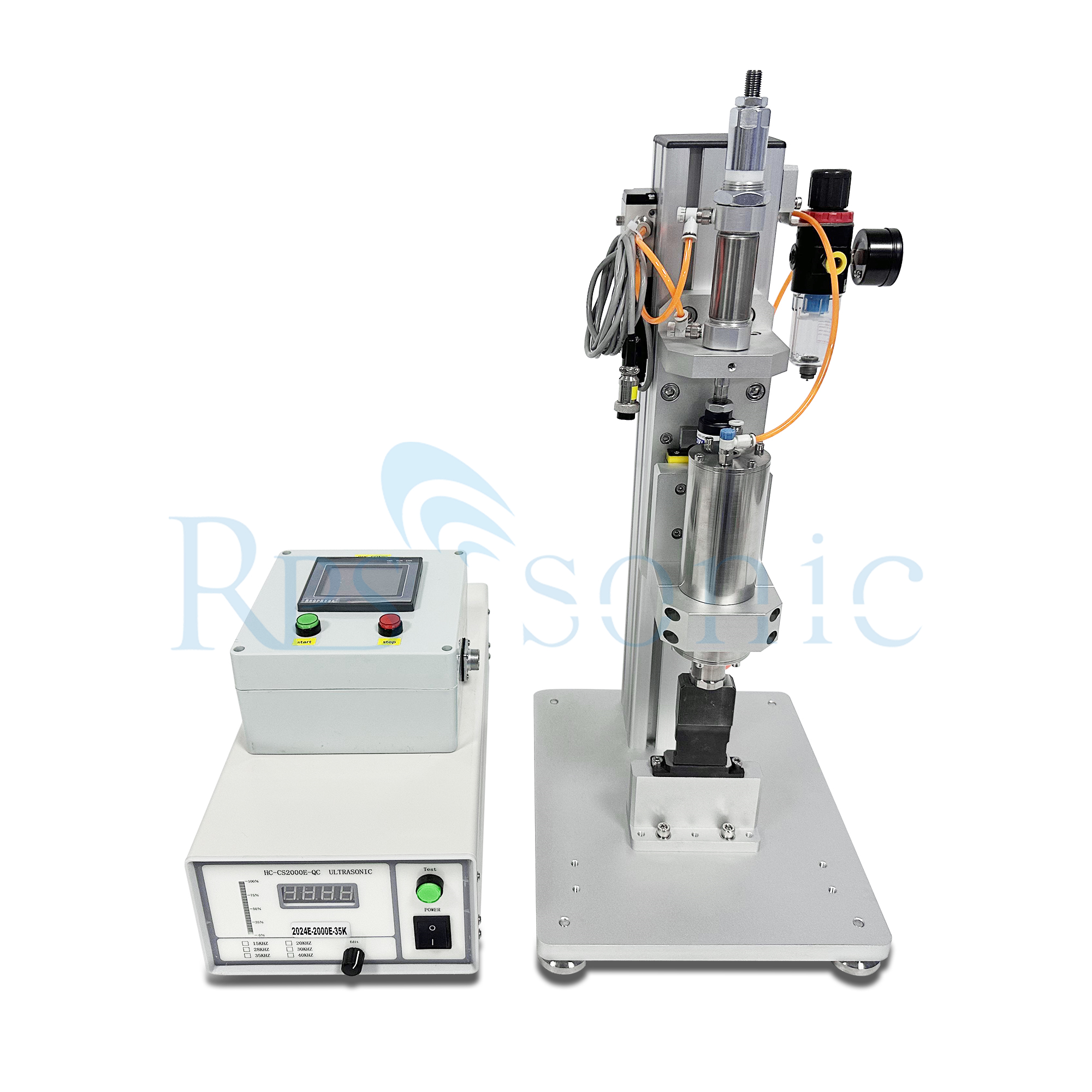
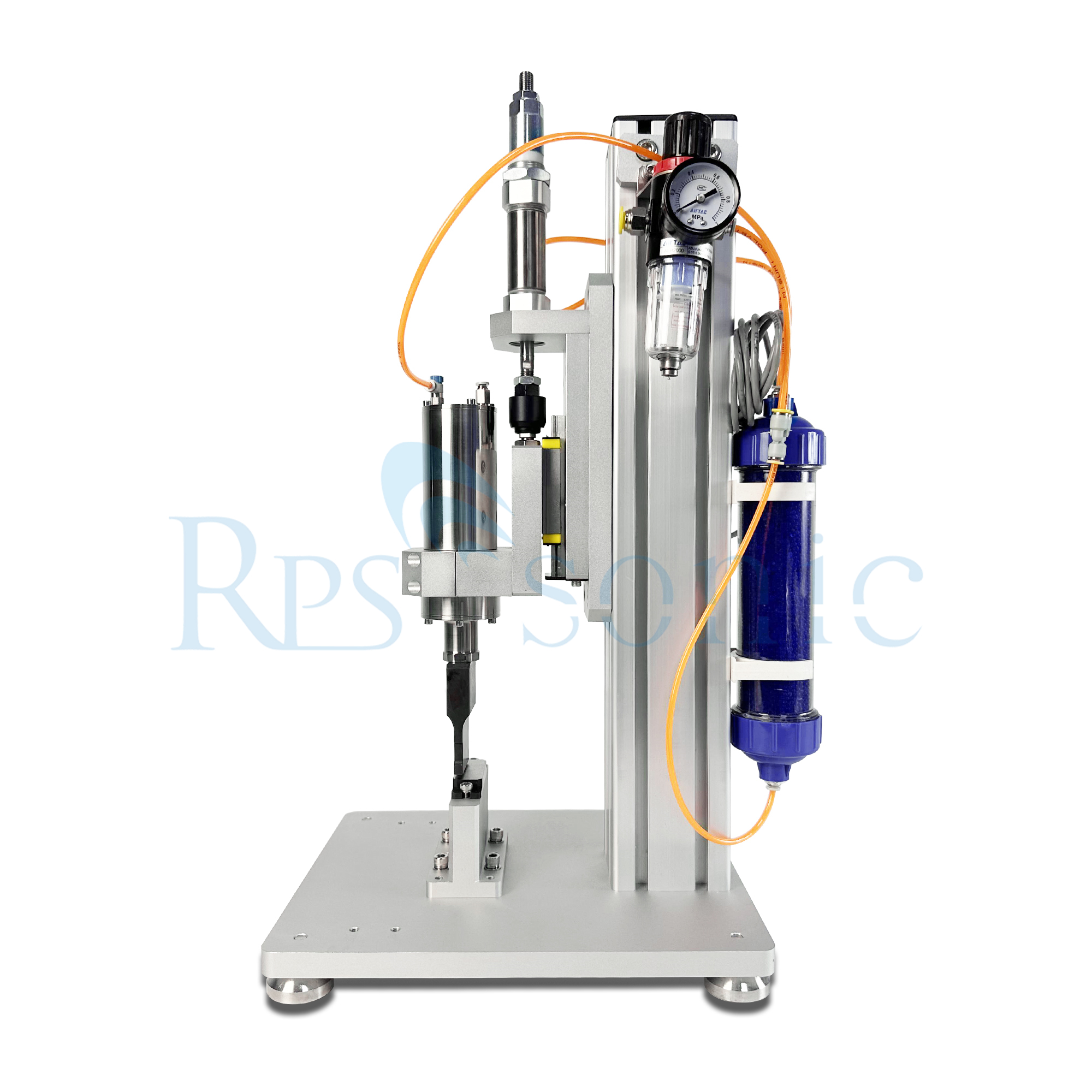
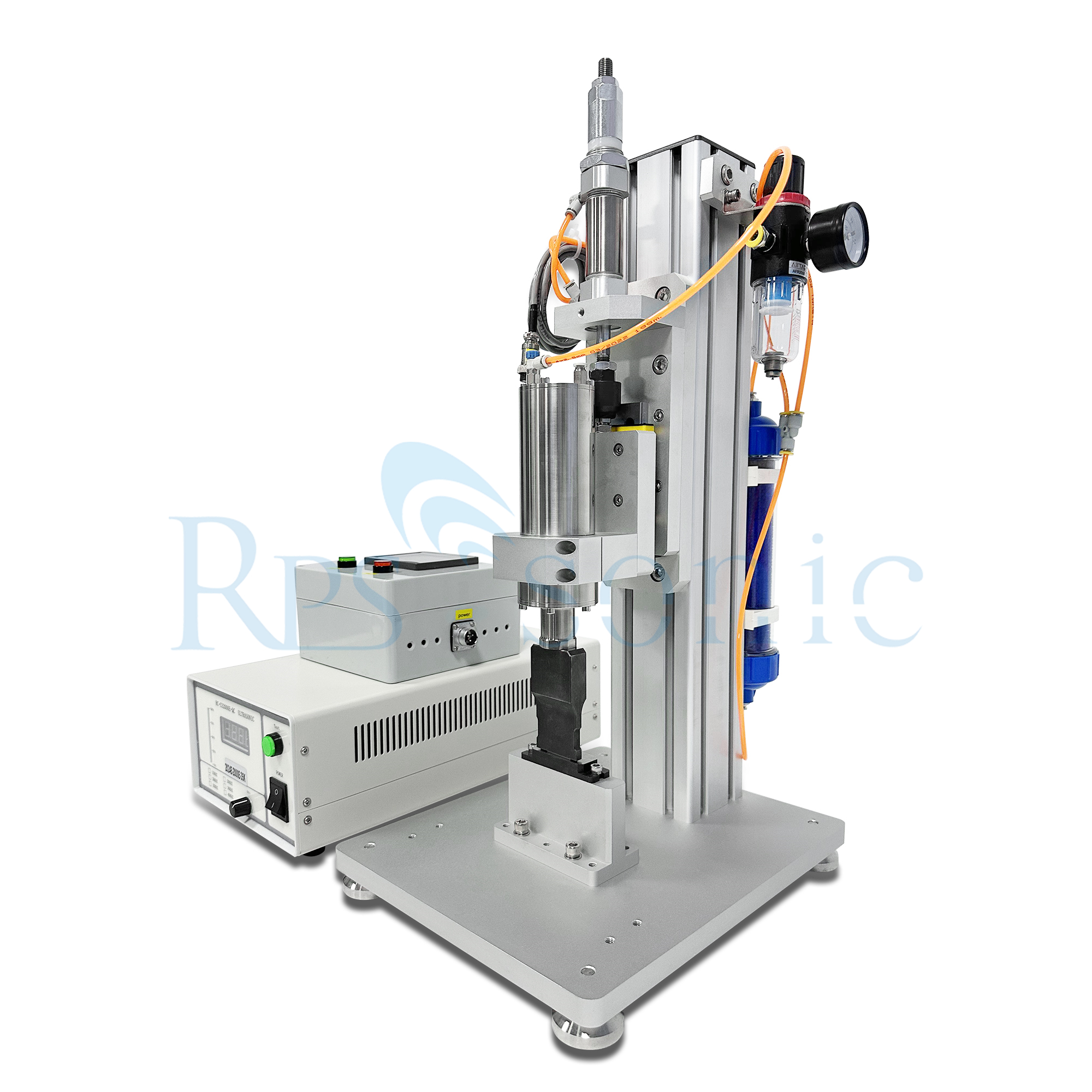
Desktop 35KHz ultrasonic spot welding machine for PP box weldingwith food pedal


Product Details
Ultrasonic spot welders typically include the following basic components:
Power supply: The power supply provides the required electrical energy for generating high-frequency vibrations. It converts the input electrical energy into the appropriate frequency and amplitude required by the ultrasonic transducer.
Ultrasonic transducer: The ultrasonic transducer is a key component of the device that converts electrical energy into mechanical vibrations. It usually consists of one or more piezoelectric elements that can expand and contract rapidly when exposed to electrical signals.
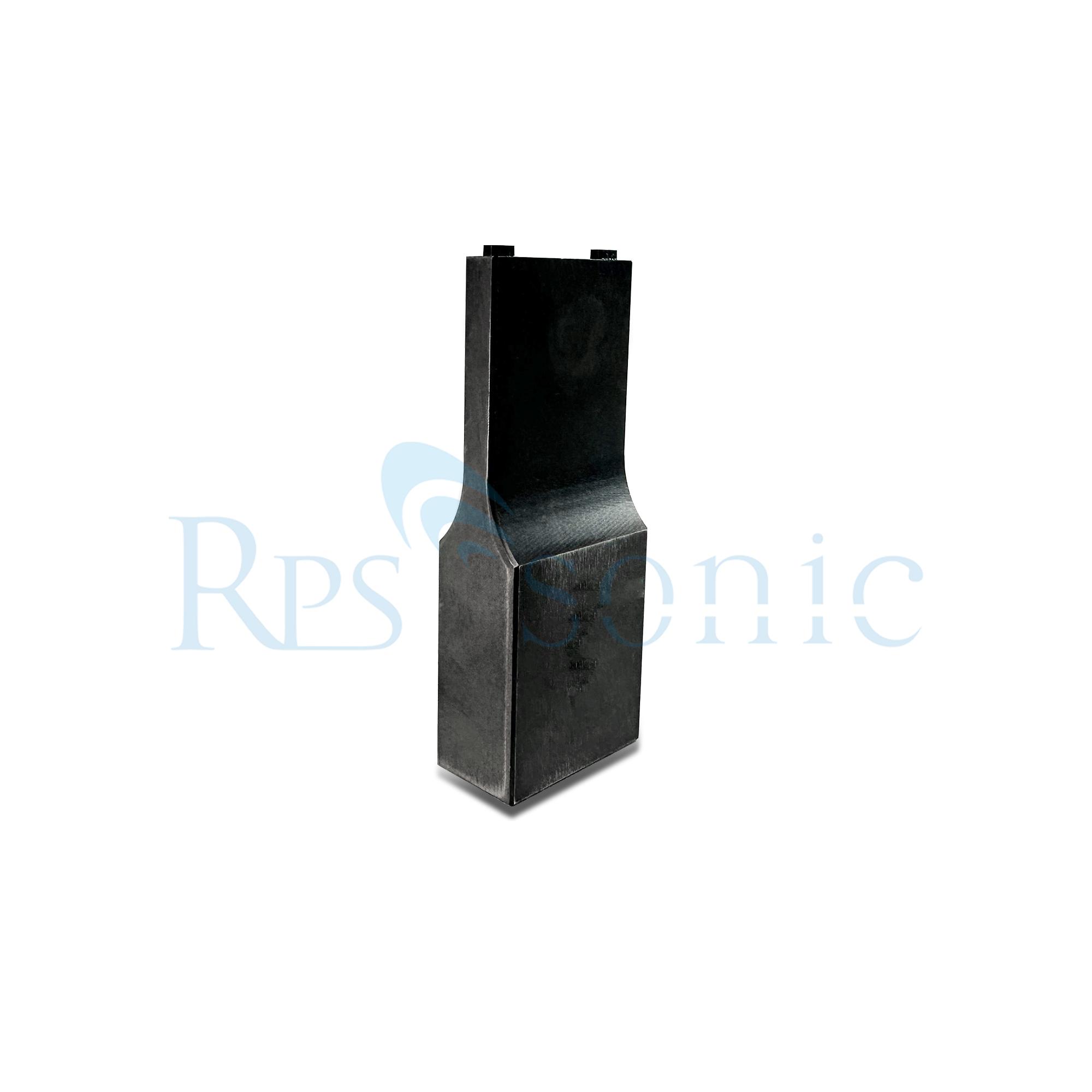
Welding horn (sonic electrode): A welding horn, also called a sonic electrode, is attached to an ultrasonic transducer and amplifies the vibrations produced by the transducer. It focuses energy on the weld area and applies pressure to form the weld.
Jaws: The jaws are the fixed surface on which the material to be welded is placed. It provides support and helps transfer ultrasonic vibrations to the welding area.
Control system: The control system of an ultrasonic spot welder allows adjustments to welding parameters such as amplitude, pressure and time. It ensures precise control of the welding process and can include features such as timers, monitors and feedback mechanisms.
Ultrasonic spot welding has the advantages of fast welding speed, non-contact process, high weld strength and suitability for various materials. Its applications include component assembly, cable termination welding, sealing, riveting and more. However, the suitability of ultrasonic spot welding for a specific application depends on factors such as material compatibility, weld joint design and production requirements.

1.Is ultrasonic welding a suitable method for sealing or joining packaging materials?
Yes, ultrasonic welding is commonly used for sealing and joining packaging materials, such as blister packs, clamshell packaging, and flexible pouches. It provides hermetic seals and helps maintain the integrity of the packaged contents.
2.Can ultrasonic welding be used to weld dissimilar materials?
It depends on the melting points of the different materials. If the melting points of the two materials are similar, of course, there is no problem. If the melting point of the two materials is very different, the welding effect will be not good
3.Are there different types of ultrasonic welding equipment?
Yes, there are different types of ultrasonic welding equipment available, including handheld units, benchtop machines, and fully automated systems. The choice of equipment depends on the specific application requirements and production volume.
4.What factors should be considered when selecting an ultrasonic welding machine?
When selecting an ultrasonic welding machine, consider key factors such as the material melting points and thickness, desired welding strength, required production speed, part complexity, and any specific features or customization needed for your application.
5.Is ultrasonic welding a safe process?
Ultrasonic welding is generally considered safe when proper safety precautions are followed. Operators should use appropriate personal protective equipment, such as gloves and safety glasses, and ensure that the equipment is properly maintained and operated within specified parameters.
-

2019 Latest Design China Laboratory Ultrasonic Homogenizer Probe Sonicator
-
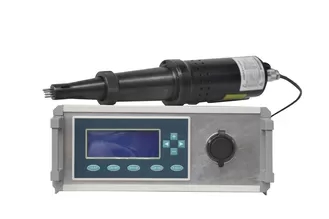
20Khz 800w Ultrasonic ageing impact equipment for Ultrasonic stress relief
-
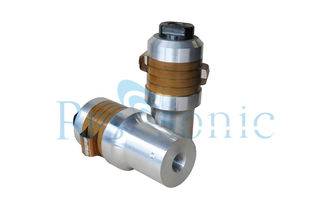
30khz Low impedance ultrasonic welding transducer For sealing
-

Pot Welding High Power Ultrasonic Transducer 28khz 800W Strong Output
-

28Khz Piezoelectric Ultrasonic Power Generator High Frequency
-

40Khz Ultrasonic rubber Cutting machine high amplitude