




Factory-Grade 20Khz Ultrasonic Sonication Device
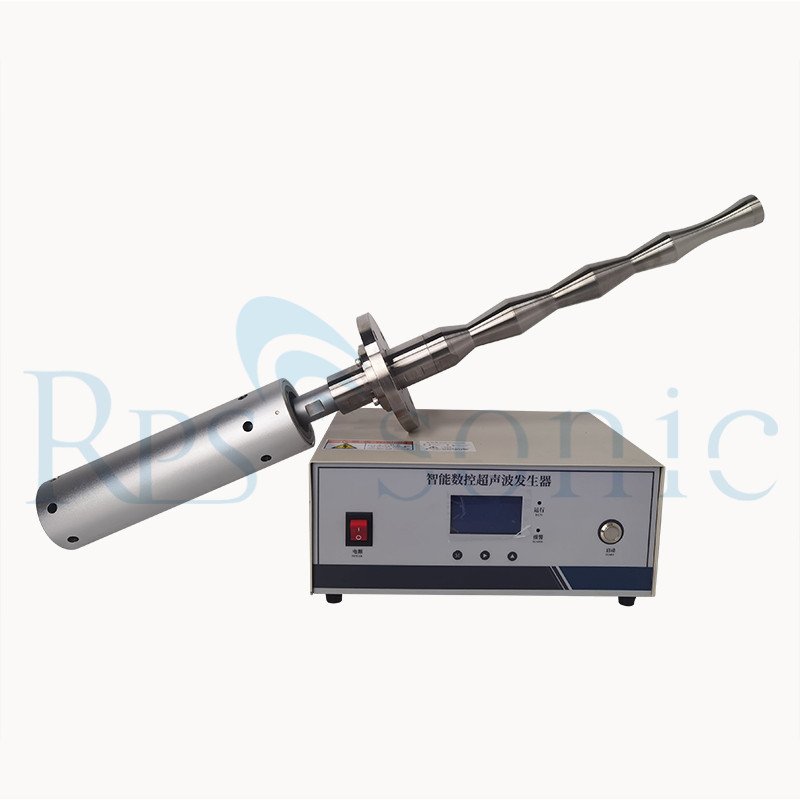
Product Main Parameters
| Model | Frequency | Power | Voltage | Temperature | Pressure | Intensity of Sound | Max Capacity |
|---|---|---|---|---|---|---|---|
| SONO20-1000 | 20±0.5 KHz | 1000 W | 220/110V | 300 ℃ | 35 MPa | 20 W/cm² | 10 L/Min |
| SONO20-2000 | 20±0.5 KHz | 2000 W | 220/110V | 300 ℃ | 35 MPa | 40 W/cm² | 15 L/Min |
| SONO15-3000 | 15±0.5 KHz | 3000 W | 220/110V | 300 ℃ | 35 MPa | 60 W/cm² | 20 L/Min |
| SONO20-3000 | 20±0.5 KHz | 3000 W | 220/110V | 300 ℃ | 35 MPa | 60 W/cm² | 20 L/Min |
Common Product Specifications
| Horn Material | Titanium Alloy |
|---|---|
| Generator | Digital |
| Weight | 30kg |
| Power Supply | 220V 50/60HZ |
| Horn Size | 35mm |
Product Manufacturing Process
The manufacturing process for ultrasonic devices involves precision engineering to ensure optimal performance. According to authoritative sources, the transducer and generator are critical components. The transducer is responsible for converting electrical energy into mechanical vibrations, which are transmitted through a probe or horn. The process requires careful consideration of materials, particularly for the horn, typically made from titanium alloy due to its strength and resistance to corrosion. The assembly process involves stringent quality checks to ensure resonance is achieved, allowing the device to operate at peak efficiency.
Product Application Scenarios
Ultrasonic sonication has diverse applications across various fields. In material science, it facilitates the dispersion of nanoparticles for nanocomposite synthesis. In biology, it aids in cell lysis and protein extraction, while in environmental science, it is used for pollutant degradation. Authoritative studies indicate that the technique is also effective in wine processing, enhancing flavor by extracting phenolic compounds. These applications highlight the versatility and effectiveness of ultrasonic sonication devices in both research and industrial settings.
Product After-Sales Service
Our factory provides comprehensive after-sales service, including technical support, maintenance, and replacement parts. Customers can contact our service center for troubleshooting and guidance on operational best practices to ensure the longevity of their ultrasonic sonication devices.
Product Transportation
Our products are securely packaged to protect against damage during transportation. We offer international shipping options with tracking services to ensure timely delivery of your ultrasonic sonication equipment from our factory to your location.
Product Advantages
- Efficient Homogenization: Achieves consistent results through advanced cavitation technology.
- Durable Construction: Built with high-quality materials for long-lasting use.
- Versatile Applications: Suitable for various industries including materials science, biology, and environmental science.
- Cost-Effective: Reduces operational costs by decreasing the need for costly replacements and repairs.
- User-Friendly: Intuitive design simplifies operation and setup.
Product FAQ
- What is ultrasonic sonication used for in laboratories?
In laboratories, factory-grade ultrasonic sonication devices are used for homogenizing samples, dispersing nanoparticles, and lysing cells to extract cellular components like DNA and proteins.
- How does cavitation affect the sonication process?
Cavitation generated by ultrasonic waves creates intense local heat and pressure, resulting in effective mixing and breakdown of samples in various applications.
- What materials are compatible with ultrasonic sonication?
Ultrasonic sonication is compatible with a variety of liquids and suspensions, making it suitable for applications in chemistry, biology, and materials science.
- Can ultrasonic sonication damage sensitive compounds?
While ultrasonic sonication is powerful, optimizing parameters like time and power can prevent damage to sensitive compounds.
- How can I ensure the longevity of my ultrasonic sonication device?
Proper maintenance, regular cleaning, and following operational guidelines provided by the factory can enhance the durability of your device.
- What is the power requirement for your ultrasonic sonication models?
Our models require a power supply of 220V 50/60HZ, with variable power outputs tailored to specific applications.
- How does the factory ensure product quality?
The factory adheres to strict quality control protocols, testing each device for performance and reliability before shipment.
- What are the shipping options for your products?
We offer international shipping with tracking services to ensure your ultrasonic sonication device is delivered safely and promptly.
- Can the device be customized for specific applications?
Our factory offers customization options to meet unique application requirements, including specific power and frequency settings.
- Is technical support available for troubleshooting?
Yes, our factory provides technical support and troubleshooting assistance to address any issues you may encounter with your device.
Product Hot Topics
- Ultrasonic Sonication in Nanotechnology
The use of factory-grade ultrasonic sonication devices is revolutionizing the field of nanotechnology. Researchers are leveraging the capability of sonication to disperse nanoparticles uniformly, which is essential for creating high-performance nanocomposites. The precise control over sonication parameters allows scientists to tailor the properties of nanomaterials, leading to breakthroughs in electronics, medicine, and environmental applications.
- Advancements in Wine Processing with Ultrasonic Sonication
The wine industry is seeing significant enhancements through the application of ultrasonic sonication. By extracting phenolic and aromatic compounds, sonication enhances the flavor and quality of wines. The factory-grade equipment ensures consistent results, making it a favored choice among vintners looking to innovate in wine production.
- Environmental Benefits of Ultrasonic Sonication
Ultrasonic sonication is becoming a sustainable method for pollutant degradation in wastewater treatment. The factory-designed devices are capable of breaking down complex pollutants, reducing their impact on the environment. This has positioned sonication as a vital tool in ecological conservation efforts.
- Cell Disruption Techniques in Biotechnology
Factory-based ultrasonic sonication devices are critical in biotechnological processes for disrupting cells to extract intracellular contents like proteins and nucleic acids. This method is preferred for its efficiency and ability to process large volumes, enhancing productivity in research labs.
- Ultrasonic Sonication in Material Science
The field of material science has greatly benefited from the use of ultrasonic sonication. The technology aids in the synthesis and processing of advanced materials, offering advantages such as reduced particle size and improved material properties.
- Innovations in Pharmaceutical Applications
Ultrasonic sonication facilitates drug development by enhancing solubility and stability of pharmaceutical compounds. The factory-grade devices provide consistent results, improving the effectiveness of drug formulations.
- Power Efficiency in Ultrasonic Devices
Modern ultrasonic sonication devices are designed for power efficiency, maximizing output while minimizing energy consumption. This makes them suitable for continuous industrial use without significant operational costs.
- Ultrasonic Sonication and Food Processing
In food processing, sonication helps in emulsification and homogenization, improving texture and shelf life of products. The factory-grade equipment ensures compliance with safety and quality standards, making it a reliable choice for the industry.
- Research Trends in Ultrasonic Sonication
Current research is exploring new applications for ultrasonic sonication, including its potential role in alternative energy solutions and nanomedicine. The adaptability and efficiency of factory-grade sonication devices make them a focal point in scientific innovation.
- Comparing Ultrasonic Sonication with Traditional Methods
Compared to traditional methods, ultrasonic sonication from the factory offers enhanced efficiency and precision. Its ability to achieve uniform particle dispersion and effective cell disruption positions it as a superior choice in various applications.
Image Description

Q1.What kind material of the horn?
A. Titanium alloy, we also customized aluminum hom for customer before.
Q2.What’s the time of delivery?
A. For Conventional hom, 3 days, for customized hom 7 work days.
Q3.Does ultrasonic extraction also require the addition of a chemical catalyst?
A. No . but some time need Mechanical stiring.
Q4.Can the device work continously?
A. Yes ,it can work 24hours continously.
Q5.What’s the Processing capacity of one set ultrasonic extraction equipment?
A. Different hor different Processing capacity, for 2000W Nine section whip horm can dealing 2L~10Lmin.
Q6.What’s the warranty of your sonicator equipment?
A. All equipment one year warranty.
-

Hot sale Ultrasonic Spray Nozzle Price - Automated Ultrasonic Welding Equipment For Polycarbonate / Polypropylene – Powersonic
-
Hot-selling Fabric Welding Machine For Sale - 20Khz Ultrasonic cutting machine for Ribbons cutting & label cutting – Powersonic
-

China Supplier Impedance Analyzer Manufacturers - 800w 20khz Ultrasonic Sewing Machine With Rotray Horn – Powersonic
-
Chinese wholesale 28 Khz Ultrasonic Generator - 20khz 2600w Ultrasonic Welding Generator RPS-DG4200 – Powersonic
-

Hot Sale for Ultrasonic Tool Holder - Titanium alloy solid mount ultrasonic welding booster Rinco replaced – Powersonic
-

China wholesale 40 Khz Transducer - Titanium Alloy Ultrasonic Welding Transducer High Frequency Ultrasonic Transducer – Powersonic