





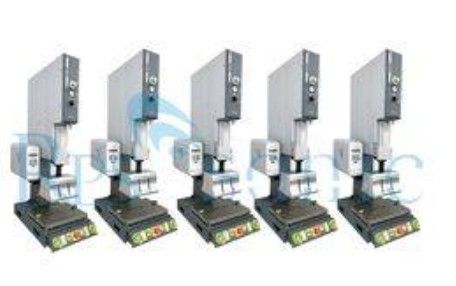
Ultrasonic welding is an innovative and highly efficient process used in various industries for joining materials, particularly thermoplastics and metals. This technology leverages high-frequency ultrasonic acoustic vibrations to create a solid-state weld. In this article, we delve deep into the principles of ultrasonic welding, its mechanism, applications, and the environmental benefits it offers. We also explore the burgeoning market for ultrasonic welders, with specific attention to offerings from China, a leading global supplier.
Understanding Ultrasonic Welding Principles
● Definition and Basic Mechanics
Ultrasonic welding is a technique that uses high-frequency ultrasonic vibrations to join materials under pressure. The process is fast, clean, and energy-efficient, making it an attractive option for many industrial applications. Unlike traditional welding, which relies on heat generated by flame or electricity to melt the materials, ultrasonic welding uses mechanical vibrations to achieve molecular bonding at the interface of the materials.
● Comparison to Other Welding Methods
Compared to conventional welding techniques, ultrasonic welding offers numerous advantages. It eliminates the need for solder, adhesives, or other bonding agents, reducing material costs and environmental impact. Additionally, ultrasonic welding is faster and requires less energy, making it a cost-effective solution for high-volume production.
Mechanism of Heat Generation
● Heat Through Friction and Vibration
In ultrasonic welding, the heat required to create a weld is generated through friction and vibration. The process involves converting high-frequency electrical energy into mechanical vibrations using an ultrasonic transducer. These vibrations are then transferred to the materials to be joined through a sonotrode or horn, generating localized heat at the interface.
● Role of High-Frequency Vertical Motion
The high-frequency vertical motion induced by ultrasonic welding equipment causes the materials' molecules to oscillate, generating a significant amount of heat. This heat, combined with the pressure applied, allows the materials to bond without reaching their melting point, resulting in a strong weld.
Environmental Benefits of Ultrasonic Welding
● Reduction of Adhesives and Fasteners
One of the most significant environmental benefits of ultrasonic welding is the reduction or elimination of adhesives and fasteners. By relying solely on mechanical bonding, this technique minimizes waste and reduces the environmental impact associated with conventional welding methods that require consumable materials.
● Energy Efficiency and Rapid Application
Ultrasonic welding is exceptionally energy-efficient, as it requires lower energy input compared to traditional welding methods. The process is quick, often taking just seconds to complete a weld, which further enhances its energy efficiency and productivity.
Automating Ultrasonic Welding Processes
● Integration into Production Lines
The automation of ultrasonic welding processes is becoming increasingly common, particularly in industries such as automotive and electronics manufacturing. By integrating ultrasonic welders into production lines, manufacturers can achieve higher production rates and consistency in weld quality.
● Impact on Labor and Production Speed
The automation of ultrasonic welding not only speeds up production but also reduces labor costs. With minimal human intervention required, manufacturers can deploy their workforce more efficiently, focusing on quality assurance and other critical tasks.
Vibration Welding Variants and Applications
● Differences Between Linear and Axial Vibration
Vibration welding, a subset of ultrasonic welding, employs either linear or axial vibrations to join materials. Linear vibration welding involves moving the components in a horizontal direction, while axial vibration welding uses vertical motions. Each method has its specific applications and advantages, depending on the materials and desired outcomes.
● Application Suitability for Sonic Welding
Sonic welding, another variation, is particularly suitable for joining large or irregularly shaped parts. It is commonly used in industries where high precision and strength are required, such as in the production of medical devices and automotive components.
Key Features of Ultrasonic Welding Equipment
● Frequency Auto-Tracking and Intelligent Control
Modern ultrasonic welding equipment comes equipped with advanced features such as frequency auto-tracking and intelligent control systems. These features ensure that the equipment operates at the optimal frequency, enhancing weld quality and consistency.
● Importance of Amplitude Adjustment and Protection Systems
Amplitude adjustment and protection systems are critical in ultrasonic welding equipment. They allow operators to fine-tune the welding process based on the specific materials and applications, ensuring a precise and reliable weld every time.
Specifications and Customization Options
● Equipment Parameters Such as Frequency and Power
Ultrasonic welding machines are available with varying frequencies and power outputs to cater to different applications. Understanding these parameters and their implications is crucial when selecting the right equipment for any specific process.
● Tailoring Machinery to Specific Part Requirements
Customization options in ultrasonic welding machines enable manufacturers to tailor the equipment to meet specific part requirements. This flexibility ensures that the welding process is optimized for the best possible results.
Application in Thermoplastic Parts Assembly
● Interface Design for Effective Melting and Bonding
For successful ultrasonic welding of thermoplastics, the interface design is critical. Proper interface design ensures effective melting and molecular bonding, leading to a strong and durable weld.
● Transition from Traditional Assembly Methods
Many industries are transitioning from traditional assembly methods to ultrasonic welding for thermoplastic parts. This change is driven by the need for increased efficiency, reduced costs, and improved environmental sustainability.
Industry Applications of Ultrasonic Welding
● Use in Aerospace, Automotive, and Electronics
Ultrasonic welding is utilized across various industries, including aerospace, automotive, and electronics. Its ability to create high-strength bonds without additional materials makes it ideal for the production of critical components such as fuel systems, electronic housings, and medical devices.
● Examples of Products Manufactured Through Ultrasonic Welding
Some examples of products manufactured using ultrasonic welding include automotive dashboards, battery packs, medical device casings, and electronic sensors. These products benefit from the precise, clean, and efficient nature of ultrasonic welding.
Challenges and Limitations
● Material and Size Constraints in Metal Welding
Despite its advantages, ultrasonic welding has limitations. For instance, it is less effective for welding large metal parts due to the material thickness constraints. Manufacturers must carefully evaluate the suitability of ultrasonic welding for their specific applications.
● Considerations for Application in Various Industries
Different industries face unique challenges when implementing ultrasonic welding. Factors such as material compatibility, equipment cost, and production requirements must be considered to ensure successful integration.
ultrasonic welder for sale: Exploring the Market
The market for ultrasonic welders is flourishing, with numerous manufacturers and suppliers offering a wide range of products. In particular, China has emerged as a leading source of ultrasonic welders for sale, offering competitive pricing and advanced technology.
● China Ultrasonic Welder for Sale: A Global Perspective
Chinese manufacturers are renowned for producing high-quality ultrasonic welding equipment at affordable prices. They provide an extensive range of options, from entry-level machines to advanced systems equipped with the latest technology.
● Ultrasonic Welder for Sale Manufacturer and Supplier Insights
When considering the purchase of an ultrasonic welder, it is essential to evaluate the manufacturer and supplier's reputation, support services, and customization options. Reliable manufacturers offer comprehensive support and tailored solutions to meet the unique needs of different industries.
Introducing Powersonic
Rps-sonic, operating under the brand name Powersonic, is an innovative company driven by a team of passionate individuals with extensive experience in the ultrasonic industry. Specializing in transducers and generators, Rps-sonic focuses on tailoring ultrasonic solutions to meet customer-specific needs. Their business philosophy emphasizes finding the right product for each client rather than promoting unnecessary products. With a commitment to solving transducer and generator challenges, Powersonic is dedicated to helping users optimize their ultrasonic equipment's performance and longevity. For more information or to address ultrasonic equipment issues, Powersonic welcomes your inquiries.
In conclusion, ultrasonic welding offers immense potential for improving manufacturing processes across numerous industries. Its environmental benefits, energy efficiency, and rapid application make it a preferred choice for modern manufacturing, positioning it as a cornerstone technology for the future.