




Specific applications and advantages of ultrasonic pipeline water treatment:
1.Good cleaning effect: Ultrasonic waves can remove dirt and sediment inside the water pipe without causing any damage to the pipe, which is more thorough than traditional methods.
2.Good disinfection effect: Through the local high temperature and high pressure generated by cavitation, ultrasonic waves can effectively sterilize and disinfect, kill most bacteria and viruses, and improve water quality.
3.Energy saving and environmental protection: Ultrasonic treatment does not require any chemicals, will not cause secondary pollution, and has low energy consumption, which meets environmental protection requirements.
4.Low maintenance cost: Ultrasonic equipment does not require frequent replacement of parts or large-scale repairs, and the long-term use cost is low.
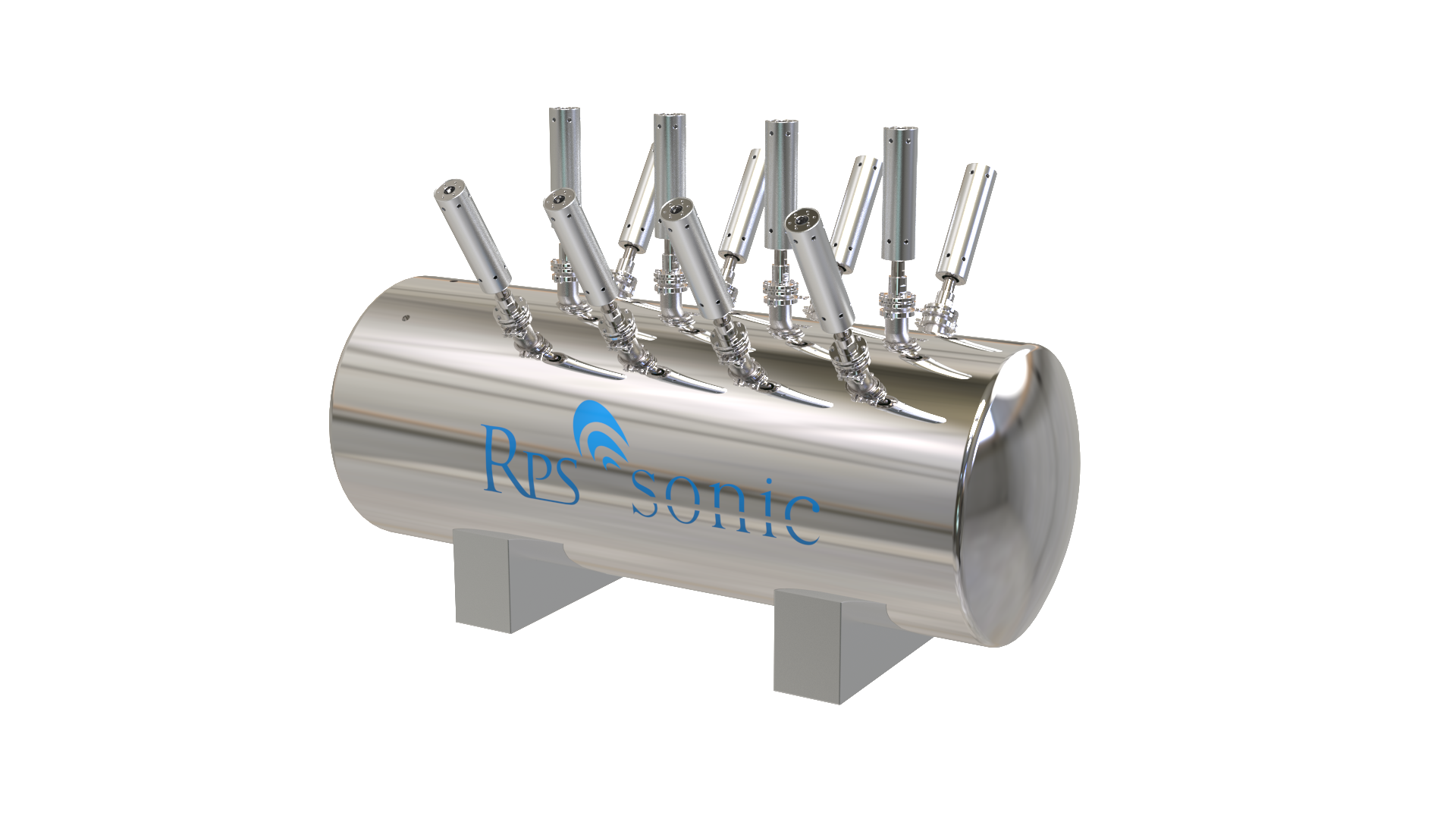
Application fields of ultrasonic pipeline water treatment:
Ultrasonic pipeline water treatment technology is widely used in wastewater treatment, drinking water treatment, industrial water treatment and medical waste liquid treatment. Specific applications include:
Degradation of organic pollutants: Ultrasonic waves can decompose macromolecular organic matter (such as pesticides, dyes, phenols, etc.) into small molecular substances, which are convenient for subsequent biological treatment.
Sterilization and disinfection: The cell walls and cell membranes of bacteria and viruses are destroyed by cavitation to achieve the purpose of sterilization and disinfection.
Enhance the oxidation process: Ultrasonic waves can be used in conjunction with other chemical treatment technologies to enhance oxidation capacity and promote the decomposition of organic matter.
Enhance the coagulation effect: Cavitation causes suspended matter and colloidal particles to collide, aggregate and settle with each other, thereby improving the clarity of the water.
Remove heavy metals: Enhance the adsorption capacity of adsorbents for heavy metal ions and accelerate the removal rate.
Promote membrane filtration: Reduce the deposition of pollutants on the membrane surface and improve the filtration efficiency and service life of the membrane.