




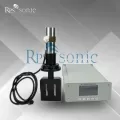
You just want strong, clean welds, but choosing between ultrasonic rotary and linear machines feels like picking a favorite child in a sci‑fi movie—lots of noise, scary specs, and way too many “expert” opinions.
Relax. Compare welding speed, joint strength, and maintenance needs side by side, then match them to your production volume and part geometry. For a solid benchmark, check this authoritative study on ultrasonic welding performance before you decide.
⚙️ Fundamental Working Principles of Ultrasonic Rotary and Linear Welding Systems
Ultrasonic rotary and linear welding both use high‑frequency vibration to bond thermoplastics, but they apply motion in different ways. The choice affects seam length, speed, and part handling.
Rotary systems use a rolling horn for continuous seams. Linear welders move the horn in a straight line for spot or line welds with precise energy control.
1. Linear Ultrasonic Welding Basics
Linear welding converts electrical energy into vertical vibration. The horn presses the parts together and melts a small joint area to create a strong bond.
- Best for: spot welds, short seams, rigid assemblies
- Common uses: filters, electronic housings, medical parts
- Typical frequency: 20–40 kHz with tuned horn design
2. Rotary Ultrasonic Welding Basics
Rotary welding uses a cylindrical horn that rotates while vibrating. It forms continuous welds, ideal for long seams and high-speed web materials.
- Best for: films, nonwovens, thin sheets
- Continuous seams with low material distortion
- Supports high line speeds in roll‑to‑roll processes
3. Power Supply and Transducer Considerations
Stable power and robust transducers keep amplitude constant. This ensures repeatable weld strength and lower scrap in both rotary and linear systems.
- Continuous Ultrasonic Power Supply Non Woven Sealing Stable Performance supports fast rotary sealing lines.
- Digital control improves amplitude and energy accuracy.
4. Tooling, Horn Design, and Material Match
Horn face design, material, and frequency must match the plastic and joint style. Good design reduces stress and improves service life.
- 20Khz ultrasonic welding horn for ultrasonic welding abs plastic Power outlet supports tough engineering plastics.
- Proper horn geometry avoids part marking and burn‑through.
📏 Joint Design, Part Geometry, and Application Suitability Comparison
Joint style and part geometry strongly influence whether rotary or linear welding is the better option. Clear evaluation reduces redesign and qualification time.
Engineers should review joint area, material thickness, and access for tooling before choosing equipment.
1. Joint Types for Linear vs Rotary Welding
Linear welders handle shear, tongue‑and‑groove, and energy director joints. Rotary is ideal for lap seams on thin flexible webs and films.
| Joint Type | Best Method | Notes |
|---|---|---|
| Energy Director | Linear | High strength, tight tolerance |
| Lap Seam (Film) | Rotary | Continuous, fast sealing |
| Spot Welds | Linear | Local reinforcement points |
2. Effect of Wall Thickness and Part Size
Thicker, rigid parts usually favor linear welding. Thin walls and very long seams often run better with rotary horns for stable sealing.
- Linear: housings, dashboards, under‑hood parts
- Rotary: masks, gowns, technical textiles
3. Data‑Driven Comparison of Typical Use Cases
The following bar chart compares relative suitability scores (0–10) for rotary and linear welding across common criteria.
4. Application Matching for Automotive and Electronics
Automotive interiors and electronics often require linear welding to meet tight fit and finish needs with strong, hidden joints.
- 20Khz Ultrasonic Welding Machine with Touch Screen for Automobile Welding supports dashboards, door panels, and sensor housings.
- Rotary is added for interior film and acoustic layers.
⏱️ Cycle Time, Productivity, and Process Stability in Industrial Production
Cycle time and stability decide real throughput on the line. Rotary and linear systems perform differently in continuous and batch production.
1. Rotary Speed Advantages in Continuous Lines
Rotary systems shine on roll‑to‑roll lines. They seal while the material moves, cutting idle time and raising output per hour.
- Ideal for PPE, filters, and packaging
- Less indexing and clamping time
2. Linear Welding in Indexed and Robotic Cells
Linear welders match well with robots and indexing tables. They weld multiple points per cycle with accurate energy control.
| Mode | Typical Cycle |
|---|---|
| Single‑point linear | 0.3–1.0 s |
| Multi‑point linear | 3–6 s |
3. Process Stability and Maintenance Factors
Stable ultrasonic power, rigid frames, and well‑tuned horns lower variation and unplanned downtime for both welding styles.
- Scheduled horn re‑tuning and cleaning
- Monitoring amplitude, power, and weld time
🔍 Quality, Strength, and Reliability of Welds Under Different Operating Conditions
Both rotary and linear welding can deliver strong, repeatable joints when parameters, tooling, and materials are correctly matched.
1. Weld Strength in Static and Dynamic Loads
Linear welds often reach near‑base‑material strength on rigid parts. Rotary seams offer uniform strength over long flexible joints.
- Test with peel, tensile, and burst methods
- Verify under real temperature and load profiles
2. Effect of Temperature, Humidity, and Aging
Plastics change with heat and time. Stable amplitude and pressure compensate for small material shifts and keep weld quality high.
| Factor | Impact | Mitigation |
|---|---|---|
| Heat | Softer plastic | Lower energy, pressure |
| Cold | More brittle | Increase energy carefully |
3. Inline Quality Monitoring and Traceability
Modern systems log weld energy, power, and displacement for every part. This supports SPC, recalls, and compliance audits.
- Set control limits on key weld parameters
- Use barcode or MES links for traceability
🏭 Practical Selection Guidelines and Why Powersonic Meets Industrial Requirements
Selection should balance seam style, material, geometry, volume, and quality needs. Powersonic equipment covers both rotary and linear systems for demanding lines.
1. Quick Checklist for Choosing Rotary vs Linear
Use a simple screening checklist early in design to avoid late tooling changes and speed up launch.
- Long, continuous flexible seam → rotary
- Complex 3D, rigid housing → linear
- High cosmetic demand → linear with custom horn
2. How Powersonic Supports Scaling from Prototype to Mass Production
Powersonic platforms allow you to transfer parameters from lab to plant. Common power supplies and horns reduce risk during scaling.
| Phase | Need | Powersonic Support |
|---|---|---|
| Prototype | Flexibility | Configurable tooling |
| Pilot | Stability | Closed‑loop power |
| Mass | OEE | High‑duty hardware |
3. Total Cost, Service, and Global Support
Beyond machine price, look at uptime, spare parts, and engineering help. Powersonic offers strong service and application support worldwide.
- Training for operators and engineers
- Remote diagnostics and fast spare parts
Conclusion
Ultrasonic rotary welding excels for continuous seams on films and nonwovens, while linear welding suits rigid parts, complex joints, and tight tolerances.
By reviewing geometry, seam length, cycle time, and quality needs, manufacturers can pick the right method and pair it with Powersonic systems for stable, scalable production.
Frequently Asked Questions about ultrasonic rotary welding machine
1. What materials are best suited for ultrasonic rotary welding?
Ultrasonic rotary welding works best on thermoplastic films, nonwovens, and thin sheets such as PP, PE, PET, and nylon used in packaging and medical disposables.
2. How fast can an ultrasonic rotary welding machine run?
Line speed depends on material and seam design, but many rotary systems run from several meters per minute up to over 60 meters per minute on light webs.
3. Is rotary welding as strong as linear ultrasonic welding?
For continuous lap seams on thin, flexible materials, rotary welds can match or exceed required strength. For thick, rigid parts, linear welding is usually stronger.
4. What maintenance does a rotary ultrasonic welder need?
Key tasks include cleaning horn and anvil, checking alignment, inspecting bearings, and verifying amplitude and power. Regular checks prevent uneven seams and downtime.
5. Can one machine switch between different seam patterns?
Yes. Many rotary ultrasonic systems allow you to change patterned anvils or horns. This lets you switch between continuous, spot, or decorative seams with minimal changeover.