


Ultrasonic atomization spraying equipment is an advanced spraying equipment. Its principle is to convert high-frequency sound waves into mechanical energy through piezoelectric transducers, and then transfer the mechanical energy to liquid, so that the liquid is atomized into fine particles, and then evenly coated on the surface of the substrate through the carrier gas to form a coating or film. This equipment plays an important role in modern manufacturing due to its high stability, energy saving and environmental protection, controllable molding, easy maintenance and wide range of applications. The following are the applications of ultrasonic atomization spraying equipment in different fields:
1. Energy field
Fuel cell: Ultrasonic fuel cell catalyst coating system can produce highly uniform, repeatable and durable coatings, increase platinum utilization by up to 90%, and reduce material consumption by 50%.
Solar cell: Ultrasonic spraying technology can be used for thin-film solar cell spraying, such as perovskite solar cells, organic solar cells, transparent conductive films, etc., to enhance light absorption and conversion efficiency and improve the output power of solar cells.
2. Electronics and semiconductor field
Semiconductor manufacturing: Ultrasonic spraying can be used for semiconductor photolithography wafer processing, finely controlling flow rate, coating speed and deposition amount, and achieving uniform coating coverage of high aspect ratio grooves and deep hole structures.
OLED display: Ultrasonic spraying can achieve ultra-thin and uniform film deposition, ensuring the uniformity and color accuracy of OLED display.
Circuit board manufacturing: Ultrasonic sprayers can accurately and evenly spray insulating varnish on the complex circuits and component surfaces of circuit boards to avoid short circuits and component damage.
3. Medical equipment field
Medical coating: Ultrasonic spraying can be used for coating of airbags, diagnostic equipment, blood collection tubes, etc., as well as biosensor coating spraying.
Disinfection application: In the disinfection of operating rooms and hospital environments, ultrasonic spray can effectively reduce the risk of microbial transmission.
Drug atomization: Ultrasonic spraying can be used for drug atomization inhalation therapy. The spray particles are fine and uniform, which helps to improve the absorption rate and efficacy of drugs.
4. Glass coating field
Functional coating: Ultrasonic spraying performs well in functional glass coatings, such as transparent conductive oxide coatings, AR anti-reflection films, hydrophilic coatings, hydrophobic coatings, thermal insulation films, etc.
Nano-scale coatings: Ultrasonic spraying technology can produce high-quality nano-scale coatings, making the glass surface smoother and more uniform, and improving the performance and stability of the product.
5. Food manufacturing field
Antibacterial coating: Spray antibacterial coatings on cooked meat products to improve product safety and extend shelf life.
Flavoring agent addition: Add thin coatings such as flavorings, sweeteners or nutrients to pre-prepared foods to enhance food flavor.

- English
- French
- German
- Portuguese
- Spanish
- Russian
- Japanese
- Korean
- Arabic
- Irish
- Greek
- Turkish
- Italian
- Danish
- Romanian
- Indonesian
- Czech
- Afrikaans
- Swedish
- Polish
- Basque
- Catalan
- Esperanto
- Hindi
- Lao
- Albanian
- Amharic
- Armenian
- Azerbaijani
- Belarusian
- Bengali
- Bosnian
- Bulgarian
- Cebuano
- Chichewa
- Corsican
- Croatian
- Dutch
- Estonian
- Filipino
- Finnish
- Frisian
- Galician
- Georgian
- Gujarati
- Haitian
- Hausa
- Hawaiian
- Hebrew
- Hmong
- Hungarian
- Icelandic
- Igbo
- Javanese
- Kannada
- Kazakh
- Khmer
- Kurdish
- Kyrgyz
- Latin
- Latvian
- Lithuanian
- Lithuanian
- Macedonian
- Malagasy
- Malay
- Malayalam
- Maltese
- Maori
- Marathi
- Mongolian
- Burmese
- Nepali
- Norwegian
- Pashto
- Persian
- Punjabi
- Serbian
- Sesotho
- Sinhala
- Slovak
- Slovenian
- Somali
- Samoan
- Scots Gaelic
- Shona
- Sindhi
- Sundanese
- Swahili
- Tajik
- Tamil
- Telugu
- Thai
- Ukrainian
- Urdu
- Uzbek
- Vietnamese
- Welsh
- Xhosa
- Yiddish
- Yoruba
- Zulu
- Kinyarwanda
- Tatar
- Oriya
- Turkmen
- Uyghur

What are the applications of ultrasonic atomization spray equipment?
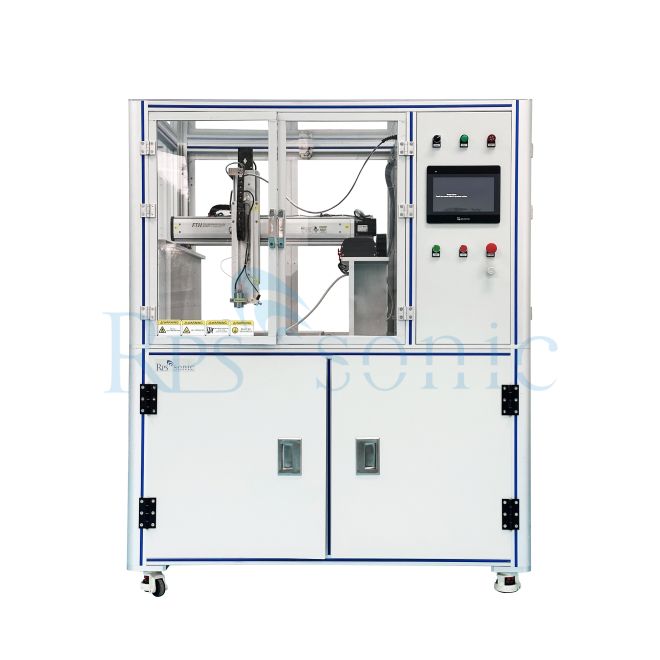
Table of Contents