




Wholesale Ultrasonic Welding Part: Wire Harness Welder
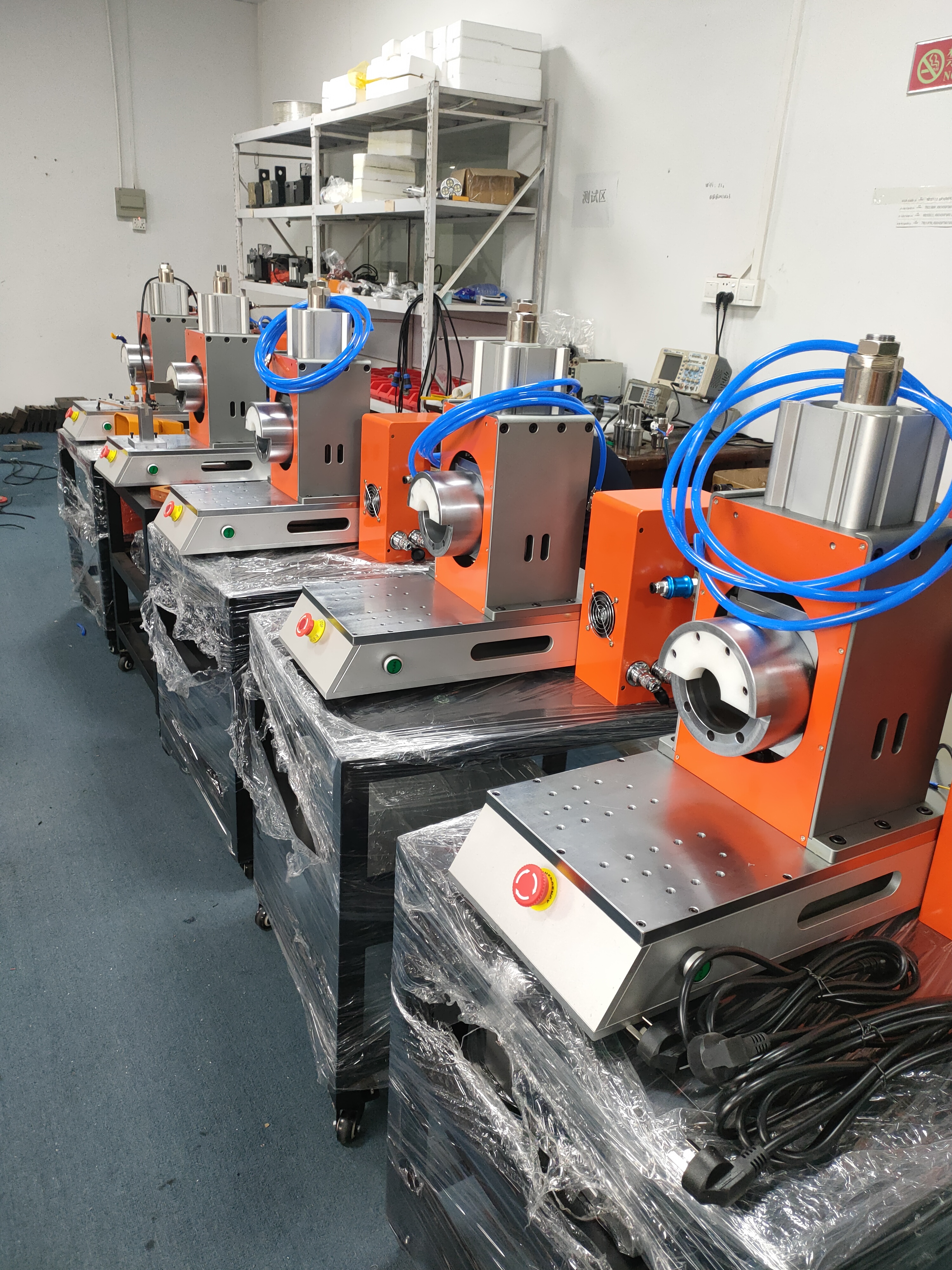
Product Main Parameters
| Parameter | Details |
|---|---|
| Power | 2000—6000W |
| Frequency | 20KHZ |
| Power Supply | 220V |
| Gas Source | 0.5kg |
| Way to Control | Touch Screen |
| Welding Area Range | 1mm—5mm |
| Welding Mode | Automic |
| Welding Time Area | 0.01sec-999sec |
| Bracket Size | 700Lx600Wx300H mm |
| Quality Control | 1 Year |
| Generator Size | 400Lx280Wx220H mm |
| Whole Weight | 60kg |
Common Product Specifications
| Component | Description |
|---|---|
| Transducer | Converts electrical energy to mechanical motion. |
| Generator | Provides required frequency and power to the system. |
| Mold | Forms the shaping interface for welding. |
Product Manufacturing Process
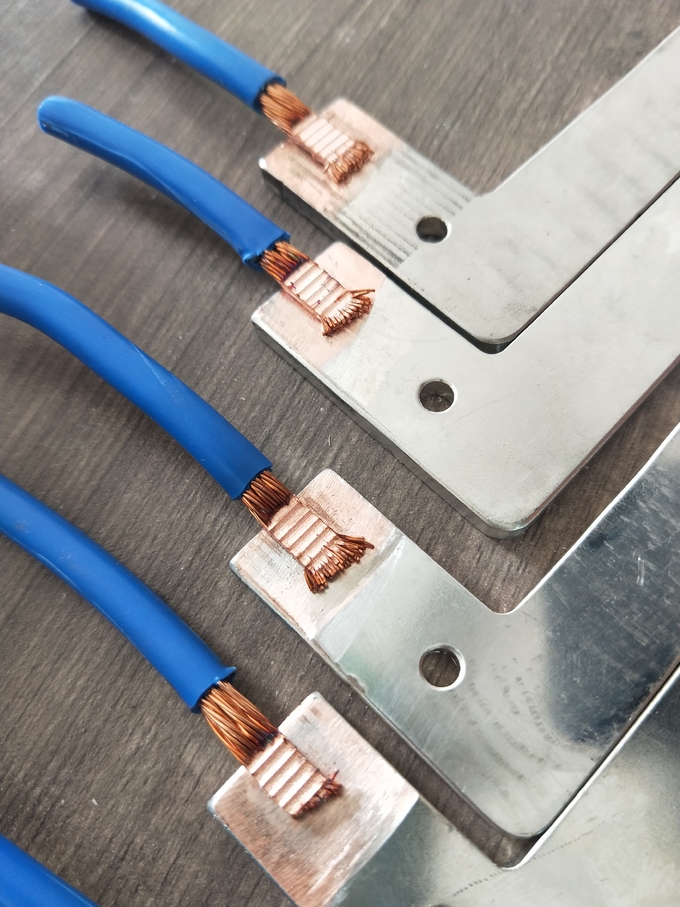
Ultrasonic welding of wire harnesses involves a precise technique where high-frequency vibrations generate heat and facilitate the bonding of metal surfaces. According to research, ultrasonic welding enables the conservation of energy and material while ensuring high tensile strength joints. The manufacturing process begins with the generation of ultrasonic waves by a power supply system. These waves, typically in the range of 20 kHz, are transmitted through the transducer to the sonotrode. The welding occurs under controlled pressure, where vibrations induce molecular deformation and frictional heat at the interface, leading to fusion without melting of the base materials. This method is especially advantageous for thin metals or thermoplastics, with its success heavily reliant on accurate tuning to achieve resonance. This ensures efficient energy transfer and optimal bonding conditions as concluded in various studies on ultrasonic welding technology.
Product Application Scenarios
Ultrasonic welding is extensively applied in sectors like automotive, electronics, and medical devices, each leveraging its unique benefits. In the automotive industry, it is crucial for assembling lightweight components like wire harnesses, ensuring reliable electrical connectivity without added weight. The electronics sector benefits from its capacity to fuse delicate components without thermal damage, ideal for battery packs and micro-circuits. Medical applications capitalize on the sterile bonding method, useful for devices like implantable sensors and tubing. Studies highlight ultrasonic welding’s precision and cleanliness, vital in industries where material integrity and performance are non-negotiable, making it indispensable for contemporary manufacturing needs.
Product After-Sales Service
We offer a comprehensive one-year warranty covering technical support, part replacements, and maintenance guidance. Our expert team is available 24/7 to resolve any operational issues, ensuring your welding equipment performs optimally.
Product Transportation
All products are securely packaged to prevent damage during transit. We partner with reliable logistics services to ensure timely and safe delivery, offering tracking options and insurance for all orders.
Product Advantages
- Spark-free and environmentally friendly operation.
- No melting of materials, preserving metal's structural integrity.
- Effective on oxidized/electroplated surfaces.
- Minimal setup time without auxiliary materials.
- Low resistivity, ensuring excellent conductivity post-welding.
Product FAQ
Q1: What is the typical lifespan of an ultrasonic transducer?
A1: A quality transducer, including wholesale ultrasonic welding parts, should last between 5 to 30 years, depending on usage and maintenance.
Q2: Can these machines weld thick metal parts?
A2: Ultrasonic welding is generally not suitable for very thick metal parts; it is best for parts with a thickness of 5mm or less.
Q3: What power supply is required?
A3: Our machines require a 220V power supply, which is standard in most industrial facilities for wholesale ultrasonic welding parts.
Q4: How do I know if the generator is perfectly matched to the transducer?
A4: Proper resonance tuning is critical; our support team can assist in ensuring components are correctly matched for optimal performance.
Q5: Is ultrasonic welding suitable for medical device manufacturing?
A5: Yes, it's ideal due to its clean and precise nature, making it suitable for sterile environments.
Q6: What types of materials can be welded?
A6: Ultrasonic welding can fuse various metals like copper, aluminum, and nickel, as well as certain plastics.
Q7: How often should maintenance be performed?
A7: Regular maintenance is recommended every 6 months to ensure longevity and efficiency, especially for wholesale ultrasonic welding parts.
Q8: Are there safety concerns associated with ultrasonic welding?
A8: This method is generally safe, producing no hazardous fumes, but operators should avoid direct contact with vibrating components.
Q9: How does ultrasonic welding compare to other welding methods?
A9: It offers faster, cleaner welds without consumables, beneficial for high-volume production environments.
Q10: Can the machine handle dissimilar material welding?
A10: Yes, ultrasonic welding can effectively join dissimilar metals, making it versatile for various applications.
Product Hot Topics
Topic 1: The Future of Ultrasonic Welding Parts in Manufacturing
The manufacturing landscape is rapidly evolving with the integration of high-tech ultrasonic welding systems. These innovations offer unparalleled efficiency and precision, vital for maintaining competitiveness in global markets. With advancements in automation and material sciences, the reliance on ultrasonic welding parts, especially in wholesale production, continues to grow. Their adaptability to diverse applications—from automotive to medical device manufacturing—positions them at the forefront of sustainable industrial practices.
Topic 2: Reducing Environmental Impact with Ultrasonic Welding Parts
As industries strive to minimize their carbon footprint, ultrasonic welding parts provide a cleaner, more sustainable alternative to conventional welding methods. The elimination of consumables such as fluxes and adhesives reduces material waste, and the energy-efficient nature of ultrasonic technology contributes to lower resource consumption. By choosing wholesale ultrasonic welding parts, manufacturers not only enhance operational efficiency but also align with eco-friendly practices, meeting both regulatory standards and consumer demand for greener products.
Topic 3: Overcoming Challenges with Ultrasonic Welding Parts
While the benefits of ultrasonic welding are clear, there are challenges in its application, particularly concerning material compatibility and equipment calibration. Success in using ultrasonic welding parts hinges on fine-tuning the resonance and understanding the material properties being joined. With proper knowledge and the right wholesale ultrasonic welding parts, these challenges can be managed, ultimately unlocking the full potential of this advanced welding technique.
Topic 4: Innovations Driving Wholesale Ultrasonic Welding Part Demand
The drive for innovation in various sectors is increasing the demand for specialized ultrasonic welding parts. New materials and complex component designs require welding solutions that traditional methods can't provide. Wholesale suppliers are stepping up to meet these demands, offering tailored solutions that support rapid prototyping and short production runs, allowing manufacturers to bring cutting-edge products to market swiftly and efficiently.
Topic 5: Cost Efficiency of Wholesale Ultrasonic Welding Parts
Cost efficiency remains a priority for manufacturers, and ultrasonic welding parts are a critical component in achieving this goal. By offering high-speed and low-energy consumption solutions, these parts help reduce operational costs significantly. Additionally, the longevity and durability of ultrasonic welding equipment lessen the need for frequent replacements, making wholesale ultrasonic welding parts a cost-effective choice for long-term investment.
Topic 6: Enhancing Product Quality with Ultrasonic Welding Parts
The precision and repeatability of ultrasonic welding parts contribute to consistent product quality, a significant advantage in high-stakes industries like aerospace and electronics. The ability to produce defect-free welds ensures that final products meet stringent quality standards. Wholesale ultrasonic welding parts play a vital role in maintaining this level of quality, fostering trust and reliability with end-users.
Topic 7: The Role of Ultrasonic Welding Parts in Automation
Automation is transforming manufacturing, with ultrasonic welding parts at the heart of this revolution. These components integrate seamlessly into automated systems, enhancing production speed and accuracy. As industries move towards smart manufacturing, the demand for wholesale ultrasonic welding parts that meet the requirements of Industry 4.0 is expected to soar, paving the way for future advancements.
Topic 8: Ultrasonic Welding Parts and Industry Standards
Compliance with industry standards is non-negotiable in manufacturing. Ultrasonic welding parts are designed to meet or exceed these standards, ensuring safe and reliable operations. Wholesale suppliers focus on delivering parts that adhere to global quality benchmarks, facilitating manufacturers' compliance and certification processes across different markets.
Topic 9: Exploring New Materials with Ultrasonic Welding Parts
R&D efforts are continually expanding the range of materials compatible with ultrasonic welding. This flexibility allows manufacturers to experiment with new alloys and composites, broadening their design possibilities. Wholesale ultrasonic welding parts support these explorations, offering adaptable solutions that keep pace with material advancements and evolving industry demands.
Topic 10: The Impact of Ultrasonic Welding Parts on Operational Efficiency
Operational efficiency is a key driver for adopting ultrasonic welding parts. Their quick cycle times and minimal setup requirements improve throughput rates, vital in high-volume production settings. By opting for wholesale ultrasonic welding parts, manufacturers can streamline their processes, reduce downtime, and enhance overall operational agility, securing their competitive edge in the market.
Image Description
Q1.What kind material of the horn?
A. Titanium alloy, we also customized aluminum hom for customer before.
Q2.What’s the time of delivery?
A. For Conventional hom, 3 days, for customized hom 7 work days.
Q3.Does ultrasonic extraction also require the addition of a chemical catalyst?
A. No . but some time need Mechanical stiring.
Q4.Can the device work continously?
A. Yes ,it can work 24hours continously.
Q5.What’s the Processing capacity of one set ultrasonic extraction equipment?
A. Different hor different Processing capacity, for 2000W Nine section whip horm can dealing 2L~10Lmin.
Q6.What’s the warranty of your sonicator equipment?
A. All equipment one year warranty.
-

Personlized Products Portable Homogenizer - Titanium alloy solid mount ultrasonic welding booster Rinco replaced – Powersonic
-

New Arrival China Ultrasonic Vibration Cutting - Digital type Ultrasonic 40khz fabric cutting machine for nonwoven cutting and sealing – Powersonic
-

Factory wholesale Ultrasonic Dispersion - Branson replaced ultrasonic booster for ultrasonic transducer Amplifier – Powersonic
-
Low price for Solder Dipping Equipment - 15khz high power ultrasonic welding machine 5000W Automatic high precision – Powersonic
-
100% Original Ultrasonic Seam Sealing Machine - 20Khz Ultrasonic cutting machine for Ribbons cutting & label cutting – Powersonic
-

PriceList for Spray Pyrolysis Equipment Price - 15khz high precision ultrasonic welder & Tools for plastic welding solution – Powersonic