



In the rubber product production workshop, the burrs and dust pollution problems caused by traditional rotary blades cutting butyl rubber sealing strips have troubled engineers for more than ten years. Until a cutting device equipped with a 40kHz ultrasonic vibration system was put into production, the cut surface of the rubber parts instantly became as smooth as a mirror, and the air cleanliness of the workshop increased by 85%. This revolutionary scene revealed the disruptive value of ultrasonic cutting technology to the rubber processing industry. This article will deeply analyze how this cutting-edge technology that combines acoustics and mechanics reshapes the rubber processing industry.
1. The physical code of high-frequency vibration cutting
The core technology of ultrasonic rubber cutting knife is to convert 20kHz-40kHz high-frequency electrical oscillation into mechanical vibration. The piezoelectric ceramic transducer converts high-frequency electrical energy into longitudinal vibration of the blade, and the amplitude is controlled in the range of 10-100μm. When the vibration frequency resonates with the natural frequency of the rubber material, the blade performs more than 20,000 microscopic impacts per second, forming a stress concentration effect inside the material.
This microscopic vibration cutting is essentially different from traditional shearing. The vibration energy causes the rubber molecular chain to break before heating, and the blade temperature is always below 60℃, avoiding the formation of heat-affected zone. Experimental data show that for silicone rubber with a hardness of 70 Shore A, the force required for ultrasonic cutting is only 1/5 of that of traditional methods, and energy consumption is reduced by more than 40%.
2. Process revolution of precision manufacturing
In the processing of automobile sealing strips, the 0.3mm dimensional error caused by traditional water jet cutting leads to an assembly leakage rate of up to 5%. After ultrasonic cutting, the dimensional accuracy is stably controlled at ±0.05mm, and the product qualification rate jumps to 99.7%. Medical catheter cutting shows its unique advantages. The precise matching of the vibration frequency of the cutter head and the rotation speed of the catheter achieves a minimally invasive incision of 0.01mm level.
In the field of rubber-metal composite parts processing, ultrasonic cutting shows selective cutting characteristics. When vibration energy acts on EPDM rubber, its elastic modulus decreases by 80% in the vibration field, while the metal insert maintains rigid characteristics. This dynamic modulus difference enables the tool to automatically identify the cutting interface, solving the problem of interlayer tearing in traditional processes.
3. The butterfly effect of industrial change
After a tire company applied ultrasonic cutting technology, the mold cleaning cycle was extended from 8 hours to 120 hours, saving more than 2 million yuan in cleaning agent costs annually. The more far-reaching impact lies in the breakthrough in product design freedom. Vibration cutting allows the transition of curved surfaces with a radius of 0.2mm, which increases the structural complexity of new energy vehicle battery seals by three orders of magnitude.
In terms of environmental benefits, ultrasonic cutting completely eliminates rubber dust pollution. Test data show that the PM2.5 concentration in the working area has dropped from 180μg/m³ in traditional processes to 12μg/m³, reaching the cleanliness standard of operating rooms. This has opened up a market channel for rubber product companies to enter clean workshops such as medical and food.
Standing at the critical point of material processing technology change, ultrasonic cutting knives are evolving from a single tool to the nerve endings of intelligent manufacturing. With the deep integration of self-sensing vibration systems and AI control algorithms, future equipment will be able to automatically identify 3,000 rubber formulas and optimize cutting parameters. When green manufacturing becomes a global consensus, this pollution-free, low-energy technology will surely reconstruct the value chain of the entire rubber industry and usher in a new era of precision elastomer processing.

- English
- French
- German
- Portuguese
- Spanish
- Russian
- Japanese
- Korean
- Arabic
- Irish
- Greek
- Turkish
- Italian
- Danish
- Romanian
- Indonesian
- Czech
- Afrikaans
- Swedish
- Polish
- Basque
- Catalan
- Esperanto
- Hindi
- Lao
- Albanian
- Amharic
- Armenian
- Azerbaijani
- Belarusian
- Bengali
- Bosnian
- Bulgarian
- Cebuano
- Chichewa
- Corsican
- Croatian
- Dutch
- Estonian
- Filipino
- Finnish
- Frisian
- Galician
- Georgian
- Gujarati
- Haitian
- Hausa
- Hawaiian
- Hebrew
- Hmong
- Hungarian
- Icelandic
- Igbo
- Javanese
- Kannada
- Kazakh
- Khmer
- Kurdish
- Kyrgyz
- Latin
- Latvian
- Lithuanian
- Lithuanian
- Macedonian
- Malagasy
- Malay
- Malayalam
- Maltese
- Maori
- Marathi
- Mongolian
- Burmese
- Nepali
- Norwegian
- Pashto
- Persian
- Punjabi
- Serbian
- Sesotho
- Sinhala
- Slovak
- Slovenian
- Somali
- Samoan
- Scots Gaelic
- Shona
- Sindhi
- Sundanese
- Swahili
- Tajik
- Tamil
- Telugu
- Thai
- Ukrainian
- Urdu
- Uzbek
- Vietnamese
- Welsh
- Xhosa
- Yiddish
- Yoruba
- Zulu
- Kinyarwanda
- Tatar
- Oriya
- Turkmen
- Uyghur

Ultrasonic rubber cutting knife: When high-frequency vibration meets flexible material revolution
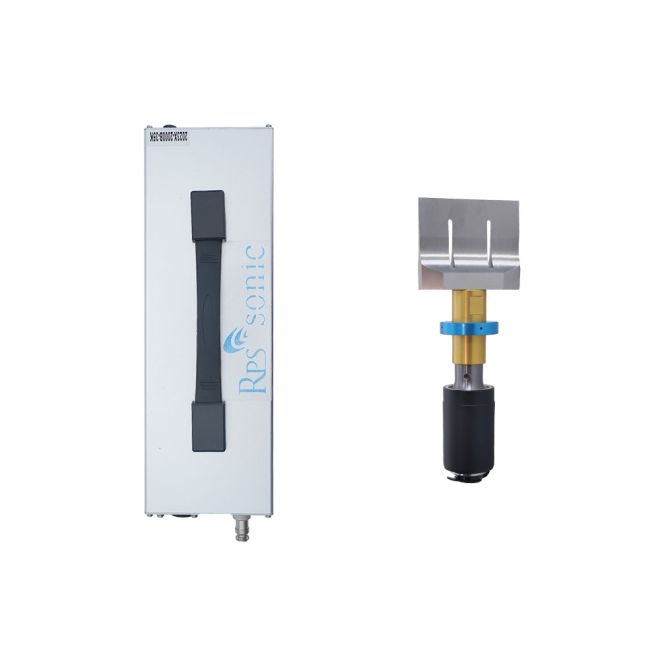
Table of Contents