



In the processing of rubber products, traditional cutting methods (such as mechanical blades, lasers or water jets) often face problems such as material deformation, residual burrs, and rapid tool wear. Especially for highly elastic and viscous rubber materials, accurate cutting is even more difficult. The emergence of ultrasonic cutting technology, with its "soft overcoming hardness" characteristics, is reshaping the efficiency and precision standards of the rubber processing industry.
1. Technical principle: high-frequency vibration achieves "resistance-free cutting"
The core of ultrasonic rubber cutting knife is to convert electrical energy into high-frequency mechanical vibration. Its working principle can be divided into three steps:
1.1 Energy conversion: The ultrasonic generator generates a high-frequency electrical signal of 20-40kHz, and the transducer converts it into mechanical vibration;
1.2 Amplitude amplification: The amplitude transformer amplifies the micron-level vibration to 30-100μm and transmits it to the cutting head;
1.3 Microscopic cutting: The head vibrates at a frequency of tens of thousands of times per second, so that the friction between rubber molecules generates heat and softens the material, achieving a "micro-fusing" effect and greatly reducing cutting resistance.
In this process, the contact time between the tool and the material is extremely short, which not only avoids material adhesion, but also reduces heat accumulation, and perfectly adapts to the physical properties of rubber.
2. Application scenarios: precise empowerment from automobile manufacturing to medical technology
Ultrasonic rubber cutting knives have penetrated into multiple high-end manufacturing fields with their non-contact and low-stress characteristics:
2.1 Automobile industry: cutting sealing strips and tire inner linings, with smooth incisions without burrs to improve sealing;
2.2 Medical consumables: precise cutting of silicone catheters and medical gaskets to eliminate the risk of material contamination;
2.3 Electronic components: processing shockproof rubber pads to avoid tiny cracks caused by traditional knives;
2.4 Environmental recycling: efficient sorting of waste rubber to improve the utilization rate of recycled materials.
Taking a tire company as an example, after using ultrasonic cutting, the product qualification rate increased from 88% to 99%, and the frequency of tool replacement decreased by 70%.
Ultrasonic cutting technology not only solves the historical problem of rubber processing, but also provides a low-carbon and efficient solution for the manufacturing industry through the simple and ingenious design of "high-frequency vibration". With the deepening of Industry 4.0, this technology may lead precision rubber products into the "micron era" and become a key booster for the leap of "China's smart manufacturing" to high-end.

- English
- French
- German
- Portuguese
- Spanish
- Russian
- Japanese
- Korean
- Arabic
- Irish
- Greek
- Turkish
- Italian
- Danish
- Romanian
- Indonesian
- Czech
- Afrikaans
- Swedish
- Polish
- Basque
- Catalan
- Esperanto
- Hindi
- Lao
- Albanian
- Amharic
- Armenian
- Azerbaijani
- Belarusian
- Bengali
- Bosnian
- Bulgarian
- Cebuano
- Chichewa
- Corsican
- Croatian
- Dutch
- Estonian
- Filipino
- Finnish
- Frisian
- Galician
- Georgian
- Gujarati
- Haitian
- Hausa
- Hawaiian
- Hebrew
- Hmong
- Hungarian
- Icelandic
- Igbo
- Javanese
- Kannada
- Kazakh
- Khmer
- Kurdish
- Kyrgyz
- Latin
- Latvian
- Lithuanian
- Lithuanian
- Macedonian
- Malagasy
- Malay
- Malayalam
- Maltese
- Maori
- Marathi
- Mongolian
- Burmese
- Nepali
- Norwegian
- Pashto
- Persian
- Punjabi
- Serbian
- Sesotho
- Sinhala
- Slovak
- Slovenian
- Somali
- Samoan
- Scots Gaelic
- Shona
- Sindhi
- Sundanese
- Swahili
- Tajik
- Tamil
- Telugu
- Thai
- Ukrainian
- Urdu
- Uzbek
- Vietnamese
- Welsh
- Xhosa
- Yiddish
- Yoruba
- Zulu
- Kinyarwanda
- Tatar
- Oriya
- Turkmen
- Uyghur

What's ultrasonic rubber cutting system?
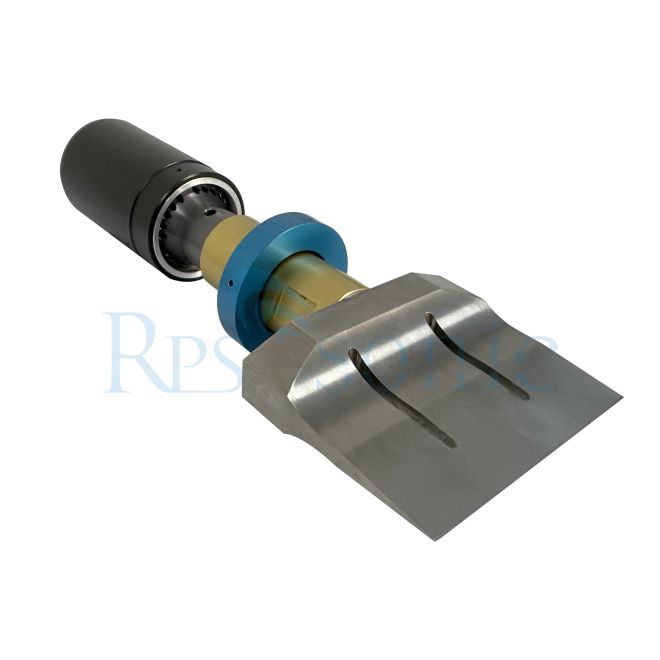
Table of Contents