


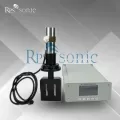
The operating principle of ultrasonic drug extraction equipment is based on the unique physical properties of ultrasound. It primarily involves mechanical vibration, cavitation, and thermal effects. These effects work synergistically to efficiently separate and extract active pharmaceutical ingredients from raw materials.
●Mechanical vibration: When ultrasound propagates through a liquid medium, it induces high-frequency mechanical vibrations in the particles of the medium. This vibration, like a vigorous dance at the
microscopic level,causes the molecules within the raw pharmaceutical ingredients to vibrate rapidly. For example, in traditional Chinese medicine (TCM), the active ingredient molecules within its cells, under the
influence of these high- frequency vibrations, significantly increase the frequency of collisions with molecules in the surrounding environment. Through these frequent collisions and vibrations, the active
ingredients, once tightly bound within the cells, gradually break free from the constraints of the cellular structure and begin to diffuse into the surrounding solvent. It's like a small ball, once tightly confined to a
small room, being forced by intense vibrations to break through the confines of the door and enter a wider space.
●Cavitation effect: When ultrasound propagates, it creates tiny bubbles in the liquid. These bubbles undergo a rapid growth and collapse process under the influence of ultrasound. This is the cavitation effect. The
moment bubbles collapse, they generate localized high pressures reaching thousands of atmospheres and transient high temperatures, accompanied by intense shock waves and micro-jets. This powerful energy acts
on the pharmaceutical raw material, like tiny bombs exploding around the cells. For botanicals, the powerful impact of cavitation rapidly destroys the cell walls, allowing the active ingredients previously enclosed
within the cells to be rapidly released into the solvent. For example, when extracting flavonoids, cavitation ruptures plant cells, allowing the flavonoids to be more efficiently dissolved, significantly improving
extraction efficiency.
●Thermal Effect: While not the primary effect of ultrasound, it does play a supporting role in the extraction process. Ultrasonic vibrations create friction between the molecules of the medium, generating heat. However,
the temperature rise caused by this thermal effect is relatively mild. Compared to high-temperature extraction methods such as traditional decoction, the temperature rise during ultrasonic extraction is generally within
an acceptable range. This is crucial for heat-sensitive active ingredients, preventing degradation or decreased activity due to high temperatures. For example, when extracting volatile essential oils, mild
temperatures better preserve their aroma and activity.
Advantages are obvious: compared with traditional extraction technology
1.Efficiency Leap: Significantly Reduced Time
Traditional drug extraction methods, such as decoction and reflux extraction, often require a long time to extract the active ingredients. For example, decoction can take hours or even longer to extract ginsenosides from ginseng. For example, traditional decoction typically requires 3-5 hours to dissolve some of the ginsenosides. Ultrasonic drug extraction equipment, however, leverages the cavitation and mechanical effects of ultrasound to rapidly disrupt the cellular structure of the medicinal material, accelerating the dissolution of the active ingredients. Experimental data shows that ultrasonic extraction equipment can achieve the same or even surpass the extraction results of traditional decoction methods for ginsenosides in just 30-60 minutes, significantly reducing extraction time by several times. This time advantage is particularly significant in large-scale production, significantly improving production efficiency and meeting the rapidly growing market demand for drugs.
2. Enhanced Quality: Integrity Preserved
Traditional high-temperature extraction methods, such as decoction and reflux, typically require high temperatures during the heating process, posing a significant challenge to many heat-sensitive active pharmaceutical ingredients. For example, some volatile pharmaceutical ingredients, such as mint and patchouli, experience significant loss of these volatile components at high temperatures, resulting in a decrease in active ingredient content and quality. Ultrasonic drug extraction equipment, while generating some heat during the extraction process, is relatively mild, limiting the overall temperature rise and generally allowing for a lower temperature range. Research has shown that ultrasonic extraction can be performed at temperatures as low as 40-50°C for the extraction of volatile oils from mint, while traditional steam distillation methods often require temperatures around 100°C. At these low temperatures, key components in mint volatile oils, such as menthol and menthone, are well preserved, with the loss of active ingredients limited to less than 5%, compared to 20-30% with traditional methods. This ensures the quality and activity of the extract, further enhancing the efficacy of the drug.
3. Operational Innovation: Simplicity and Intelligence
Traditional extraction techniques are often complex and require highly skilled and experienced operators. For example, percolation requires precise control of multiple factors, such as the solvent flow rate and the amount of medicinal material loaded. Any inaccuracy can negatively impact the extraction process. Furthermore, traditional methods often rely on manual labor, resulting in high labor intensity and low production efficiency. Ultrasonic drug extraction equipment, on the other hand, is equipped with an advanced automated control system. Operators simply set extraction parameters, such as ultrasonic frequency, power, extraction time, and temperature, on the device's control panel, and the equipment automatically operates according to the pre-set program. Throughout the extraction process, the equipment monitors these parameters in real time and automatically adjusts them based on actual conditions. Some high-end ultrasonic drug extraction equipment also features fault diagnosis and alarm functions. When an abnormality occurs, an alarm is issued immediately, indicating the cause of the problem, making it easier for operators to perform repairs and resolve the issue. This automated and intelligent operation not only reduces the operator's skill requirements and workload, but also improves the stability and consistency of the production process and mitigates the impact of human factors on extraction results.
4. Green Concept: A Win-Win for Environmental Protection and Energy Saving
Traditional drug extraction processes often require the use of large amounts of organic solvents, such as ethanol and methanol, to maximize the extraction yield of active ingredients. These solvents are not only costly but also easily evaporate during use, polluting the environment. Furthermore, the heating process in traditional extraction techniques consumes significant amounts of energy. For example, the decoction method requires continuous heating, which is energy-intensive. Ultrasonic drug extraction equipment uses cavitation and mechanical effects to enhance the penetration of solvents, facilitating the dissolution of active ingredients and thus reducing the amount of organic solvents used. Research has shown that ultrasonic extraction can reduce solvent usage by 30%-50% compared to traditional extraction methods. Furthermore, ultrasonic extraction equipment does not require prolonged high-temperature heating, resulting in relatively low energy consumption. This effectively reduces production costs, energy consumption, and carbon emissions, aligning with current green and environmentally friendly development concepts and providing strong support for the sustainable development of pharmaceutical production.

- English
- French
- German
- Portuguese
- Spanish
- Russian
- Japanese
- Korean
- Arabic
- Irish
- Greek
- Turkish
- Italian
- Danish
- Romanian
- Indonesian
- Czech
- Afrikaans
- Swedish
- Polish
- Basque
- Catalan
- Esperanto
- Hindi
- Lao
- Albanian
- Amharic
- Armenian
- Azerbaijani
- Belarusian
- Bengali
- Bosnian
- Bulgarian
- Cebuano
- Chichewa
- Corsican
- Croatian
- Dutch
- Estonian
- Filipino
- Finnish
- Frisian
- Galician
- Georgian
- Gujarati
- Haitian
- Hausa
- Hawaiian
- Hebrew
- Hmong
- Hungarian
- Icelandic
- Igbo
- Javanese
- Kannada
- Kazakh
- Khmer
- Kurdish
- Kyrgyz
- Latin
- Latvian
- Lithuanian
- Lithuanian
- Macedonian
- Malagasy
- Malay
- Malayalam
- Maltese
- Maori
- Marathi
- Mongolian
- Burmese
- Nepali
- Norwegian
- Pashto
- Persian
- Punjabi
- Serbian
- Sesotho
- Sinhala
- Slovak
- Slovenian
- Somali
- Samoan
- Scots Gaelic
- Shona
- Sindhi
- Sundanese
- Swahili
- Tajik
- Tamil
- Telugu
- Thai
- Ukrainian
- Urdu
- Uzbek
- Vietnamese
- Welsh
- Xhosa
- Yiddish
- Yoruba
- Zulu
- Kinyarwanda
- Tatar
- Oriya
- Turkmen
- Uyghur

Ultrasonic drug extraction equipment: opening a new era of drug extraction

Table of Contents