


In the connection and protection process of electronic components, tinning technology is a key means to achieve conductivity and corrosion resistance on metal surfaces. Ultrasonic tinning equipment, as an upgraded version of the traditional tinning process, has significantly improved the coating quality and production efficiency with the empowerment of ultrasonic technology. It has become one of the core equipment in the fields of consumer electronics, automotive electronics, industrial control, etc.
Advantages
◆Environmentally friendly soldering solution
1. No chemicals harmful to the environment or human health are emitted: No flux or flux cleaning process is required.
2. No water or air pollution: No flux is used during soldering, resulting in no harmful gas emissions or industrial wastewater.
◆Perfect soldering
1. Using flux during soldering can create tiny bubbles within the solder. Over time, these bubbles can lead to cracks and other solder quality issues. However, ultrasonic soldering uses no flux. The vibration energy allows the solder to penetrate very small gaps, eliminating the formation of tiny bubbles within the solder and achieving a perfect weld (sealed).
2. Flux-free soldering -> No solder joint defects caused by strong flux corrosion.
3. Ultrasonic vibrations allow the solder to penetrate tiny gaps, resulting in strong and reliable joints.
◆Save production costs and improve production efficiency
1. Using aluminum wire instead of expensive copper wire significantly reduces costs (up to 80%). 2. Since flux-free soldering eliminates the need for pretreatment and flux-related processes, this method reduces equipment and production costs, simplifies the soldering process, and improves production efficiency.
◆Supports the Development of New Materials and New Products
1. It successfully welds difficult-to-weld materials such as glass, ceramics, and aluminum non-metallic materials that are difficult to weld with traditional welding methods, contributing to the development of new materials.
2. Suitable for solar cell glass, semiconductors, and ceramic heaters, it facilitates dual-material welding (aluminum-copper, copper-glass, aluminum-glass, and aluminum-ceramic), facilitating new product development.

- English
- French
- German
- Portuguese
- Spanish
- Russian
- Japanese
- Korean
- Arabic
- Irish
- Greek
- Turkish
- Italian
- Danish
- Romanian
- Indonesian
- Czech
- Afrikaans
- Swedish
- Polish
- Basque
- Catalan
- Esperanto
- Hindi
- Lao
- Albanian
- Amharic
- Armenian
- Azerbaijani
- Belarusian
- Bengali
- Bosnian
- Bulgarian
- Cebuano
- Chichewa
- Corsican
- Croatian
- Dutch
- Estonian
- Filipino
- Finnish
- Frisian
- Galician
- Georgian
- Gujarati
- Haitian
- Hausa
- Hawaiian
- Hebrew
- Hmong
- Hungarian
- Icelandic
- Igbo
- Javanese
- Kannada
- Kazakh
- Khmer
- Kurdish
- Kyrgyz
- Latin
- Latvian
- Lithuanian
- Lithuanian
- Macedonian
- Malagasy
- Malay
- Malayalam
- Maltese
- Maori
- Marathi
- Mongolian
- Burmese
- Nepali
- Norwegian
- Pashto
- Persian
- Punjabi
- Serbian
- Sesotho
- Sinhala
- Slovak
- Slovenian
- Somali
- Samoan
- Scots Gaelic
- Shona
- Sindhi
- Sundanese
- Swahili
- Tajik
- Tamil
- Telugu
- Thai
- Ukrainian
- Urdu
- Uzbek
- Vietnamese
- Welsh
- Xhosa
- Yiddish
- Yoruba
- Zulu
- Kinyarwanda
- Tatar
- Oriya
- Turkmen
- Uyghur

Ultrasonic tinning equipment: efficient plating solution in electronics manufacturing
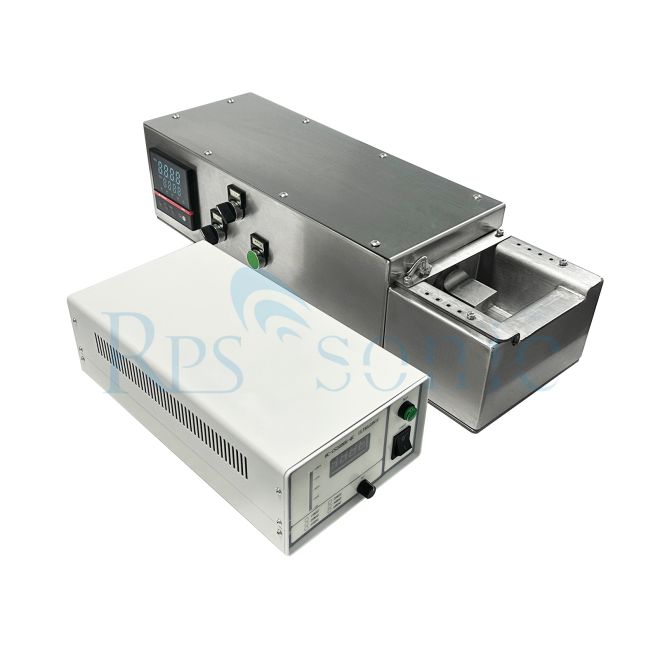
Table of Contents