


This technology uses ultrasonic vibration to atomize the catalyst slurry into tiny droplets, which are then precisely deposited onto the substrate surface to form a uniform, high-performance electrode coating.
I. Technical Principle
The core process of ultrasonic atomization spraying of electrode catalyst slurry can be divided into two stages: atomization and deposition.
1.1 Ultrasonic Atomization Stage
The catalyst slurry (consisting of catalyst particles, solvent, binder, etc.) is delivered to the ultrasonic atomization nozzle through a feed system. The ultrasonic transducer (typically a piezoelectric ceramic material) within the nozzle generates high-frequency mechanical vibrations (typically 10-180 kHz) when excited by a high-frequency electrical signal. This vibrational energy is transferred to the slurry surface, causing the slurry to overcome surface tension and form tiny droplets (as small as 1-50 μm in diameter), forming a uniform atomization cone.
1.2 Deposition Stage
The atomized droplets, driven by a carrier gas (such as compressed air or nitrogen), are sprayed at a controlled speed onto the surface of the substrate to be coated (such as a proton exchange membrane, metal current collector, ceramic substrate, etc.). The droplets spread across the substrate surface, and the solvent evaporates, ultimately forming a continuous and uniform catalyst coating.
II. Core Advantages
Compared to traditional coating technologies (such as doctor blade coating, screen printing, and air spray), ultrasonic atomization offers the following significant advantages:
● High coating uniformity: Ultrasonic atomization produces a narrow and consistent droplet size distribution. Combined with precision motion control systems (such as robotic arms and XY stages), coating thickness deviations of ≤±5% can be achieved, eliminating issues such as edge buildup and pinholes associated with traditional processes.
● High material utilization: Atomized droplets are highly directional, eliminating the "overspray" waste associated with air spray. Material utilization rates can reach 80%-95% (compared to 30%-50% for traditional air spray), making it particularly suitable for cost-reduction needs in precious metal catalysts (such as Pt/C). ● Excellent controllability of coating thickness: By adjusting parameters such as atomization power, feed rate, nozzle movement speed, and spraying times, coating thickness can be precisely adjusted from the nanometer level (e.g., 100nm) to the micrometer level (e.g., 50μm), meeting the performance requirements of different electrodes (e.g., the catalyst layer thickness of a proton exchange membrane fuel cell is typically 5-20μm).
● Strong substrate compatibility: The atomization process eliminates high-pressure airflow impact, allowing for application on flexible substrates (e.g., polymer membranes), brittle substrates (e.g., ceramic wafers), or sensitive substrates, avoiding deformation or damage.
● Environmentally friendly process: No volatile diluents are required (or minimal amounts are used). Combined with a sealed spray chamber and exhaust gas recovery system, this effectively reduces VOC emissions, meeting green manufacturing standards.
III. Typical Application Scenarios
Ultrasonic atomization spraying of electrode catalyst slurries has achieved industrial application in multiple fields, including the following:
● Proton Exchange Membrane Fuel Cells (PEMFCs): Used to prepare the cathode and anode catalyst layers. Catalyst slurries such as Pt/C and Pt alloys are evenly coated on the surface of the proton exchange membrane or gas diffusion layer to enhance catalytic reaction activity and gas diffusion performance.
● Water Electrolysis Electrodes: Coating oxygen evolution catalysts such as IrO₂ and RuO₂, or Pt-based hydrogen evolution catalysts, onto substrates such as titanium mesh and carbon paper to form a highly active and stable catalytic coating.
● Lithium-ion Battery Electrodes: Used to coat the positive electrode (e.g., LiCoO₂, LiFePO₄) or negative electrode (e.g., graphite) with catalyst/conductive agent coatings, improving electrode conductivity and ion diffusion capacity.
● Sensor Electrodes: Preparing sensitive electrode coatings (e.g., the catalytically active layer of a gas sensor) on ceramic or silicon substrates to enhance sensor response speed and detection accuracy. ●Solar cells: used for coating the electron transport layer or hole transport layer of perovskite solar cells, and preparing the catalytic counter electrode of dye-sensitized cells.

- English
- French
- German
- Portuguese
- Spanish
- Russian
- Japanese
- Korean
- Arabic
- Irish
- Greek
- Turkish
- Italian
- Danish
- Romanian
- Indonesian
- Czech
- Afrikaans
- Swedish
- Polish
- Basque
- Catalan
- Esperanto
- Hindi
- Lao
- Albanian
- Amharic
- Armenian
- Azerbaijani
- Belarusian
- Bengali
- Bosnian
- Bulgarian
- Cebuano
- Chichewa
- Corsican
- Croatian
- Dutch
- Estonian
- Filipino
- Finnish
- Frisian
- Galician
- Georgian
- Gujarati
- Haitian
- Hausa
- Hawaiian
- Hebrew
- Hmong
- Hungarian
- Icelandic
- Igbo
- Javanese
- Kannada
- Kazakh
- Khmer
- Kurdish
- Kyrgyz
- Latin
- Latvian
- Lithuanian
- Lithuanian
- Macedonian
- Malagasy
- Malay
- Malayalam
- Maltese
- Maori
- Marathi
- Mongolian
- Burmese
- Nepali
- Norwegian
- Pashto
- Persian
- Punjabi
- Serbian
- Sesotho
- Sinhala
- Slovak
- Slovenian
- Somali
- Samoan
- Scots Gaelic
- Shona
- Sindhi
- Sundanese
- Swahili
- Tajik
- Tamil
- Telugu
- Thai
- Ukrainian
- Urdu
- Uzbek
- Vietnamese
- Welsh
- Xhosa
- Yiddish
- Yoruba
- Zulu
- Kinyarwanda
- Tatar
- Oriya
- Turkmen
- Uyghur

How to use ultrasonic atomization to spray electrode catalyst slurry?
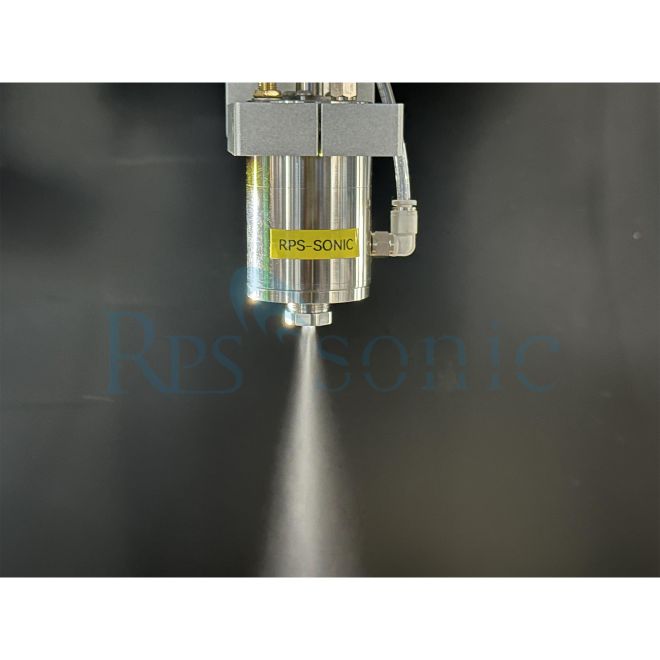
Table of Contents