


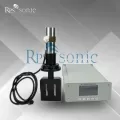
Recently, with the acceleration of the intelligent and green transformation of the manufacturing industry, ultrasonic atomization spraying technology has achieved breakthrough applications in new energy, electronics, biomedicine and other fields with its high efficiency, precision and environmental protection, becoming a "dark horse" in the field of industrial spraying. Relevant companies and research institutions said that this technology is expected to reshape the traditional spraying process and inject new impetus into industrial upgrading.
1. Technological breakthrough: from laboratory to large-scale application
Ultrasonic atomization spray equipment converts liquid into micron-level uniform particles through high-frequency vibration. Combined with a precise control system, it can achieve ultra-thin uniform spraying of nano- to micron-level coatings. Compared with traditional high-pressure spraying or spin coating processes, it has significant advantages:
1.1 The material utilization rate is increased by more than 30%, reducing the waste of raw materials;
1.2 The spraying accuracy reaches the micron level, avoiding the "splashing" problem;
1.3 Zero VOCs emissions, in line with green manufacturing standards;
1.4 Adapt to complex surfaces, including curved surfaces, porous materials, etc.
2. Cross-border application: New energy and electronics fields become the main battlefield
2.1 New energy battery manufacturing
In the lithium battery industry, ultrasonic spraying is used for electrode material coating, and the thickness error is controlled within ±1μm, which significantly improves the battery energy density and consistency. A power battery company revealed that after adopting this technology, the pole piece qualification rate increased from 92% to 98%.
2.2 Photovoltaic industry upgrade
In the production of perovskite solar cells, ultrasonic spraying achieves high uniformity deposition of ultra-thin functional layers (such as electron transport layers), driving mass production efficiency to exceed 18%.
2.3 Flexible electronics breakthrough
In the manufacturing of precision devices such as OLED display panels and sensors, this technology solves the problem of film cracking caused by traditional processes, and the yield rate is increased by more than 15%.
3. Emerging scenarios: Biomedicine and environmentally friendly materials open up a blue ocean
● Medical device coatings: used for drug-eluting stents, antibacterial coatings, etc., to achieve efficient loading of active ingredients;
● Bioprinting precursor spraying: assisting 3D bioprinting to accurately construct cell scaffolds;
● Degradable material processing: spraying barrier layers on the surface of environmentally friendly materials such as PLA to extend the service life of the product.

- English
- French
- German
- Portuguese
- Spanish
- Russian
- Japanese
- Korean
- Arabic
- Irish
- Greek
- Turkish
- Italian
- Danish
- Romanian
- Indonesian
- Czech
- Afrikaans
- Swedish
- Polish
- Basque
- Catalan
- Esperanto
- Hindi
- Lao
- Albanian
- Amharic
- Armenian
- Azerbaijani
- Belarusian
- Bengali
- Bosnian
- Bulgarian
- Cebuano
- Chichewa
- Corsican
- Croatian
- Dutch
- Estonian
- Filipino
- Finnish
- Frisian
- Galician
- Georgian
- Gujarati
- Haitian
- Hausa
- Hawaiian
- Hebrew
- Hmong
- Hungarian
- Icelandic
- Igbo
- Javanese
- Kannada
- Kazakh
- Khmer
- Kurdish
- Kyrgyz
- Latin
- Latvian
- Lithuanian
- Lithuanian
- Macedonian
- Malagasy
- Malay
- Malayalam
- Maltese
- Maori
- Marathi
- Mongolian
- Burmese
- Nepali
- Norwegian
- Pashto
- Persian
- Punjabi
- Serbian
- Sesotho
- Sinhala
- Slovak
- Slovenian
- Somali
- Samoan
- Scots Gaelic
- Shona
- Sindhi
- Sundanese
- Swahili
- Tajik
- Tamil
- Telugu
- Thai
- Ukrainian
- Urdu
- Uzbek
- Vietnamese
- Welsh
- Xhosa
- Yiddish
- Yoruba
- Zulu
- Kinyarwanda
- Tatar
- Oriya
- Turkmen
- Uyghur

Ultrasonic atomization spraying technology promotes efficient and green development
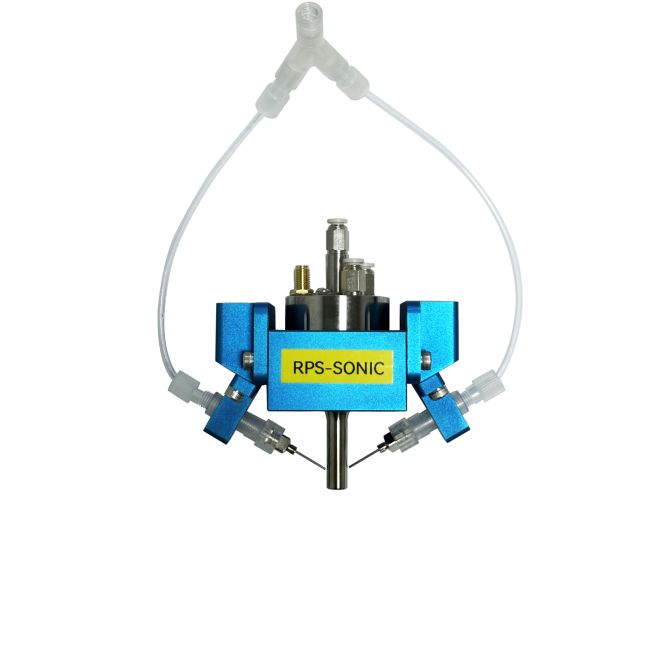
Table of Contents