



The core working logic of an ultrasonic tinning machine is the ultrasonic cavitation effect. The entire process is a physical process, free from chemical reactions and pollution, with a clear principle and high efficiency and stability. During operation, the built-in ultrasonic transducer generates high-frequency mechanical vibrations of 20kHz-40kHz, which are transmitted to the molten solder through the solder bath.
These high-frequency vibrations create countless tiny vacuum bubbles within the molten solder. These bubbles continuously generate, expand, and collapse instantaneously, producing powerful microscopic shock waves and localized impact forces. This impact force can precisely peel off and pulverize oxide films, oil stains, and dust impurities on the workpiece surface, thoroughly removing media that hinder solder wetting. Simultaneously, the continuous ultrasonic vibrations disturb the molten solder, eliminating bubbles and voids in the solder layer, allowing the solder to fully and evenly adhere to the substrate surface, achieving a high-strength metallurgical bond. This fundamentally solves the problems of poor soldering, incomplete plating, and uneven plating in traditional tinning. The entire process requires no flux; cleaning, wetting, and tinning are completed solely through physical action.
Core Structure of the Equipment
The ultrasonic soldering machine boasts a compact and mature modular design, comprised of four core systems. These modules work collaboratively to ensure stable and high-precision operation:
1. Ultrasonic Vibration System
Comprising a transducer, vibrating plate, and ultrasonic generator, this is the core power module. The generator outputs a high-frequency electrical signal, which is converted into mechanical vibration by the transducer and transmitted to the molten solder. This provides stable energy output for the cavitation effect, with precise and controllable vibration frequency to meet the processing needs of various precision workpieces.
2. Constant Temperature Solder Melting System
Equipped with an intelligent temperature control module and a high-temperature resistant solder bath, this system precisely regulates the molten solder temperature, maintaining it stably within the optimal process range of 300-400℃. This ensures complete solder melting while preventing high-temperature damage to the precision workpiece substrate. Temperature control accuracy is high, and temperature fluctuations are minimal.
3. Intelligent Control System
Integrated with a touch-screen control panel, this system supports customizable adjustments to soldering time, vibration intensity, and temperature parameters. It features multiple protection functions, including high-temperature overload, overload vibration, and short-circuit protection. The equipment operates safely and stably, is easy to use, and is suitable for both mass production and small-batch precision machining.
4. Body Support System
The machine body is made of corrosion-resistant and high-temperature resistant metal, with a stable structure. The modular disassembly and assembly design facilitates equipment maintenance, cleaning and parts replacement. It can be adapted for embedded installation on production lines and use as an independent workbench.
Main Application Scenarios
With its superior processing performance, ultrasonic tinning machines have been widely adopted in various precision manufacturing industries. Core applications include:
- Electronics and Electrical Appliances Industry: Tinning of precision electronic components such as enameled wires, inductors, transformers, terminals, connectors, and micro-circuit boards; a core piece of equipment for pre-processing electronic components.
- Precision Hardware Industry: Tinning for corrosion protection of stainless steel, copper-aluminum alloys, precision stamped parts, and micro-metal components, improving conductivity and corrosion resistance.
- New Energy Industry: Tinning of lithium battery electrodes, new energy wiring harnesses, and precision conductive accessories, ensuring conductivity stability and product safety.
- Aerospace and Military Manufacturing: High-precision tinning of high-end precision metal components and special material parts, meeting military and aerospace-grade high-quality processing standards.
- Scientific Research and New Materials Field: Welding pre-treatment and tinning experiments for new alloys and composite metal materials, adapting to diverse and customized precision processing needs.

- English
- French
- German
- Portuguese
- Spanish
- Russian
- Japanese
- Korean
- Arabic
- Irish
- Greek
- Turkish
- Italian
- Danish
- Romanian
- Indonesian
- Czech
- Afrikaans
- Swedish
- Polish
- Basque
- Catalan
- Esperanto
- Hindi
- Lao
- Albanian
- Amharic
- Armenian
- Azerbaijani
- Belarusian
- Bengali
- Bosnian
- Bulgarian
- Cebuano
- Chichewa
- Corsican
- Croatian
- Dutch
- Estonian
- Filipino
- Finnish
- Frisian
- Galician
- Georgian
- Gujarati
- Haitian
- Hausa
- Hawaiian
- Hebrew
- Hmong
- Hungarian
- Icelandic
- Igbo
- Javanese
- Kannada
- Kazakh
- Khmer
- Kurdish
- Kyrgyz
- Latin
- Latvian
- Lithuanian
- Lithuanian
- Macedonian
- Malagasy
- Malay
- Malayalam
- Maltese
- Maori
- Marathi
- Mongolian
- Burmese
- Nepali
- Norwegian
- Pashto
- Persian
- Punjabi
- Serbian
- Sesotho
- Sinhala
- Slovak
- Slovenian
- Somali
- Samoan
- Scots Gaelic
- Shona
- Sindhi
- Sundanese
- Swahili
- Tajik
- Tamil
- Telugu
- Thai
- Ukrainian
- Urdu
- Uzbek
- Vietnamese
- Welsh
- Xhosa
- Yiddish
- Yoruba
- Zulu
- Kinyarwanda
- Tatar
- Oriya
- Turkmen
- Uyghur

Ultrasonic Tinning Machine: Efficient and Green Precision Welding Equipment
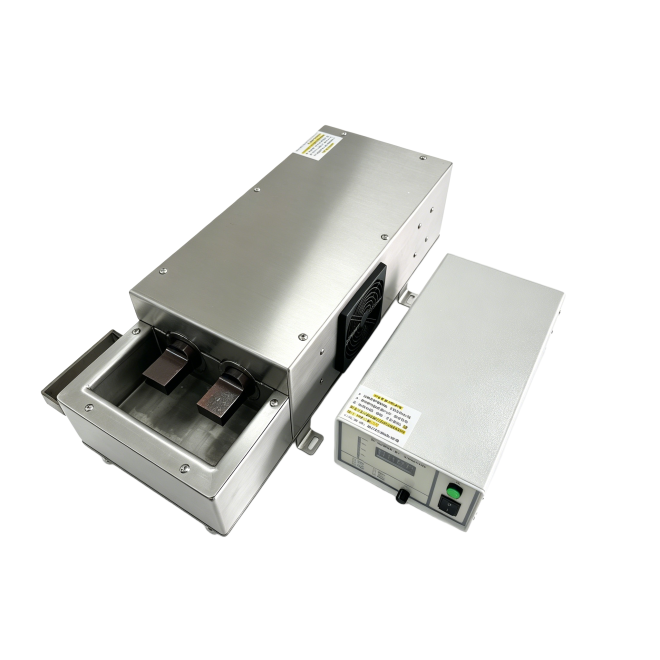
Table of Contents