




Electric lifting 20kHz ultrasonic aluminum melt equipment

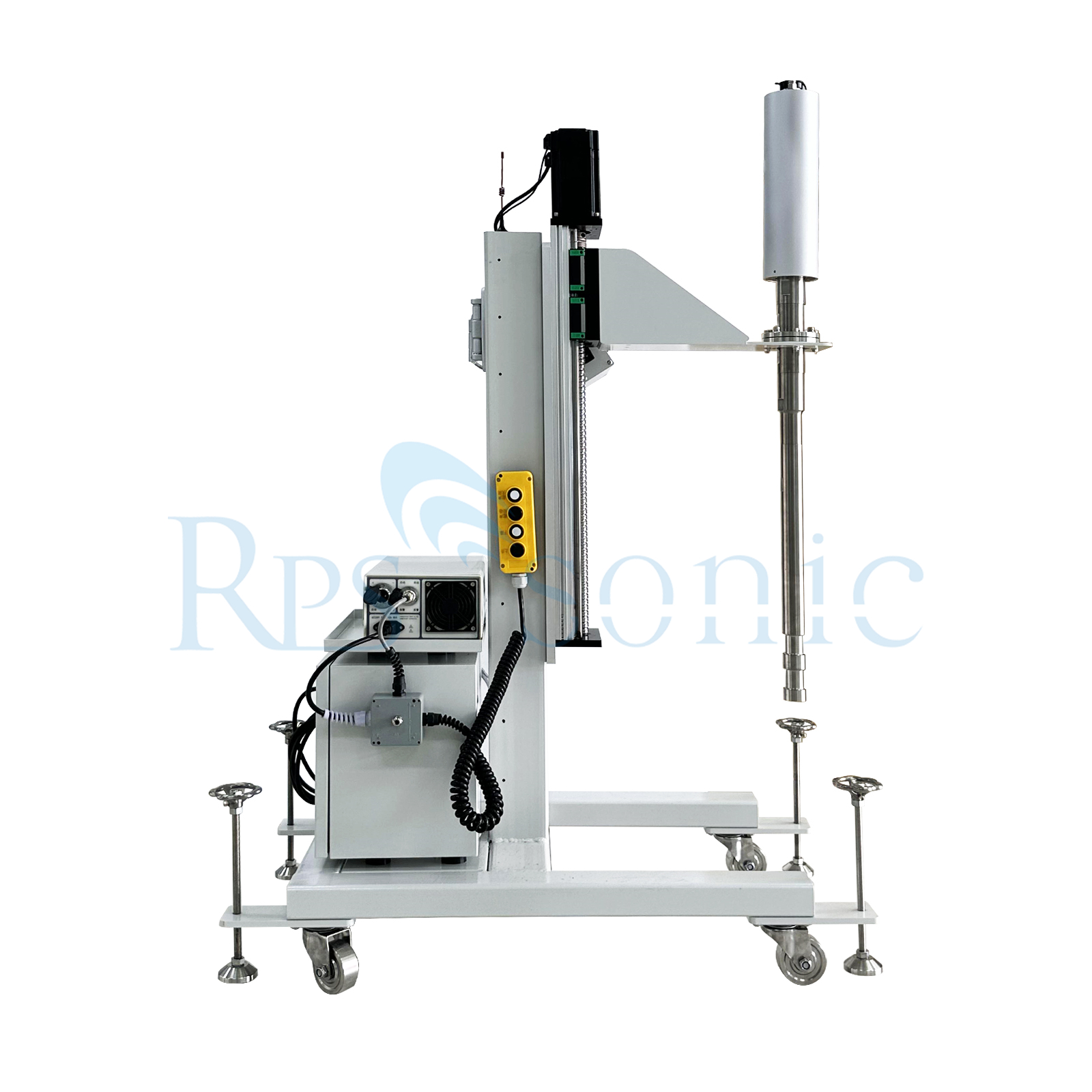

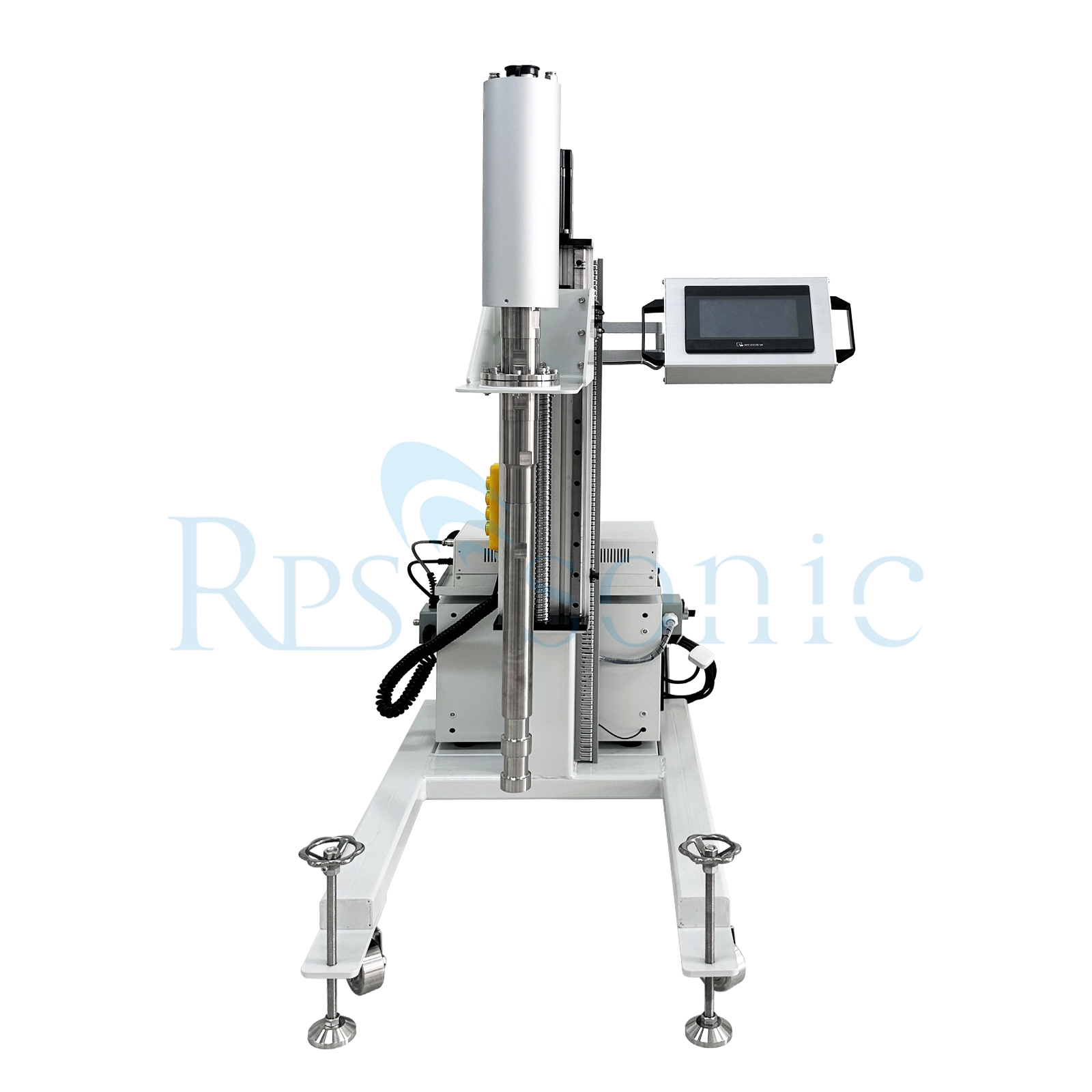


| Frequency | 20kHz |
| Power | 1500watt in max |
| Temperature | 700℃ |
| Amplitude | 20-90% |
| Power supply | 220v/50-60Hz |
| Horn material | Titanium alloy |
| Horn size | 50mm(Customized) |
| Generator | Digital |
| Tank material | SS304 |
1. Basic Principle:
The Effect of Ultrasonic Waves in Aluminum Melts
Ultrasonic waves are mechanical waves with a frequency higher than 20kHz. When they are transmitted into aluminum melts through a probe (or transducer), they will trigger two core effects, thereby changing the microstructure and macroscopic properties of the melts:
1.1 Cavitation Effect
When ultrasonic waves propagate in the melt, they will periodically generate pressure fluctuations: a large number of tiny bubbles (cavitation bubbles) are formed in the low-pressure stage, and the bubbles collapse rapidly in the high-pressure stage. The collapse of bubbles will release huge impact force (local pressure can reach thousands of atmospheres) and high temperature (local temperature can reach thousands of degrees Celsius), and generate strong microjets at the same time.
This impact force can break the oxide film in the aluminum melt (the surface of the aluminum melt is prone to form Al₂O₃ oxide film, which affects the fluidity of the melt);
The high temperature and high pressure environment can promote the escape of gases (such as hydrogen) in the melt, or break coarse inclusions (such as impurity particles).
1.2 Acoustic Streaming Effect
When ultrasonic waves propagate, they drive the melt to produce macroscopic or microscopic flow (acoustic streaming). This flow can accelerate the material exchange inside the melt, making the melt composition and temperature more uniform, and at the same time promoting the separation of bubbles, inclusions and the melt.
2. The main role of ultrasonic treatment of aluminum melt
2.1. Purify the melt and reduce defects
○ Remove gas: The bubbles generated by the cavitation effect can absorb hydrogen in the melt (aluminum melt is easy to absorb hydrogen, and pore defects are formed after solidification), and float to the surface with the bubbles to escape, reducing the porosity of the casting.
○ Remove inclusions: The cavitation impact force can break coarse oxide inclusions (such as Al₂O₃), and the acoustic streaming effect promotes the aggregation and floating of fine inclusions, reducing the inclusion defects in the casting.
2.2. Refine the grains and improve the mechanical properties
When the aluminum melt solidifies, the grain size directly affects the strength, toughness and other properties of the material (coarse grains will lead to decreased performance).
○ The cavitation effect and mechanical vibration of the ultrasonic wave can form a large number of "heterogeneous nucleation cores" (such as broken oxide particles or bubble residues) in the melt, promoting the growth of grains from more cores during solidification, thereby refining the grains.
○ Research shows that the grain size of aluminum alloy castings treated with ultrasound can be refined from hundreds of microns to tens of microns, the tensile strength can be increased by 10%-30%, and the elongation can be increased by more than 20%.
2.3. Improve melt fluidity
The acoustic streaming effect can break the oxide film on the surface of the aluminum melt (the oxide film will increase the melt flow resistance), and at the same time promote the homogenization of the melt, so that the melt can fill the cavity more smoothly during casting (such as die casting, sand casting), reducing defects such as "under-casting".
2.4. Promote uniform distribution of alloy elements
For aluminum alloys (such as Al-Si, Al-Mg alloys), the stirring effect of ultrasound can accelerate the diffusion of alloy elements (such as Si, Mg) in the melt, avoid component segregation (local element concentration is too high or too low), and ensure the consistency of casting performance.
3. Main application scenarios
Aluminum and aluminum alloy casting
Automobile and aerospace fields: used in the production of key castings such as engine cylinders, wheels, wing connectors, etc., to reduce internal defects and improve product reliability.
Aluminum profile processing: improve the fluidity of aluminum melt, make the surface of extruded profiles smoother and have higher dimensional accuracy.
High-purity aluminum preparation
The purification effect of ultrasound can reduce impurities (such as Fe, Cu) and gases in aluminum melt, and is used to prepare high-purity aluminum (purity above 99.99%) to meet the requirements of the electronics industry (such as chip lead frames) for material purity.
New aluminum alloy development
With the ability of ultrasound to refine grains and uniform composition, high-performance aluminum alloys (such as high-strength, high-corrosion-resistant alloys) can be developed to expand the application of aluminum in extreme environments (such as deep sea and high temperature).
-
Big discounting China Industrial Ultrasonic Food Cutter Equipment Ultrasonic Cutting Machine for Food Ultrasonic Dry The Dough Cutter
-
Top Quality China 150W Turkey Hotsale Leather Fabric Acrylic Plastic Wood Plywood MDF Cloth CO2 Laser Engraving Cutting Machine
-

100kHz high frequency Ultrasonic Spray Nozzle Ultrasonic Atomizer Fuel Cell Coating
-
20Khz Ultrasonic food cutting blade for cake bread cutting ultrasonic food cutting
-
60kHz High frequency Ultrasonic spray coating equipment easy to use for thin film spraying
-

20Khz ultrasonic welding horn for ultrasonic welding abs plastic Power outlet