




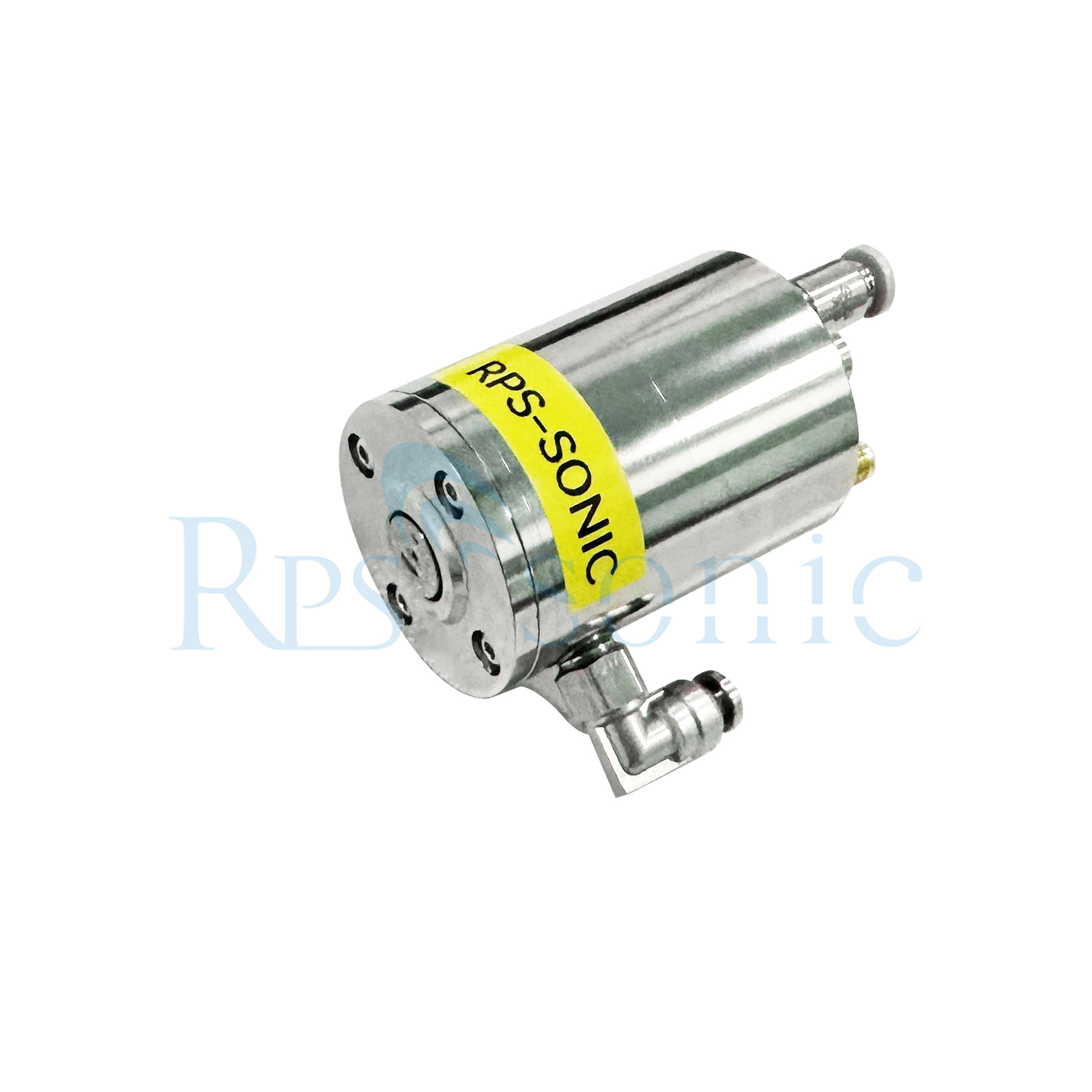
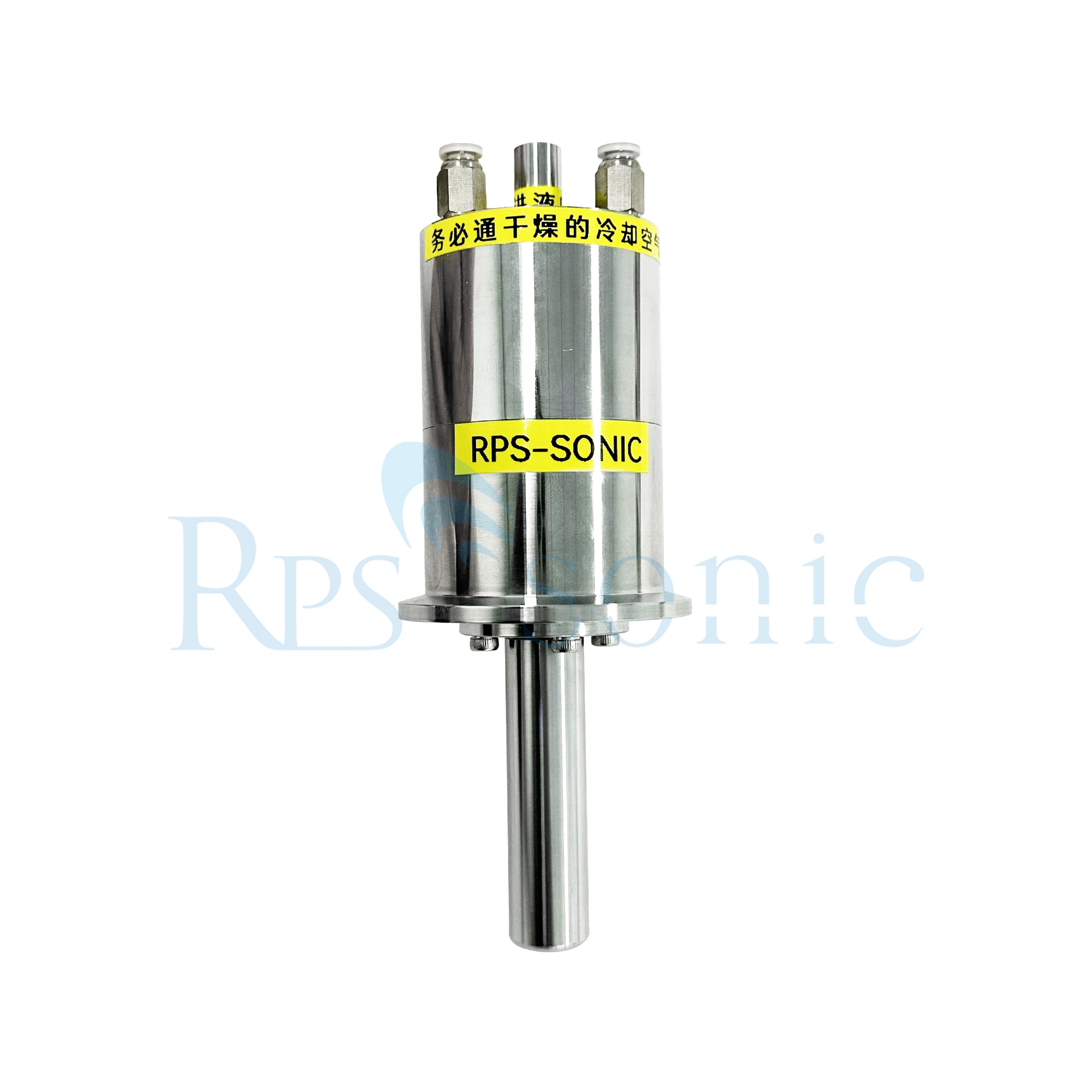
60kHz Ultrasonic Atomizing Spray Nozzle For Carbon Nanotubes coating


60kHz atomization equipment ultrasonic spray coating easy to use
Paramater
|
Frequency (khz) |
40Khz |
60Khz |
100Khz |
120Khz |
|
Generator model |
HF010 |
HF010 |
HF010 |
HF010 |
|
Input Voltage |
220V/50Hz |
220V/50Hz |
220V/50Hz |
220V/50Hz |
|
spray nozzle material |
Titanium alloy |
Titanium alloy |
Titanium alloy |
Titanium alloy |
|
Shell material |
Stainless steel |
Stainless steel |
Stainless steel |
Stainless steel |
|
Communication port with RS485 |
DB15 |
DB15 |
DB15 |
DB15 |
|
coating width |
10~50mm |
10~35mm |
2~10mm |
2~8mm |
|
coating particle size |
15~40um |
10~20um |
5~15um |
1~10um |
|
Material viscosity requirement |
<100cps |
<80cps |
<50cps |
<50cps |
|
solid content |
<10% |
<10% |
<10% |
<10% |
|
Ultrasonic power |
100W ,10~90% adjustable |
100W ,10~90% |
100W ,10~90% |
100W ,10~90% |
|
External fluid viscosity requireme |
n< 100cps |
< 100cps |
< 100cps |
< 100cps |
|
coating flow capacity |
<40ml/min |
<15ml/min |
<7ml/min |
<5ml/min |
|
Hole diameter |
0.3~1.5mm |
0.3~1mm |
0.3~0.8mm |
0.3~0.5mm |
Ultrasonic Spray Nozzles
As their name implies, ultrasonic nozzles employ high frequency sound waves, those beyond the range of human hearing. Disc -shaped ceramic piezoelectric transducers
convert electrical energy into mechanical energy. The transducers receive electrical input in the form of a high frequency signal from a power generator and convert that into
mechanical energy at the same frequency.
The liquid is introduced to the atomizing probe with the use of a small pump or can be gravity feed. For the liquid to atomize, the vibrational amplitude of the atomizing surface must be carefully controlled. Below the so-called critical amplitude, the energy is
insufficient to produce atomized drops. If the amplitude is excessively high, the liquid is literally ripped apart, and large “chunks” of fluid are ejected, a condition known as
cavitation. Only within a narrow band of input power is the amplitude ideal for producing the nozzle’s characteristic fine, low velocity mist.
The fine control of input energy is what distinguishes ultrasonic atomizing nozzles from other ultrasonic devices such as welders, emulsifiers, and ultrasonic cleaners; these other devices rely on cavitation with input power of the order of hundreds to thousands of watts. For ultrasonic atomization, power levels are generally under 15 watts. Adjusting the output level on the power supply controls power.
Since the atomization mechanism relies only on liquid being introduced onto the
atomizing surface, the rate at which liquid is atomized depends solely on the rate at which it is delivered to the surface. Therefore, every ultrasonic nozzle has an inherently wide flow rate range.
Ultrasonic Atomization
The phenomenon referred to as ultrasonic atomization has its roots in late 19th century acoustical physics, notably in the works of the ubiquitous Lord Kelvin.
Simply stated, when a liquid film is placed on a smooth surface that is set into vibrating motion such that the direction of vibration is perpendicular to the surface, the liquid absorbs some of the vibrational energy, which is transformed into standing waves. These waves, known as capillary waves, form a rectangular grid pattern in the liquid on the surface with regularly alternating crests and troughs extending in both directions.
When the amplitude of the underlying vibration is increased, the amplitude of the waves increases correspondingly; that is, the crest become taller and troughs deeper. A critical amplitude is ultimately reached at which the height of the capillary waves exceeds that require to maintain their stability. The result is that the waves collapse and tiny drops of liquid are ejected from the tops of the degenerating waves normal to the atomizing surface. A useful analogy that helps visualize this process comes from our everyday experience. Ocean waves coming into shore go through a transition from stability on the open water to instability as they approach shore. The instability is evident as the waves form foamy breakers.
The reason for instability in this type of wave is that as it approaches shore, the bottom of the wave contacts the ocean floor and is slowed down by frictional forces. The wave top, on the other hand, continues to move ahead unimpeded. The net result is that the wave topples over. In this process of breaking up, a spray of tiny drops is ejected from the wave surface. Although the mechanisms governing the creation of a spray from capillary and ocean waves differ, the results are similar.
- Previous:20Khz 1000w Titanium Ultrasonic food cutting machine for ice cream cake cutting
- Next:20Khz Ultrasonic spot welding machine spot welding gun for ultrasonic plastic tube sealer
Q1.What kind material of the horn?
A. Titanium alloy, we also customized aluminum hom for customer before.
Q2.What’s the time of delivery?
A. For Conventional hom, 3 days, for customized hom 7 work days.
Q3.Does ultrasonic extraction also require the addition of a chemical catalyst?
A. No . but some time need Mechanical stiring.
Q4.Can the device work continously?
A. Yes ,it can work 24hours continously.
Q5.What’s the Processing capacity of one set ultrasonic extraction equipment?
A. Different hor different Processing capacity, for 2000W Nine section whip horm can dealing 2L~10Lmin.
Q6.What’s the warranty of your sonicator equipment?
A. All equipment one year warranty.
-

High frequency 120kHz Ultrasonic spraying coating equipment for Nano film spraying
-

100kHz high frequency Ultrasonic Spray Nozzle Ultrasonic Atomizer Fuel Cell Coating
-

Ultrasonic atomization spraying equipment ultrasonic sprayer for Nano film spraying
-

60kHz Ultrasonic spray coating equipment easy to use for Carbon nanotube spraying
-
50Khz Ultrasonic atomization spraying equipment for Glass spraying with digital generator
-
50khz Ultrasonic Spray Coating Equipment For Thin Film Spraying
-

100K Ultrasonic spray coating nozzle ultrasonic sprayer for spray catalyst ink on PEM membranes
-
40KHz ultrasonic spray nozzle ultrasonic spray coating machine
-

60KHz ultrasonic spray nozzle for coating organic silane
-

Ultrasonic spray coating nozzle with pump for spray catalyst ink on PEM membranes
-

120KHz ultrasonic spray nozzle for coating organic silane
-
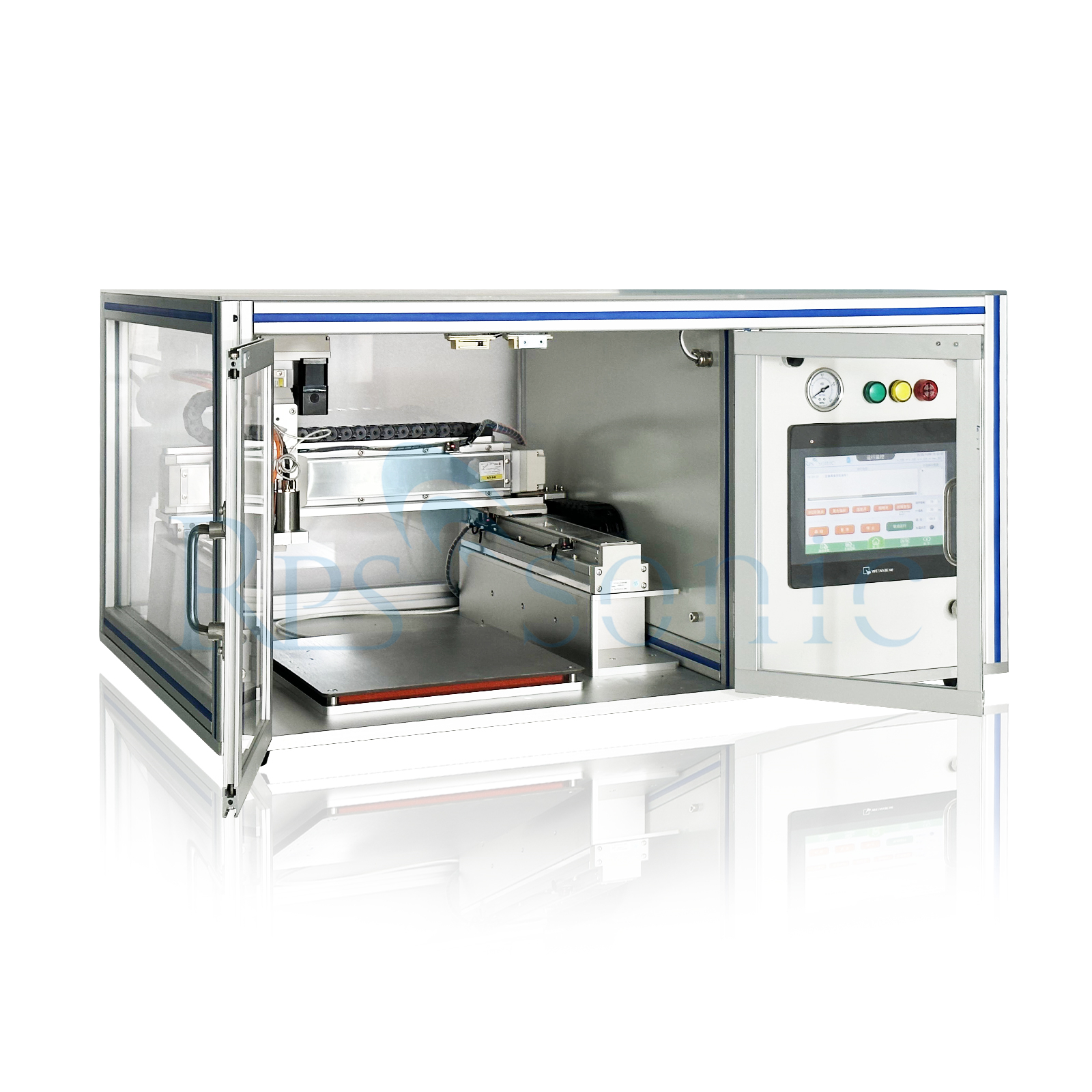
Bench-top automatic ultrasonic spray coating machine atomize liquid into micron size