



In modern filtration equipment manufacturing, the sealing performance of filter elements directly determines product quality and safety. Traditional welding processes often face problems such as loose seals, cracking, and low production efficiency. Ultrasonic filter element welding machines, with their high efficiency, precision, and environmentally friendly advantages, have gradually become core equipment in filter element manufacturing. This article will comprehensively analyze this critical equipment from the perspectives of its operating principle, technical advantages, application scenarios, and selection and maintenance.
I. Working Principle: High-Frequency Vibration Achieves Molecular-Level Welding
The core principle of the ultrasonic filter element welding machine is to utilize high-frequency mechanical vibration energy to generate instantaneous high temperatures in the filter element's welded parts (typically plastic materials such as PP and PET). The specific process can be divided into three stages:
1. Energy Transfer: The device's built-in ultrasonic generator converts electrical energy into a high-frequency electrical signal of 20kHz-40kHz. This signal is then converted to mechanical vibration by a transducer, amplified by a horn, and transmitted to the welding head.
2. Frictional Heating: The welding head applies vibration energy to the filter element's welding contact surface, causing the plastic molecules on the contact surface to rub at high speeds, instantly breaking through their melting point (typically 150°C-250°C) and forming a molten layer.
3. Cooling and Solidification: Under the continuous action of a preset pressure, the molten layer rapidly cools and solidifies, achieving a tight bond between the filter element housing and end cap, and between the filter screen and frame. The weld strength can reach 85%-95% of the original material strength. Compared to traditional hot plate welding and adhesive bonding processes, ultrasonic welding requires no additional consumables and offers an extremely short welding cycle (a single weld takes only 0.5-3 seconds), fundamentally addressing the efficiency bottlenecks and pollution issues associated with traditional processes.
II. Core Technical Advantages: Adapting to the Diverse Requirements of Filter Element Manufacturing
The rapid adoption of ultrasonic filter element welding machines in the filtration industry stems from four core advantages designed specifically for filter element product characteristics:
●Excellent Sealing Performance: During the welding process, plastic molecules are fully fused, forming a seamless seal that can withstand pressure tests of 0.3-1.0 MPa. This fully meets the stringent sealing requirements for filter elements in applications such as water treatment and air purification, effectively preventing "short-circuiting" filtration. Problems;
● Strong Compatibility: Supports welding of a variety of filter element types (such as pleated filters, meltblown filters, and activated carbon filters) and materials (PP, PE, PET, nylon, etc.). By replacing customized welding heads, it can adapt to filter elements with different diameters (20mm-300mm) and heights (50mm-600mm).
● Non-destructive Welding Protection: High-frequency vibration acts only on the welding contact surface, leaving no damage to core components such as the filter screen and adsorbent material inside the filter element. This avoids problems such as filter screen deformation and activated carbon failure caused by traditional hot welding, ensuring filter element filtration performance.
● High Automation Integration: Seamlessly integrates with filter element production lines, equipped with automatic loading, positioning, inspection, and unloading systems, enabling "one person, multiple machines" operation. A single unit can achieve an average daily production capacity of 3,000-8,000 pieces, significantly reducing labor costs and production errors.
III. Typical Application Scenarios: Covering the Filtration Needs of Multiple Industries
Ultrasonic filter element welding machines have been used in numerous fields requiring high-precision filtration. Their stable welding performance provides reliable manufacturing support across various industries:
●Water Treatment Industry: In the manufacture of water purifier filter elements (such as RO reverse osmosis filters and ultrafiltration filters), they are used to weld filter element end caps to housings, ensuring leak-free operation during long-term water flow and preventing secondary contamination.
●Medical Industry: For medical infusion filters and blood filtration filters, the welding process complies with GMP cleanroom standards, resulting in a dust-free and odor-free process. The weld strength meets medical pressure requirements, ensuring medical safety.
●Automotive Industry: They are used for welding automotive air conditioning filters and fuel filters. They can withstand extreme temperatures ranging from -30°C to 120°C, and the welds remain stable even under long-term vibration, extending the service life of automotive parts.
●Industrial Dust Removal: In the manufacture of pulse bag filter elements, ultrasonic welding secures the filter bag to the metal end cap. The seal can withstand high-pressure backwash airflow and reduce dust leakage.

- English
- French
- German
- Portuguese
- Spanish
- Russian
- Japanese
- Korean
- Arabic
- Irish
- Greek
- Turkish
- Italian
- Danish
- Romanian
- Indonesian
- Czech
- Afrikaans
- Swedish
- Polish
- Basque
- Catalan
- Esperanto
- Hindi
- Lao
- Albanian
- Amharic
- Armenian
- Azerbaijani
- Belarusian
- Bengali
- Bosnian
- Bulgarian
- Cebuano
- Chichewa
- Corsican
- Croatian
- Dutch
- Estonian
- Filipino
- Finnish
- Frisian
- Galician
- Georgian
- Gujarati
- Haitian
- Hausa
- Hawaiian
- Hebrew
- Hmong
- Hungarian
- Icelandic
- Igbo
- Javanese
- Kannada
- Kazakh
- Khmer
- Kurdish
- Kyrgyz
- Latin
- Latvian
- Lithuanian
- Lithuanian
- Macedonian
- Malagasy
- Malay
- Malayalam
- Maltese
- Maori
- Marathi
- Mongolian
- Burmese
- Nepali
- Norwegian
- Pashto
- Persian
- Punjabi
- Serbian
- Sesotho
- Sinhala
- Slovak
- Slovenian
- Somali
- Samoan
- Scots Gaelic
- Shona
- Sindhi
- Sundanese
- Swahili
- Tajik
- Tamil
- Telugu
- Thai
- Ukrainian
- Urdu
- Uzbek
- Vietnamese
- Welsh
- Xhosa
- Yiddish
- Yoruba
- Zulu
- Kinyarwanda
- Tatar
- Oriya
- Turkmen
- Uyghur

Ultrasonic filter element welding machine: efficient welding technology helps upgrade the filtration industry
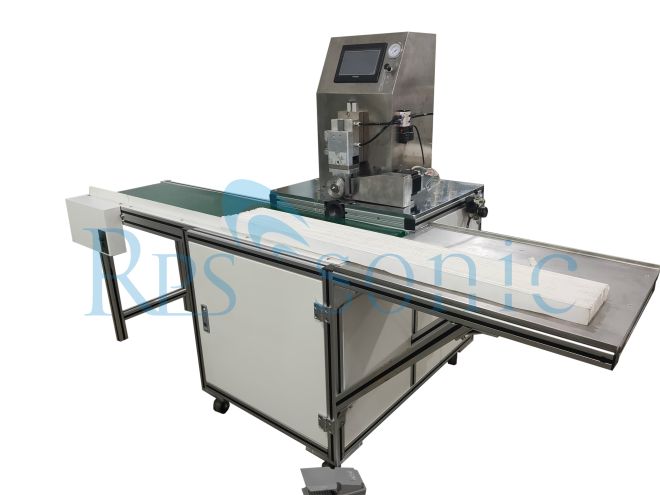
Table of Contents