




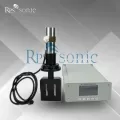
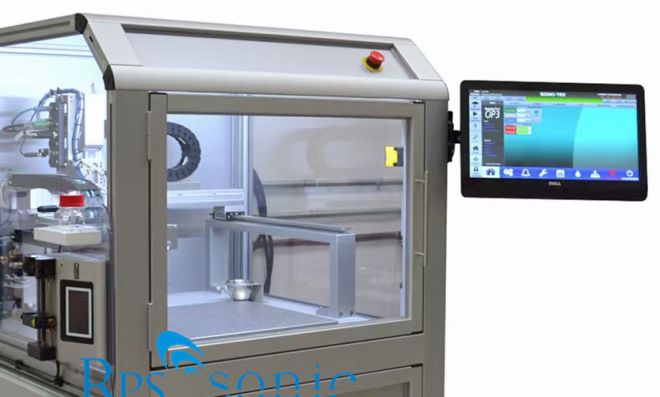
Ultrasonic atomization has fine particles and high surface activity. With appropriate adjustment of the drainage air pressure, it can be well adsorbed on the surface of the sprayed object, with small rebound and splash losses, ensuring the uniformity of the sprayed object and the utilization rate of the material (95%-99%)
An ultrasonic coating nozzle is a specialized device used in various industrial applications for precise and controlled application of coatings, such as paints, adhesives, lubricants, or other liquid substances. It utilizes ultrasonic technology to atomize and disperse the coating material into fine droplets, providing a uniform and even coating on the desired surface.
The working principle of an ultrasonic coating nozzle involves the conversion of high-frequency electrical energy into mechanical vibrations using piezoelectric transducers. These transducers generate ultrasonic waves, typically in the range of 20 kHz to 100 kHz, which are then transferred to the nozzle tip.
As the coating material passes through the nozzle, the ultrasonic vibrations cause the liquid to atomize into a fine mist or spray of droplets. This atomization process significantly increases the surface area of the liquid, enhancing its coating properties. The ultrasonic vibrations also help in breaking down the liquid into smaller droplets, resulting in a more uniform and controlled spray pattern.
Ultrasonic coating nozzles offer several advantages over traditional coating methods:
-
1.Precise and controlled application: The atomization process achieved by ultrasonic vibrations allows for precise control over coating thickness and coverage, reducing wastage and overspray.
-
2.Improved coating quality: The fine droplets produced by the ultrasonic nozzle result in a smoother and more uniform coating, even on complex or uneven surfaces.
-
3.Efficient use of coating material: The atomization process increases the effective coverage of the coating material, maximizing its utilization and reducing overall consumption.
-
4.Reduced environmental impact: The precise application and reduced overspray minimize the release of volatile organic compounds (VOCs) into the environment.
-
5.Versatility: Ultrasonic coating nozzles can be used with a wide range of coating materials, including water-based or solvent-based liquids, adhesives, lubricants, and more.