




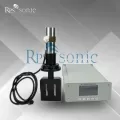
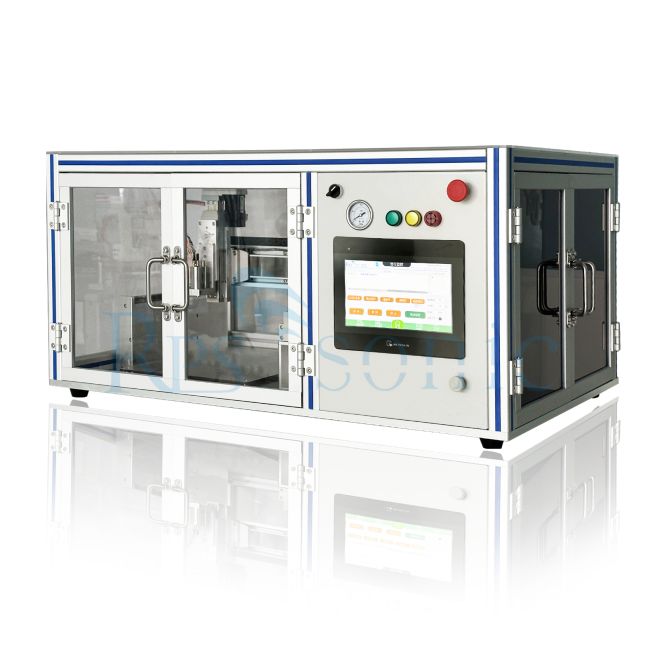
The working core of ultrasonic graphene atomization spraying equipment is based on the cavitation effect of ultrasonic waves and the principle of high-frequency vibration. The equipment is mainly composed of ultrasonic generator, transducer, atomizing nozzle and spraying control system.
When the equipment is started, the ultrasonic generator generates a high-frequency electrical signal, which is transmitted to the transducer. The transducer usually uses piezoelectric ceramic material, which has the characteristic that after receiving the high-frequency electrical signal, it can quickly convert electrical energy into mechanical energy, generating violent vibrations of up to tens of thousands of times per second or even higher frequencies (20KHZ - 120KHZ). This high-frequency vibration is transmitted to the atomizing nozzle. When the graphene solution flows through the nozzle, under the powerful effect of ultrasonic waves, countless tiny cavitation bubbles are generated inside the solution. These bubbles are generated instantly and burst quickly, generating a strong impact force, atomizing the graphene solution into extremely fine and uniform droplets with a diameter of only a few microns (adjustable between 10 - 45μm).
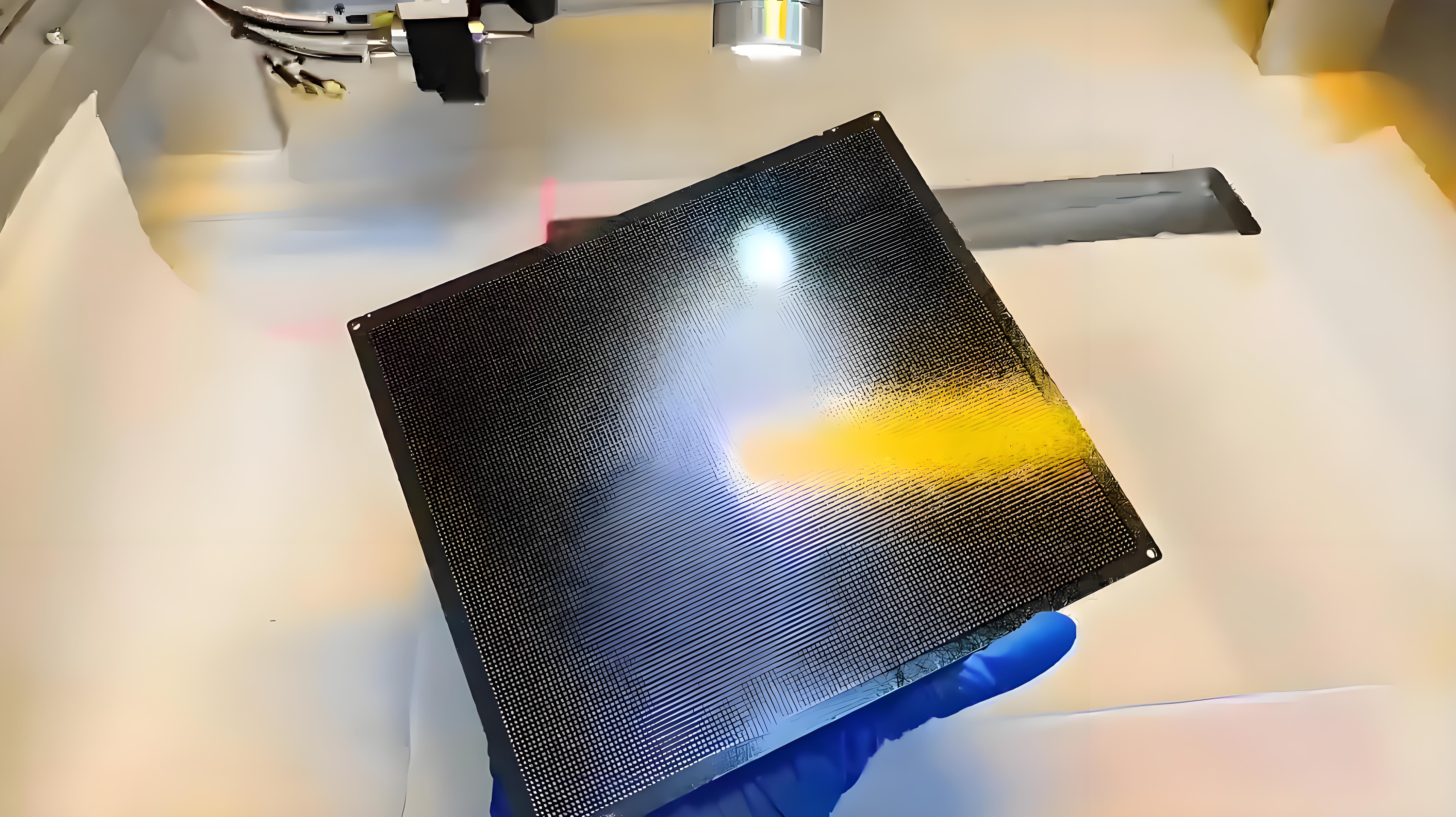
Unlike traditional pressure spraying, which relies on high-pressure gas to blow liquid into droplets, the droplet formation process of ultrasonic atomization spraying is more delicate and controllable. These micron-sized graphene solution droplets are sprayed onto the surface of the substrate material in a stable and uniform manner under the guidance of a precisely adjusted high-speed airflow. After reaching the surface of the substrate, the droplets are evenly deposited and spread, and as the solvent evaporates, a layer of graphene coating with uniform thickness, density and firm adhesion is gradually formed. Through the precise control of key parameters such as ultrasonic frequency, power, solution flow rate and spraying time, the coating thickness can be precisely controlled at the nanometer level, and the error range can be stably controlled at ±3 nanometers, which provides reliable protection for application scenarios with extremely high coating accuracy requirements.
Application fields: Enabling innovation and development in multiple industries
Electronic information field
In the manufacturing of flexible electronic devices, ultrasonic graphene atomization spraying equipment plays a key role. By spraying the graphene solution evenly on a flexible polymer substrate, a transparent conductive film with high conductivity and good flexibility can be prepared. This film is widely used in products such as flexible displays and wearable electronic devices, making it possible to achieve thinness, flexibility and high performance of electronic products. For example, in flexible OLED displays, ultrasonically sprayed graphene conductive films are used as electrodes. Compared with traditional metal electrodes, it can not only improve the light transmittance of the screen and make the display clearer, but also enhance the flexibility of the screen and reduce the risk of damage caused by bending. In integrated circuit manufacturing, graphene coatings can be used to improve the heat dissipation performance of chips. By evenly spraying graphene on the surface of the chip and utilizing its excellent thermal conductivity, the heat generated by the chip can be quickly dissipated, effectively reducing the chip temperature and improving the operating stability and life of the chip.
Energy storage and conversion field
In the field of lithium batteries, ultrasonic spraying of graphene solution on the surface of electrode materials can build an efficient conductive network. This helps to significantly improve the conductivity and electron transfer rate of the electrode, thereby improving the charging and discharging efficiency and cycle life of the lithium battery. Experimental data show that the charging and discharging efficiency of lithium battery electrodes treated with ultrasonic spraying graphene can be increased by 20%-30%, and the battery cycle life can be extended by 30%-50%, which provides important technical support for promoting the development of lithium battery technology and meeting the needs of electric vehicles, energy storage power stations, etc. for high-performance batteries. In the field of solar cells, applying graphene coating to the surface of photovoltaic cells can improve the battery's light absorption efficiency and charge transfer efficiency, thereby improving the photoelectric conversion efficiency of solar cells. At the same time, the high stability and corrosion resistance of graphene can also enhance the service life of solar cells in outdoor environments, reduce maintenance costs, and promote the efficient use and widespread popularization of solar energy.
Material protection and enhancement field
In terms of metal material protection, after mixing graphene with corrosion-resistant coatings, ultrasonic atomization spraying on the metal surface can form a dense protective coating. This coating can not only effectively isolate the metal from the contact with the external corrosive medium, but also utilize the excellent properties of graphene to enhance the mechanical strength and wear resistance of the coating, and significantly improve the corrosion resistance of metal materials in harsh environments. For example, in marine engineering, the use of this graphene coating for metal structural parts such as ships and offshore drilling platforms can greatly extend their service life and reduce maintenance and replacement costs. In the preparation of composite materials, ultrasonic sprayed graphene can be evenly dispersed in the matrix material, play the role of reinforcing phase, and effectively improve the mechanical properties of composite materials. For example, adding ultrasonically sprayed graphene to carbon fiber composite materials used in the aerospace field can improve the strength and stiffness of the material, while reducing the weight of the material, providing material guarantee for the lightweight design and high-performance flight of aerospace vehicles.
Biomedical field
In the biomedical field, ultrasonic graphene atomization spraying equipment has also shown great application potential. For example, in the preparation of drug carriers, a graphene solution containing drugs is sprayed on the surface of nanoparticles through ultrasonic atomization to prepare drug carriers with specific functions. This carrier can achieve precise delivery and sustained release of drugs, improve the therapeutic effect of drugs, and reduce the side effects of drugs on normal tissues. In terms of biosensors, by spraying graphene coating on the sensor surface, the sensitivity and selectivity of the sensor can be improved, and rapid and accurate detection of biological molecules can be achieved, providing a powerful tool for disease diagnosis and biomedical research.