





1. Working principle: high-frequency vibration, fine atomization
Ultrasonic atomization spraying technology uses the high-frequency vibration of ultrasound to convert liquid into tiny droplets, which is completely different from the traditional atomization method that relies on pressure or high-speed movement to crush liquid into small particles. Its core component is the ultrasonic transducer, which can convert electrical energy into high-frequency mechanical vibration. When the liquid is transmitted to the atomization surface through the nozzle, the atomization surface produces high-frequency vibrations under the action of ultrasound, which splits the liquid into uniform and fine droplets. The droplet diameter is usually between 1 and 10 microns, which is finer than the droplets produced by traditional spraying methods. These tiny droplets are evenly deposited on the surface of the substrate under the guidance of the airflow to form a thin and uniform coating.
2. Equipment structure: scientific combination, collaborative operation
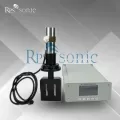
Ultrasonic vibration components: including ultrasonic transducers, horns and tool heads. The transducer converts electrical energy into mechanical energy, the horn amplifies the vibration amplitude, and the tool head acts directly on the liquid to achieve efficient atomization. For example, the disc-shaped ceramic piezoelectric transducer receives high-frequency electrical signals from the ultrasonic generator and converts them into mechanical vibrations of the same frequency. The two titanium cylinders further amplify the movement and increase the vibration amplitude of the atomization surface.
Ultrasonic drive power supply: generates high-power high-frequency AC power to provide stable energy support for ultrasonic vibration components. It usually adopts full digital control and has automatic amplitude control function. It can automatically adjust the driving characteristics according to load changes during operation to ensure stable output amplitude. At the same time, it is also equipped with system protection functions such as high temperature protection and overcurrent protection to ensure the safe operation of the equipment.
Spray head: Made of high-quality titanium material, it has outstanding acoustic properties, high tensile strength and excellent corrosion resistance. The liquid is transmitted to the spray head by its own gravity or a low-pressure pump, and continuous or intermittent atomization is achieved under the action of ultrasound. The design of the spray head is also very critical. Its structure and parameters will affect the size, distribution and shape of the droplets.
3. Technical advantages: accurate and efficient, energy-saving and environmentally friendly
High stability: Made of high-performance titanium alloy and stainless steel, it is highly adaptable and corrosion-resistant. The entire atomization process is pressure-free and noise-free, and there is no problem of nozzle wear and clogging. The uniformity of atomized particles is extremely high, which can ensure a long-term and stable spraying effect.
Energy-saving and environmental protection: The spray impact force is extremely small, and it will not cause liquid splashing, effectively reducing the waste of raw materials and air pollution caused by back-spraying. In addition, it can accurately control the atomization flow rate, and can continue to spray at low flow rate, with low energy consumption, which meets the development requirements of modern industrial energy conservation and environmental protection.
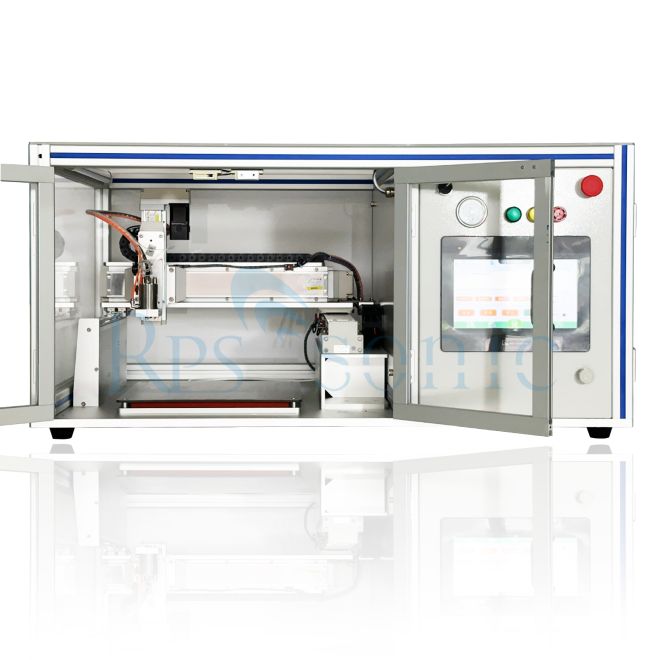
Controllable shaping: The spray shape is very easy to control and shape. By adding auxiliary equipment such as spraying robotic arms, it can meet the spraying needs of workpieces of different shapes and sizes. Moreover, the size of the atomized particles is determined by the ultrasonic frequency and has nothing to do with the nozzle caliber, which makes it more flexible and convenient to adjust the spray parameters.
Easy to maintain: The nozzle can be applied to a variety of solutions, and even sewage, chemical liquids, oil mucus, etc. can be smoothly atomized. The liquid is transmitted by its own gravity or a low-pressure pump. No cooling water is required during atomization. The equipment is simple, the failure rate is low, and there is almost no need for daily maintenance. At the same time, the nozzle maintains ultrasonic oscillation during atomization and is not easy to clog, which greatly reduces maintenance costs and downtime.