


Ultrasonic cell disruptor is an important equipment in modern biotechnology laboratories. It can achieve functions such as cell disruption, material homogenization and nanomaterial dispersion through the cavitation effect generated by high-frequency ultrasound. This article systematically introduces the working principle, core technical parameters, application fields and future development trends of ultrasonic cell disruptor, providing a reference for scientific researchers to select and use this equipment.
1. Working Principle
1.1 Core Physical Mechanism
Ultrasonic cell disruptors mainly rely on the cavitation effect to achieve cell disruption:
The transducer converts electrical energy into high-frequency mechanical vibrations of 20kHz-1MHz
Ultrasonic waves propagate in liquid media, generating alternating high-pressure and low-pressure cycles
Tiny vacuum bubbles (cavitation nuclei) are formed in the low-pressure stage
Bubbles collapse violently in the high-pressure stage, generating local high temperatures (about 5000K), high pressures (about 1000atm) and strong shock waves
2. Basic composition of the instrument
Modern ultrasonic cell disruptors usually contain the following components:
Generator: Provides high-frequency electrical signals (usually 20-40kHz)
Transducer: Piezoelectric ceramic material realizes electrical-mechanical energy conversion
Amplifier: Titanium alloy probe, amplifies vibration amplitude
Cooling system: Prevents sample from overheating (optional)
Control unit: Adjusts power, time, pulse period
3. Application fields
3.1 Life science research
Protein extraction: Escherichia coli inclusion body dissolution efficiency > 90%
DNA/RNA preparation: Used in conjunction with a kit to increase the yield by 30-50%
Subcellular component separation: Complete extraction of organelles such as mitochondria and chloroplasts
Bacterial transformation: Improve the efficiency of exogenous DNA introduction
3.2 Nanomaterials field
Nanoparticle dispersion: Can reduce the particle size of aggregates to <100nm
Graphene exfoliation: Liquid phase ultrasound method to prepare single-layer graphene
Nanoemulsion preparation: Obtain nanoemulsion with uniform particle size distribution
3.3 Industrial applications
Food processing: Juice homogenization, yeast cell wall breaking
Biofuel: Microalgae cell disruption to improve lipid extraction rate
Wastewater treatment: Enhance sludge anaerobic digestion efficiency
Ultrasonic cell disruption technology has unique advantages in maintaining the activity of biomolecules due to its physical mechanism of action and non-contact processing characteristics. With the development of precision medicine and nanomaterials, highly controllable and intelligent ultrasonic processing equipment will become the standard configuration of biological laboratories and industrial production lines. Future research should focus on improving energy transfer efficiency and establishing standardized solutions for complex sample processing.

- English
- French
- German
- Portuguese
- Spanish
- Russian
- Japanese
- Korean
- Arabic
- Irish
- Greek
- Turkish
- Italian
- Danish
- Romanian
- Indonesian
- Czech
- Afrikaans
- Swedish
- Polish
- Basque
- Catalan
- Esperanto
- Hindi
- Lao
- Albanian
- Amharic
- Armenian
- Azerbaijani
- Belarusian
- Bengali
- Bosnian
- Bulgarian
- Cebuano
- Chichewa
- Corsican
- Croatian
- Dutch
- Estonian
- Filipino
- Finnish
- Frisian
- Galician
- Georgian
- Gujarati
- Haitian
- Hausa
- Hawaiian
- Hebrew
- Hmong
- Hungarian
- Icelandic
- Igbo
- Javanese
- Kannada
- Kazakh
- Khmer
- Kurdish
- Kyrgyz
- Latin
- Latvian
- Lithuanian
- Lithuanian
- Macedonian
- Malagasy
- Malay
- Malayalam
- Maltese
- Maori
- Marathi
- Mongolian
- Burmese
- Nepali
- Norwegian
- Pashto
- Persian
- Punjabi
- Serbian
- Sesotho
- Sinhala
- Slovak
- Slovenian
- Somali
- Samoan
- Scots Gaelic
- Shona
- Sindhi
- Sundanese
- Swahili
- Tajik
- Tamil
- Telugu
- Thai
- Ukrainian
- Urdu
- Uzbek
- Vietnamese
- Welsh
- Xhosa
- Yiddish
- Yoruba
- Zulu
- Kinyarwanda
- Tatar
- Oriya
- Turkmen
- Uyghur

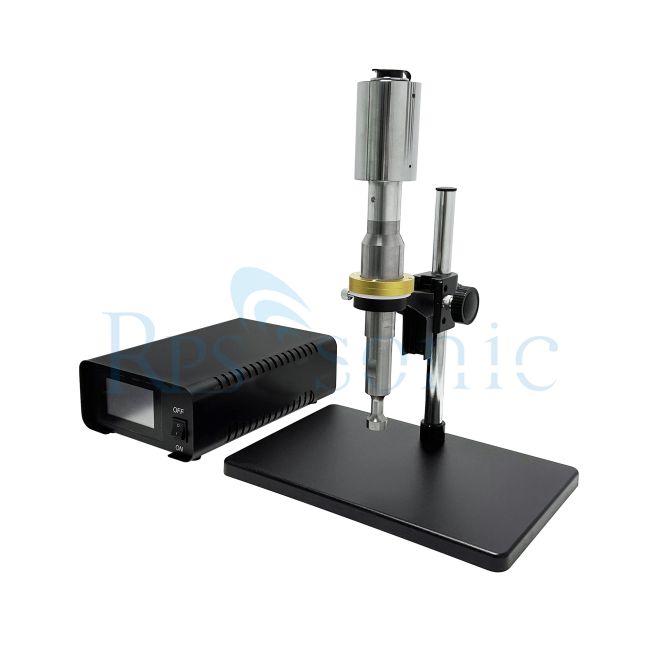
Table of Contents