


Ultrasonic emulsification equipment is a high-tech equipment that uses high-frequency ultrasonic energy to achieve uniform mixing and emulsification of liquids. Compared with traditional emulsification methods such as mechanical stirring and high-pressure homogenization, ultrasonic emulsification has significant advantages such as high efficiency, low energy consumption, and good emulsification quality. It has become an indispensable process equipment in the fields of food, pharmaceuticals, cosmetics, and chemicals.
Ultrasonic emulsification technology originated in the mid-20th century and has continued to develop with the advancement of power ultrasonic technology. Modern ultrasonic emulsification equipment has developed from laboratory scale to industrial production system, with processing capacity ranging from a few milliliters to several tons, meeting the production needs of different industries.
1. Core working mechanism
The core working mechanism of ultrasonic emulsification equipment is based on the "acoustic cavitation" effect. When high-intensity ultrasonic waves (usually in the frequency range of 20kHz-100kHz) are transmitted to the liquid medium through the transducer, alternating high-pressure and low-pressure areas are formed in the liquid. In the low-pressure stage, tiny vacuum bubbles are generated in the liquid; in the high-pressure stage, these bubbles collapse rapidly, generating local high temperatures (about 5000K), high pressures (about 1000atm) and strong shock waves.
This violent cavitation effect can:
Break up dispersed phase droplets
Promote material exchange between the two phase interfaces
Significantly reduce surface tension
Improve emulsification stability
2. Basic composition of the equipment
A complete ultrasonic emulsification system usually includes the following key components:
Ultrasonic generator: converts the mains electricity into high-frequency electrical signals, with adjustable frequency and power
Transducer assembly: converts electrical energy into mechanical vibration, commonly using piezoelectric ceramic materials
Amplifier (probe): amplifies the amplitude of mechanical vibration and directly acts on the treatment medium
Treatment container: designed according to process requirements, with cooling/heating jacket
Control system: realizes parameter setting, process monitoring and data recording
3.Compared with traditional emulsification technology, ultrasonic emulsification equipment has many advantages:
3.1. Excellent emulsification quality: can prepare emulsions with small particle size (up to nanometer level) and narrow distribution, and good stability
3.2. Accurate process control: precise control is achieved by adjusting parameters such as power, frequency, and processing time
3.3. High energy efficiency: energy directly acts on the emulsification system, heat loss is small, and energy consumption is reduced by 30-50%
3.4. Short processing time: usually only a few minutes to complete the emulsification process
3.5. Wide range of applications: can handle high viscosity and high solid content systems, and is friendly to shear-sensitive substances
3.6. Easy cleaning and maintenance: no complex mechanical structure, reduced pollution risk, and meets GMP requirements
3.7. Can be used in combination with other technologies: easy to combine with microfluidics, membrane emulsification and other technologies to form a composite process

- English
- French
- German
- Portuguese
- Spanish
- Russian
- Japanese
- Korean
- Arabic
- Irish
- Greek
- Turkish
- Italian
- Danish
- Romanian
- Indonesian
- Czech
- Afrikaans
- Swedish
- Polish
- Basque
- Catalan
- Esperanto
- Hindi
- Lao
- Albanian
- Amharic
- Armenian
- Azerbaijani
- Belarusian
- Bengali
- Bosnian
- Bulgarian
- Cebuano
- Chichewa
- Corsican
- Croatian
- Dutch
- Estonian
- Filipino
- Finnish
- Frisian
- Galician
- Georgian
- Gujarati
- Haitian
- Hausa
- Hawaiian
- Hebrew
- Hmong
- Hungarian
- Icelandic
- Igbo
- Javanese
- Kannada
- Kazakh
- Khmer
- Kurdish
- Kyrgyz
- Latin
- Latvian
- Lithuanian
- Lithuanian
- Macedonian
- Malagasy
- Malay
- Malayalam
- Maltese
- Maori
- Marathi
- Mongolian
- Burmese
- Nepali
- Norwegian
- Pashto
- Persian
- Punjabi
- Serbian
- Sesotho
- Sinhala
- Slovak
- Slovenian
- Somali
- Samoan
- Scots Gaelic
- Shona
- Sindhi
- Sundanese
- Swahili
- Tajik
- Tamil
- Telugu
- Thai
- Ukrainian
- Urdu
- Uzbek
- Vietnamese
- Welsh
- Xhosa
- Yiddish
- Yoruba
- Zulu
- Kinyarwanda
- Tatar
- Oriya
- Turkmen
- Uyghur

What's ultrasonic emulsification equipment?
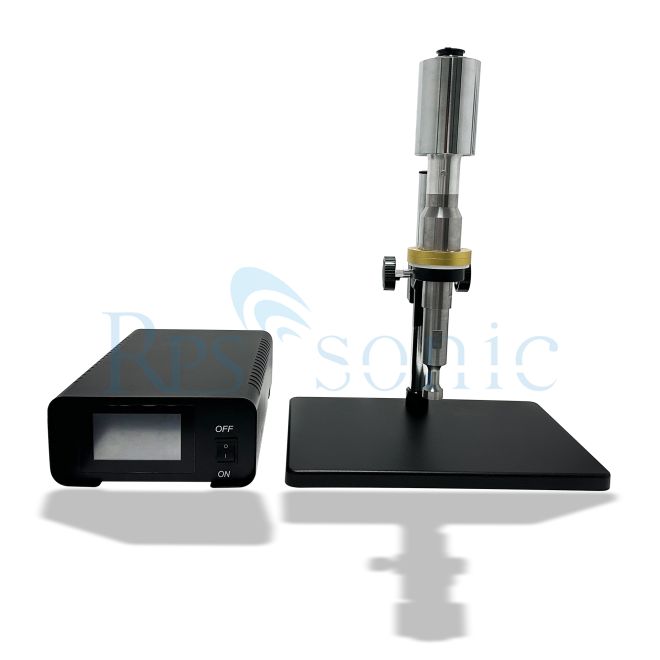
Table of Contents