




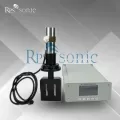
Ultrasonic soldering is an advanced welding technology that uses high-frequency mechanical vibration energy to achieve metal connection. It significantly improves the limitations of traditional soldering methods in welding special materials by introducing ultrasonic energy into the soldering process. This technology originated in the mid-20th century and was originally developed to solve the problem of difficulty in welding aluminum and its alloys. It has now developed into an indispensable process in the fields of microelectronic packaging and precision instrument manufacturing.
Compared with traditional soldering technology, ultrasonic soldering has several significant advantages: first, it can achieve welding at a lower temperature, reducing the risk of damage to heat-sensitive components; second, ultrasonic vibration can effectively destroy the oxide layer on the metal surface without the need for corrosive flux; third, this technology has relatively low requirements for the welding environment, and good welding results can be obtained without protective gas. These characteristics make ultrasonic soldering particularly suitable for the increasingly miniaturized and sophisticated product manufacturing needs in the modern electronics industry.
In terms of industrial applications, ultrasonic soldering equipment has been widely used in high-precision fields such as LED chip packaging, solar panel manufacturing, microelectronic sensor assembly, and medical device production. With the rapid development of emerging industries such as 5G communication equipment and electric vehicle battery management systems, the demand for ultrasonic soldering technology has shown a continuous growth trend.
2. Working principle of ultrasonic soldering equipment
The core principle of ultrasonic soldering system is to use piezoelectric effect to convert electrical energy into high-frequency mechanical vibration. When high-frequency electrical signal acts on piezoelectric transducer, the transducer will generate ultrasonic frequency vibration of 20kHz to 60kHz, which is amplified by horn (amplitude converter) and transmitted to welding tool head.
During welding process, ultrasonic vibration produces a variety of physical effects at the contact interface between solder and substrate: on the one hand, high-frequency shear force directly destroys the oxide film on the metal surface, exposing pure metal; on the other hand, friction heat effect generates enough temperature to melt solder locally, and cavitation effect caused by vibration promotes the flow and diffusion of liquid solder. This composite action mechanism can achieve reliable metallurgical bonding at much lower temperature than traditional solder (usually 30-50°C lower than the melting point of solder).
Equipment frequency selection is a key parameter of system design, and common operating frequencies include 20kHz, 35kHz and 60kHz. Lower frequencies provide greater amplitude and energy output, suitable for welding thicker materials; higher frequencies can achieve finer control, suitable for precision welding of micro components. Modern advanced ultrasonic soldering systems are often equipped with automatic frequency tracking technology, which can adjust in real time to maintain the resonant state and ensure maximum energy transmission efficiency.

3. Application fields and typical cases
Ultrasonic soldering equipment plays a key role in many high-tech fields. In the microelectronics packaging industry, this technology is widely used for the interconnection between chips and substrates, especially for large-area welding of power devices (such as IGBT modules). A well-known automotive electronics manufacturer uses a multi-head ultrasonic soldering system to achieve mass production of power modules, and the solder joint yield rate has increased from 92% of the traditional method to 99.8%, while reducing the heat-affected zone by 60%.
LED manufacturing is another typical application field. Ultrasonic soldering is used to connect LED chips to brackets, avoiding the thermal resistance problem caused by traditional silver glue curing. After a large LED manufacturer introduced a fully automatic ultrasonic soldering production line, the thermal resistance of the product was reduced by 35%, the light efficiency was increased by 8%, and the reliability risks caused by flux residue were completely eliminated.
In the field of new energy, ultrasonic soldering solves the problem of busbar welding of solar panels. Compared with traditional hot air welding, the ultrasonic process reduces the breakage rate of battery cells from 5% to less than 0.2%, while increasing the welding speed by 3 times. A photovoltaic enterprise uses an ultrasonic welding system with integrated visual positioning to achieve fully automatic high-precision welding of 156mm solar cells, with an average daily production capacity of 8,000 pieces.
In the manufacturing of emerging 5G communication equipment, ultrasonic soldering technology performs well in the packaging of high-frequency filters, antenna arrays and other components. A base station equipment manufacturer uses a 60kHz high-frequency ultrasonic system to successfully achieve reliable connection of 0.2mm spacing solder joints in millimeter-wave devices, with an insertion loss of less than 0.1dB, which fully meets the requirements of 5G high-frequency signal transmission.