




Silica is used in various industries for its wear resistance, electrical insulation and high thermal stability. Ultrasonic dispersion helps to unlock the potential of silica by improving dispersion quality.
Silica Application
Silica (SiO2) is a multifunctional ceramic material used in various industries to improve the surface and mechanical properties of various materials. It is used as a filler, performance additive, rheology modifier or processing aid in many product formulations such as paints and coatings, plastics, synthetic rubbers, adhesives, sealants or insulation. In particular, silica fume (amorphous silica) or microsilica is added to concrete to improve concrete strength and durability. Silica fume is also used in refractory concrete to reduce porosity and enhance strength through improved particle packing.
Silica Dispersion
Silica is available in a variety of hydrophilic and hydrophobic forms and is typically used in very fine particle sizes. Typically, silica does not disperse well after wetting. It also adds a lot of tiny air bubbles to the product formula.
For most silica applications, good and uniform dispersion is important. Especially when used in paints and lacquers to improve scratch resistance, the silica particles need to be small enough not to interfere with visible light to avoid haze and maintain clarity. For most coatings, silica needs to be less than 40nm to meet this requirement. For other applications, particle agglomeration prevents each individual silica particle from interacting with the surrounding medium. Ultrasonication has proven to be more effective in silica dispersion compared to other high shear mixing methods. At aggregate sizes greater than 200 microns, most particles were reduced to less than 200 nanometers.
Ultrasonic treatment
Three TiO2 powders were used in this work: nanoparticle P25, nanoparticle ST21 and submicron HT0514. P25 and HT0514 were prepared by gas phase synthesis; ST21 was fabricated by wet chemical synthesis. Sodium polyacrylates (PAA) with average molecular weights of 1200, 2100, 8000, 15000 and 30,000 were used as polymeric dispersants. To prepare an aqueous suspension, TiO2 powder was mixed with PAA in water. Adjust pH with ammonia solution (20%, analytical grade). For sonication, 50 mL of the suspension was sonicated in a 100 mL beaker for 30 minutes. To prevent water boiling and PAA gelling, the suspension was irradiated 10 times for 3 min each, since 3 min of continuous irradiation resulted in a temperature increase of 60–70 °C. After 3 minutes of each successive irradiation, the suspension was cooled for 10 minutes.
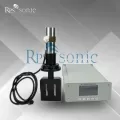
We used two sets of ultrasonic equipment, frequency: 20 kHz; amplitude: 30-34 mm; power generation: 70-120 W; tool head diameter: 26 mm, after 30 minutes of ultrasonic treatment, the water was reduced by about 10 due to evaporation ml. Weights were measured before and after sonication, and pure water was added to compensate for losses. Regardless of the vibration amplitude and probe diameter, the viscosity and average particle size of the suspended agglomerates decreased with the irradiation time. Eventually the solution becomes transparent and the sio2 particles become significantly smaller.

Post time:Apr-19-2022