




1. Ordinary blade cutting: The cut edges are loose and prone to fraying. Polyester, nylon, and nonwoven fabrics are easily fraying and peeling, requiring additional hemming and edge-binding processes, resulting in high labor costs. The blades wear down continuously, requiring frequent sharpening and replacement, leading to high material costs. Cutting elastic fabrics easily causes stretching and deformation, resulting in large dimensional errors.
2. Electrothermal cutting: Edges become excessively thick, hard, yellow, and carbonized due to excessive heating. Fabric shrinkage and deformation are significant, resulting in a poor hand feel. Inferior cutting methods can produce pungent fumes.
3. Laser cutting: High equipment investment costs. Cutting thick, multi-layered materials easily results in burnt or charred edges. Some fabrics produce harmful exhaust gases, placing significant pressure on environmental regulations and requiring complex maintenance.
Against this backdrop, ultrasonic fabric cutting equipment, with its technological advantage of "cutting + edge sealing in one step", is gradually replacing traditional cutting solutions and becoming the mainstream choice for high-precision processing of flexible textile materials.

Working Principle of Ultrasonic Equipment
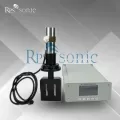
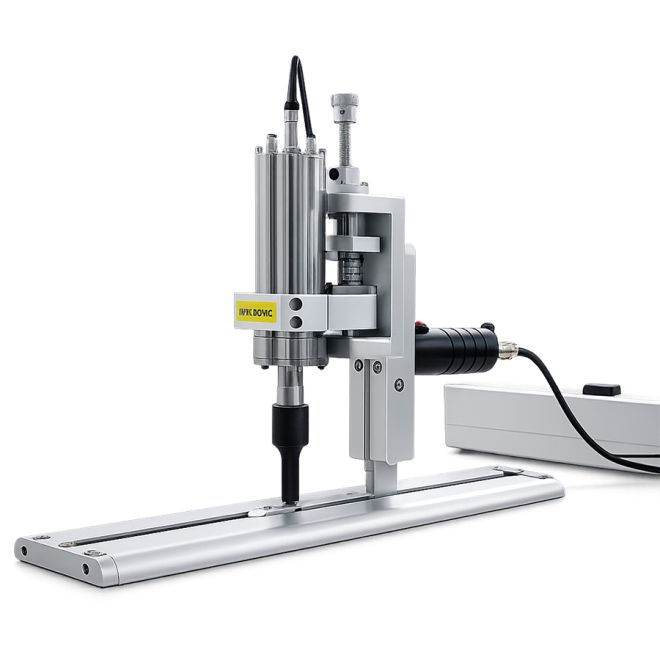
Ultrasonic fabric cutting machines do not rely on sharp blades to forcibly cut the fabric. Instead, they utilize high-frequency vibration energy to achieve thermal melting and edge sealing. The entire energy transmission logic is clear:
1. The ultrasonic generator (drive power supply) converts industrial frequency AC power into a 20kHz~40kHz high-frequency high-voltage electrical signal;
2. The transducer (piezoelectric ceramic component) converts electrical energy into tens of thousands of micron-level longitudinal mechanical vibrations per second;
3. The amplitude transformer amplifies the vibration amplitude, concentrating the vibration energy to the cutting head;
4. At the moment the cutting head contacts the fabric, high-speed friction within the fibers generates localized instantaneous heat (100~200℃). The thermoplastic synthetic fiber fabric rapidly melts and separates, and the edges of the cutting path are simultaneously fused and sealed, forming a smooth, sealed cut upon completion, eliminating burrs and loose threads at the source.
Processable Fabric Material Range
✅ Compatible Materials (including thermoplastic fibers): Polyester, Nylon, Polypropylene, Spandex Elastic Fabric, Non-woven Fabric (SMS, Needle-punched Non-woven Fabric, Spunlace Fabric), Synthetic Fiber Webbing, Velcro, Oxford Cloth, Spring Spunlace, PVC Coated Fabric, Composite Fabric, Aramid Fabric, Leather, Artificial Leather, Mask Earloops, Protective Clothing Fabric, etc.
❌ Not Compatible: Pure Cotton, Pure Linen, and other non-thermoplastic natural fabrics (cannot be melt-sealed, can only be cut, not hemmed)