





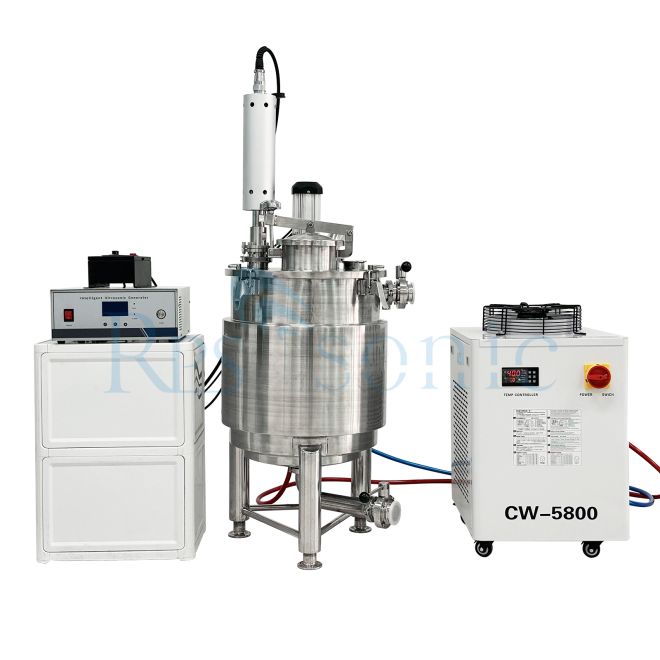
1. Principle of ultrasonic emulsification technology
Ultrasonic diesel emulsification equipment uses the cavitation effect generated by high-frequency ultrasonic waves (usually 20kHz-100kHz) to evenly mix diesel and water to form a micron-level emulsion. Its core working process includes:
Cavitation effect: The high-frequency pressure changes generated when ultrasonic waves propagate in the liquid form tiny bubbles and quickly collapse, releasing huge energy
Shearing effect: The strong mechanical vibration generated by ultrasonic waves produces shear force on the liquid, breaking the oil-water interfacial tension
Micromixing: Molecular-level mixing is achieved under the action of acoustic flow to form a stable emulsion
2. Technical advantages and benefit analysis
Compared with traditional mechanical emulsification methods, ultrasonic emulsification has significant advantages:
2.1. Excellent emulsification quality
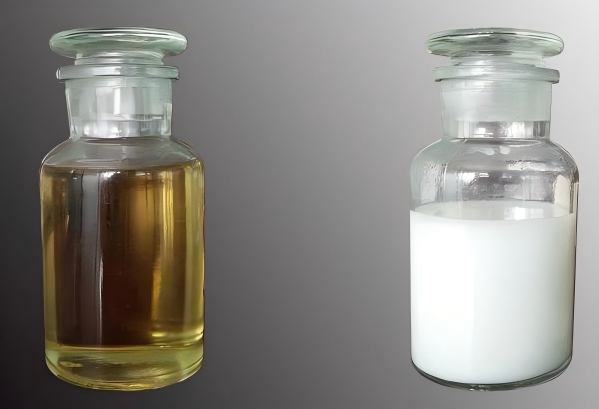
Small droplet size (usually <1μm) and uniform distribution
High emulsification stability, can remain non-stratified for several weeks
No need or small amount of emulsifier
2.2. Significant energy saving and emission reduction effects
More complete combustion, can improve thermal efficiency by 5-15%
Reduce particulate matter emissions by 30-50%
Reduce nitrogen oxide emissions by 10-20%
2.3. Good operating economy
Energy consumption is 40-60% lower than mechanical emulsification
Small equipment size, simple maintenance
High degree of automation, low labor costs
3. Main application areas
Industrial boiler system: improve combustion efficiency, reduce carbon deposition and corrosion
Ship power: meet IMO emission standards and reduce operating costs
Generator: improve power generation efficiency in remote areas
Agricultural machinery: reduce diesel consumption and reduce the burden on farmers
Fuel pretreatment: provide high-quality raw materials for subsequent processing