




1. Basic principles of ultrasonic extraction technology
1.1 Cavitation effect of ultrasound
The core principle of ultrasonic essential oil extraction is to use the cavitation effect of ultrasound. When high-frequency ultrasound (usually 20-80kHz) propagates through a liquid medium, alternating high-pressure and low-pressure cycles are generated. In the low-pressure stage, tiny vacuum bubbles are formed in the liquid; in the high-pressure stage, these bubbles collapse rapidly, producing extremely high local temperatures (about 5000K) and pressures (about 1000atm). This drastic physical effect is called "cavitation".
1.2 The role of cavitation effect in extraction
The powerful shock waves and microjets generated when cavitation bubbles collapse can:
•Destroy the plant cell wall structure and accelerate the release of cell contents
•Enhance mass transfer and promote the penetration of solvents into the plant matrix
•Increase solubility and accelerate the diffusion of target compounds into the solvent
•Lower the extraction temperature and protect heat-sensitive components
1.3 Chemical effects of ultrasound-assisted extraction
In addition to physical effects, ultrasound can also induce certain chemical reactions:
•Produce free radicals to promote the release of certain components
•Change the polarity of the solvent to increase the solubility of specific components
•Accelerate the hydrolysis reaction to release bound aromatic compounds
2. System composition of ultrasonic essential oil extraction equipment
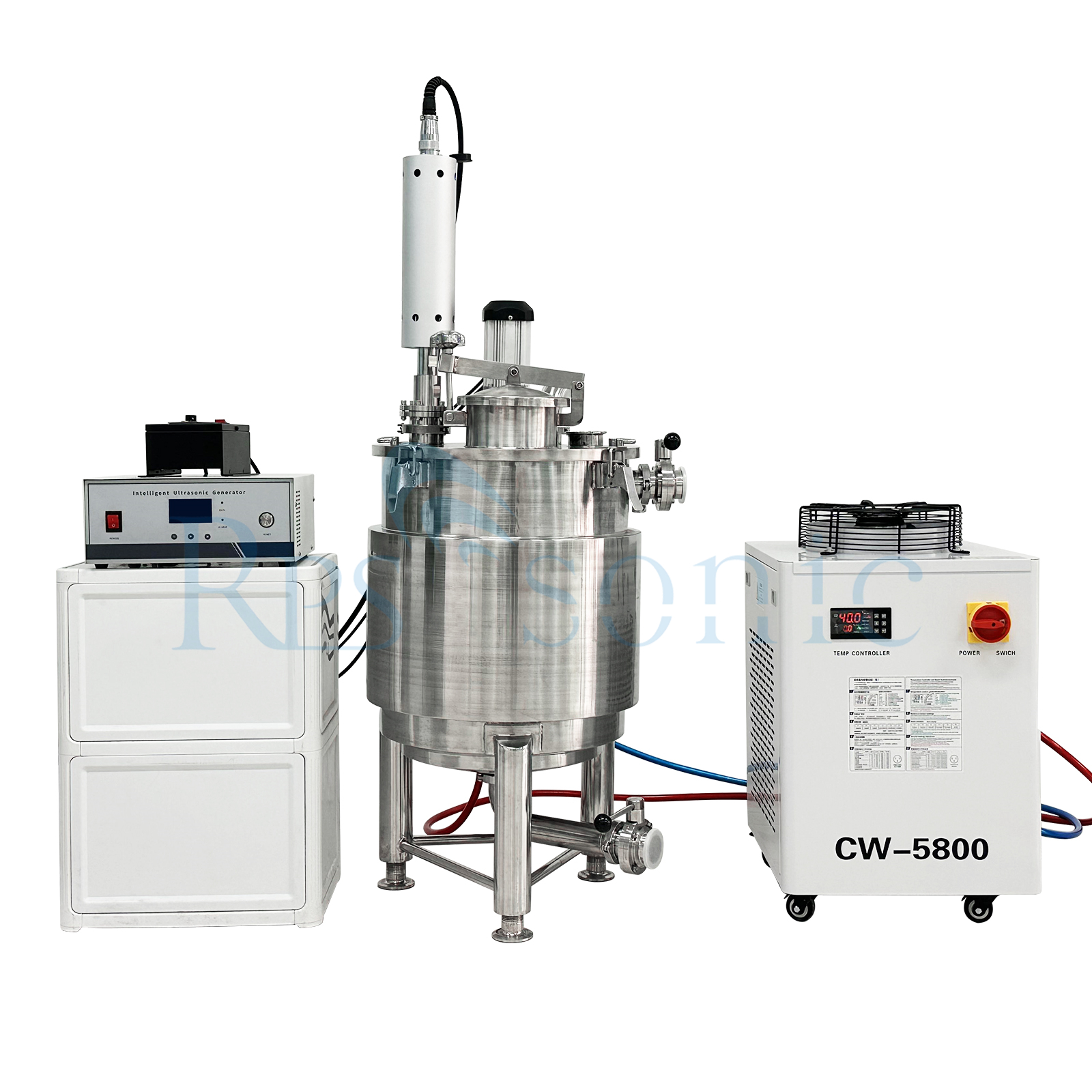
A complete industrial-grade ultrasonic essential oil extraction system usually consists of the following key parts:
2.1 Ultrasonic generator
As the core of the system, it is responsible for converting the mains power into high-frequency electrical signals. The main parameters include:
•Frequency range: 20-40kHz (40kHz is commonly used for essential oil extraction)
•Power output: 500W-5000W adjustable
•Pulse mode: The working/interval time ratio can be set
•Protection function: overload, overheating, short circuit protection
2.2 Transducer assembly
Convert electrical energy into mechanical vibration, mainly in two types:
Immersion probe: directly inserted into the reaction vessel, concentrated energy, suitable for small batch processing
Trough system: multiple transducers are installed on the outer wall of the trough body, suitable for continuous flow processing
2.3 Extraction reaction system
Includes:
Pressure reactor (usually 316L stainless steel or titanium alloy)
Temperature control system (cooling jacket or heating device)
Stirring device (to enhance mixing effect)
Pressure regulation system (for subcritical or supercritical assistance)
2.4 Separation and collection system
Post-extraction processing steps:
Multi-stage filtration device
Centrifuge
Molecular distillation equipment
Condensation recovery system
2.5 Automated control system
Modern equipment is usually equipped with:
PLC or PC control interface
Real-time monitoring of parameters (temperature, pressure, power, etc.)
Data recording and analysis function
Safety interlock device