



1. Working Principle
The ultrasonic plastic cutting knife operates based on the principle of ultrasonic vibration. It converts industrial frequency alternating current into high-frequency electrical signals through an ultrasonic generator, and then transmits it to the transducer. The core function of the transducer is to use the inverse piezoelectric effect of piezoelectric ceramic materials to convert high-frequency electrical signals into mechanical vibrations of the same frequency. This high-frequency vibration is amplified by the amplitude transformer and transmitted to the cutting head. When the cutter head contacts the plastic material, it vibrates at a frequency of more than 20,000 times per second, causing intense friction between plastic molecules. This friction quickly generates a large amount of heat, causing the plastic to melt instantly, thereby achieving the purpose of cutting. Compared with traditional cutting methods, it does not rely on pure mechanical force to forcibly cut off the plastic, but uses vibration friction to generate heat to soften and separate the material, greatly reducing mechanical damage to the material.
2. Significant advantages
2.1 High cutting accuracy: Ultrasonic plastic cutting knives can achieve extremely fine cutting. In the processing of plastic shells of electronic equipment, it can accurately cut tiny holes and complex edge contours, and the error can be controlled within a very small range. For example, in the cutting process of mobile phone frames, it can ensure the flatness and dimensional accuracy of the cutting edges, meet the strict requirements of high-end electronic products for the exquisite appearance, and greatly improve the product yield.
2.2 Fast cutting speed: High-frequency vibration enables the cutting process to be completed quickly. Taking the cutting of plastic pipes as an example, the traditional cutting method may only cut a few sections per minute, while the ultrasonic cutting knife can cut dozens of sections per minute with its efficient vibration heat cutting mechanism, which greatly improves production efficiency and provides strong support for large-scale production.
2.3 Good incision quality: Since the materials are separated by melting, the cut plastic incision is smooth and flat, without burrs or debris. This has obvious advantages in the processing of plastic products with extremely high requirements for appearance quality, such as toys and cosmetic packaging, which reduces subsequent grinding and finishing processes, reduces production costs, and improves the overall appearance of the product.
2.4 Wide applicability: Almost all types of plastics can be cut, whether it is common polyethylene, polypropylene, or engineering plastics such as polycarbonate, nylon, etc., it can easily handle it. Moreover, for multi-layer composite plastic materials, it can also accurately cut without affecting the performance and structure of each layer of material.
3. Application fields
3.1 Packaging industry: In the production of plastic packaging products, ultrasonic plastic cutting knives are used to cut plastic films, plastic containers, etc. For example, on the food packaging production line, it can quickly and accurately cut out plastic packaging of various shapes to ensure the sealing and aesthetics of the packaging and extend the shelf life of the food.
3.2 Automobile manufacturing: The processing of automobile interior parts such as dashboards and seat plastic parts is inseparable from it. Its high-precision cutting can ensure that the interior parts fit perfectly with the overall design of the car, and enhance the aesthetics and comfort of the car. At the same time, in the production of automotive plastic parts, efficient cutting speed helps to improve production efficiency and meet the needs of large-scale production in the automotive manufacturing industry.
3.3 Medical field: Medical plastic products such as syringes and infusion tubes have extremely high requirements for hygiene standards and dimensional accuracy. Ultrasonic plastic cutting knives can perform precise cutting in a sterile environment, avoiding the debris contamination that may be caused by traditional cutting methods, and ensuring the quality and safety of medical products.

- English
- French
- German
- Portuguese
- Spanish
- Russian
- Japanese
- Korean
- Arabic
- Irish
- Greek
- Turkish
- Italian
- Danish
- Romanian
- Indonesian
- Czech
- Afrikaans
- Swedish
- Polish
- Basque
- Catalan
- Esperanto
- Hindi
- Lao
- Albanian
- Amharic
- Armenian
- Azerbaijani
- Belarusian
- Bengali
- Bosnian
- Bulgarian
- Cebuano
- Chichewa
- Corsican
- Croatian
- Dutch
- Estonian
- Filipino
- Finnish
- Frisian
- Galician
- Georgian
- Gujarati
- Haitian
- Hausa
- Hawaiian
- Hebrew
- Hmong
- Hungarian
- Icelandic
- Igbo
- Javanese
- Kannada
- Kazakh
- Khmer
- Kurdish
- Kyrgyz
- Latin
- Latvian
- Lithuanian
- Lithuanian
- Macedonian
- Malagasy
- Malay
- Malayalam
- Maltese
- Maori
- Marathi
- Mongolian
- Burmese
- Nepali
- Norwegian
- Pashto
- Persian
- Punjabi
- Serbian
- Sesotho
- Sinhala
- Slovak
- Slovenian
- Somali
- Samoan
- Scots Gaelic
- Shona
- Sindhi
- Sundanese
- Swahili
- Tajik
- Tamil
- Telugu
- Thai
- Ukrainian
- Urdu
- Uzbek
- Vietnamese
- Welsh
- Xhosa
- Yiddish
- Yoruba
- Zulu
- Kinyarwanda
- Tatar
- Oriya
- Turkmen
- Uyghur

What is the principle of ultrasonic plastic cutting knife?
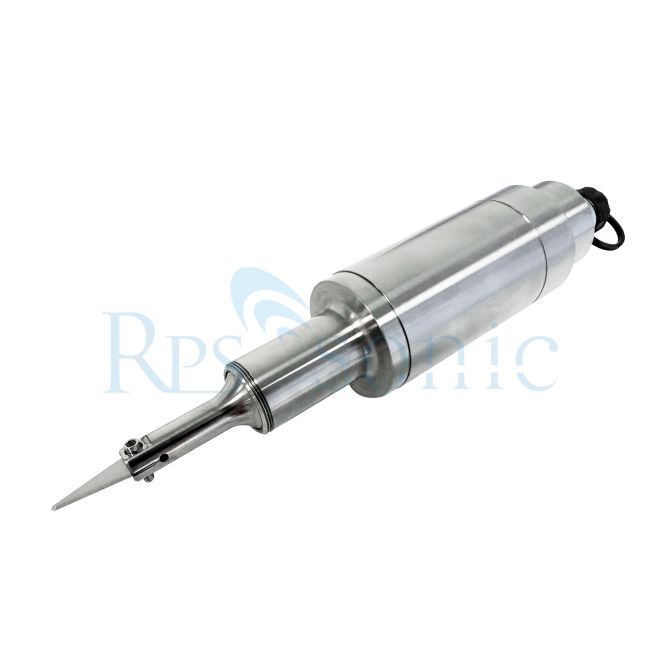
Table of Contents