


Raw Material Selection and Pretreatment
High-quality raw materials are the foundation for extracting high-quality essential oils. The essential oil content and composition of different plants vary significantly, so the appropriate raw material must be selected based on the characteristics of the target essential oil. For example, to extract rose essential oil, choose a rose variety with a strong fragrance and high oil content; to extract lavender essential oil, select well-grown lavender plants with an appropriate flowering period.
After collecting the raw materials, pretreatment is required, including cleaning, drying, and pulverization. Cleaning removes impurities and contaminants from the raw material surface; drying reduces the raw material's moisture content, preventing microbial growth and facilitating subsequent pulverization. Pulverization breaks the raw material into particles of appropriate size, increasing the contact area with the solvent and improving extraction efficiency. Generally speaking, smaller raw material particles yield better extraction results, but the equipment requirements and cost of the pulverization process must also be considered.
Solvent Selection and Ratio
A suitable solvent is crucial for ultrasonic essential oil extraction. An ideal solvent should possess good solubility for essential oil components, moderate volatility, high safety, and low cost. Common solvents include water, ethanol, petroleum ether, and n-hexane. Different plant essential oils have varying solubility in different solvents, so the appropriate solvent should be selected based on the properties of the raw material and the target essential oil. For example, for highly polar essential oils, such as water-soluble ones, water or ethanol can be used as solvents; for non-polar essential oils, non-polar solvents such as petroleum ether and n-hexane are more suitable.
In addition, the ratio of solvent to raw material also affects extraction results. Generally speaking, increasing the solvent dosage improves essential oil extraction yield, but this also increases the cost of subsequent separation and concentration. Therefore, it is necessary to optimize the solvent to raw material ratio through experimentation to minimize costs while maintaining extraction yield.
Ultrasonic Extraction Operation
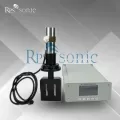
The pretreated raw materials are mixed with the selected solvent in a specific ratio and placed in an ultrasonic extraction device. Ultrasonic extraction equipment typically consists of an ultrasonic generator, a transducer, and an extraction tank. The ultrasonic generator generates a high-frequency electrical signal, which is converted by the transducer into ultrasonic mechanical vibrations and transmitted to the liquid medium in the extraction tank.
During the extraction process, precise control of ultrasonic parameters such as frequency, power, and extraction time is required. Different plant materials and target essential oils require different ultrasonic parameters. Generally, the frequency ranges from 20kHz to 100kHz, and the power ranges from tens of watts to several kilowatts depending on the equipment and raw materials. Extraction time typically ranges from several minutes to tens of minutes. By optimizing these parameters, the ultrasonic effect can be optimized, achieving efficient and rapid essential oil extraction.
Separation and Purification
After extraction, the resulting mixture contains essential oils and solvents, which require separation and purification to obtain a pure essential oil product. Common separation methods include filtration, centrifugation, and distillation. Filtration removes solid impurities from the mixture; centrifugation uses centrifugal force to separate substances of different densities, further improving the clarity of the mixture; and distillation utilizes the difference in boiling points between the essential oils and solvents by heating and evaporating the solvent, thereby separating the essential oils from the solvent.
The essential oil obtained after distillation may still contain impurities, such as pigments and odorous substances, requiring further purification. Purification methods include adsorption, chromatography, and crystallization. Adsorption uses adsorbents (such as activated carbon and silica gel) to absorb impurities from the essential oils. Chromatography separates and purifies substances based on the differences in the partition coefficients of different substances between the stationary and mobile phases. Crystallization purifies the essential oil by controlling temperature, concentration, and other conditions to crystallize the target component.

- English
- French
- German
- Portuguese
- Spanish
- Russian
- Japanese
- Korean
- Arabic
- Irish
- Greek
- Turkish
- Italian
- Danish
- Romanian
- Indonesian
- Czech
- Afrikaans
- Swedish
- Polish
- Basque
- Catalan
- Esperanto
- Hindi
- Lao
- Albanian
- Amharic
- Armenian
- Azerbaijani
- Belarusian
- Bengali
- Bosnian
- Bulgarian
- Cebuano
- Chichewa
- Corsican
- Croatian
- Dutch
- Estonian
- Filipino
- Finnish
- Frisian
- Galician
- Georgian
- Gujarati
- Haitian
- Hausa
- Hawaiian
- Hebrew
- Hmong
- Hungarian
- Icelandic
- Igbo
- Javanese
- Kannada
- Kazakh
- Khmer
- Kurdish
- Kyrgyz
- Latin
- Latvian
- Lithuanian
- Lithuanian
- Macedonian
- Malagasy
- Malay
- Malayalam
- Maltese
- Maori
- Marathi
- Mongolian
- Burmese
- Nepali
- Norwegian
- Pashto
- Persian
- Punjabi
- Serbian
- Sesotho
- Sinhala
- Slovak
- Slovenian
- Somali
- Samoan
- Scots Gaelic
- Shona
- Sindhi
- Sundanese
- Swahili
- Tajik
- Tamil
- Telugu
- Thai
- Ukrainian
- Urdu
- Uzbek
- Vietnamese
- Welsh
- Xhosa
- Yiddish
- Yoruba
- Zulu
- Kinyarwanda
- Tatar
- Oriya
- Turkmen
- Uyghur

Ultrasonic essential oil extraction technology
Table of Contents