




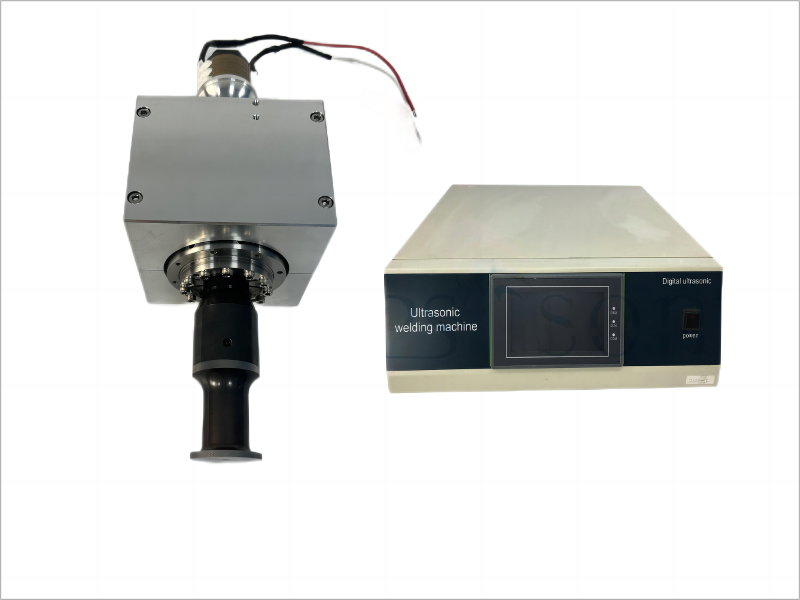
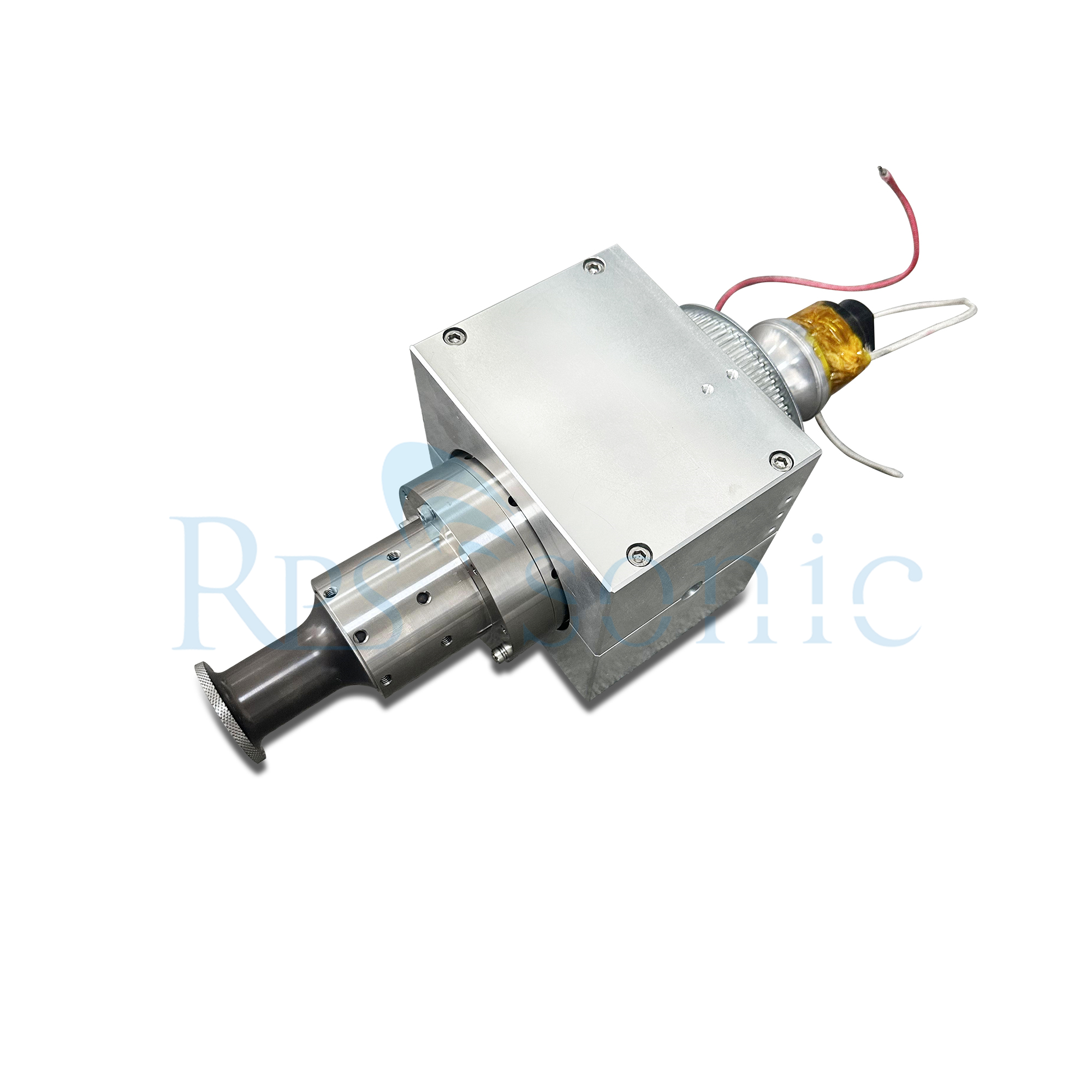
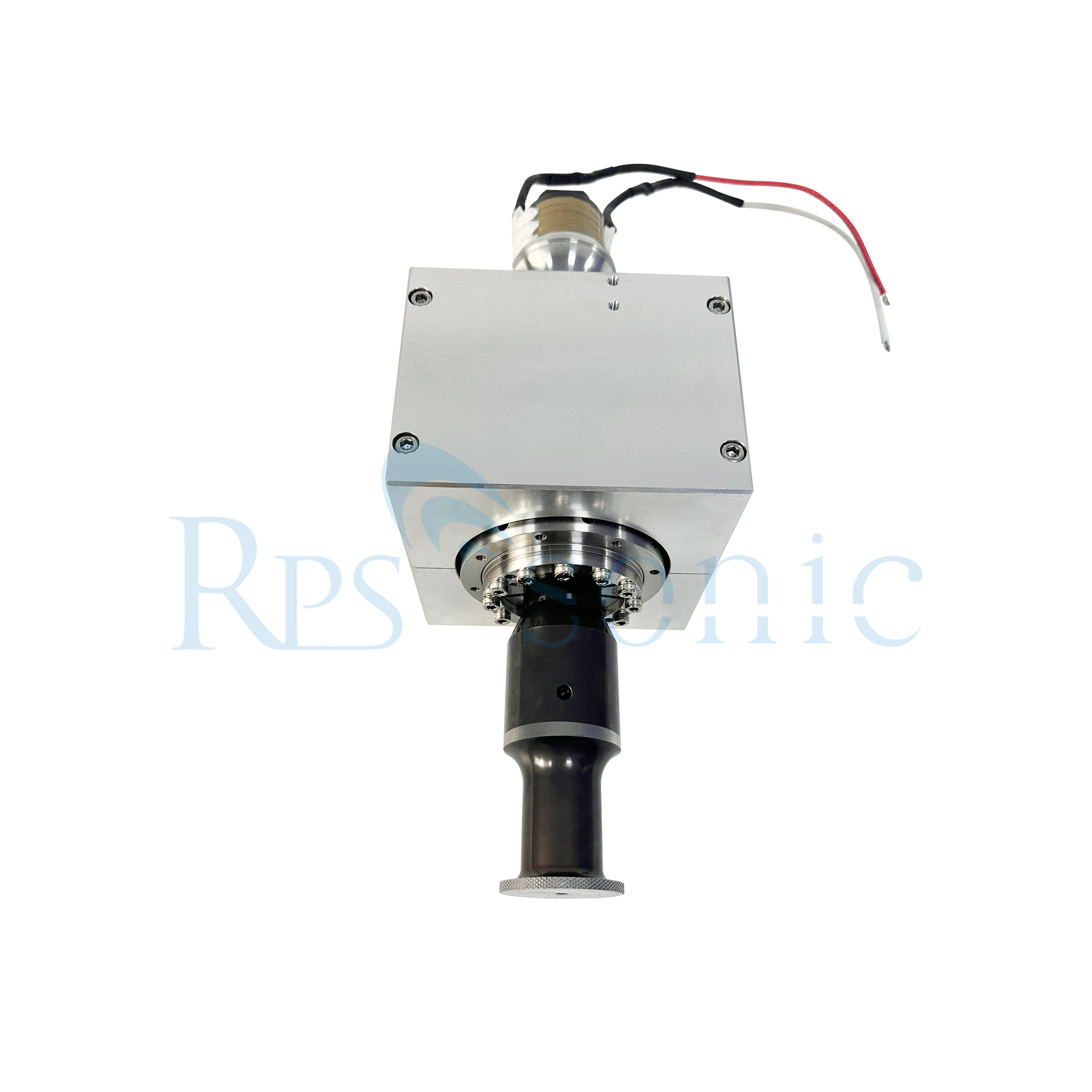
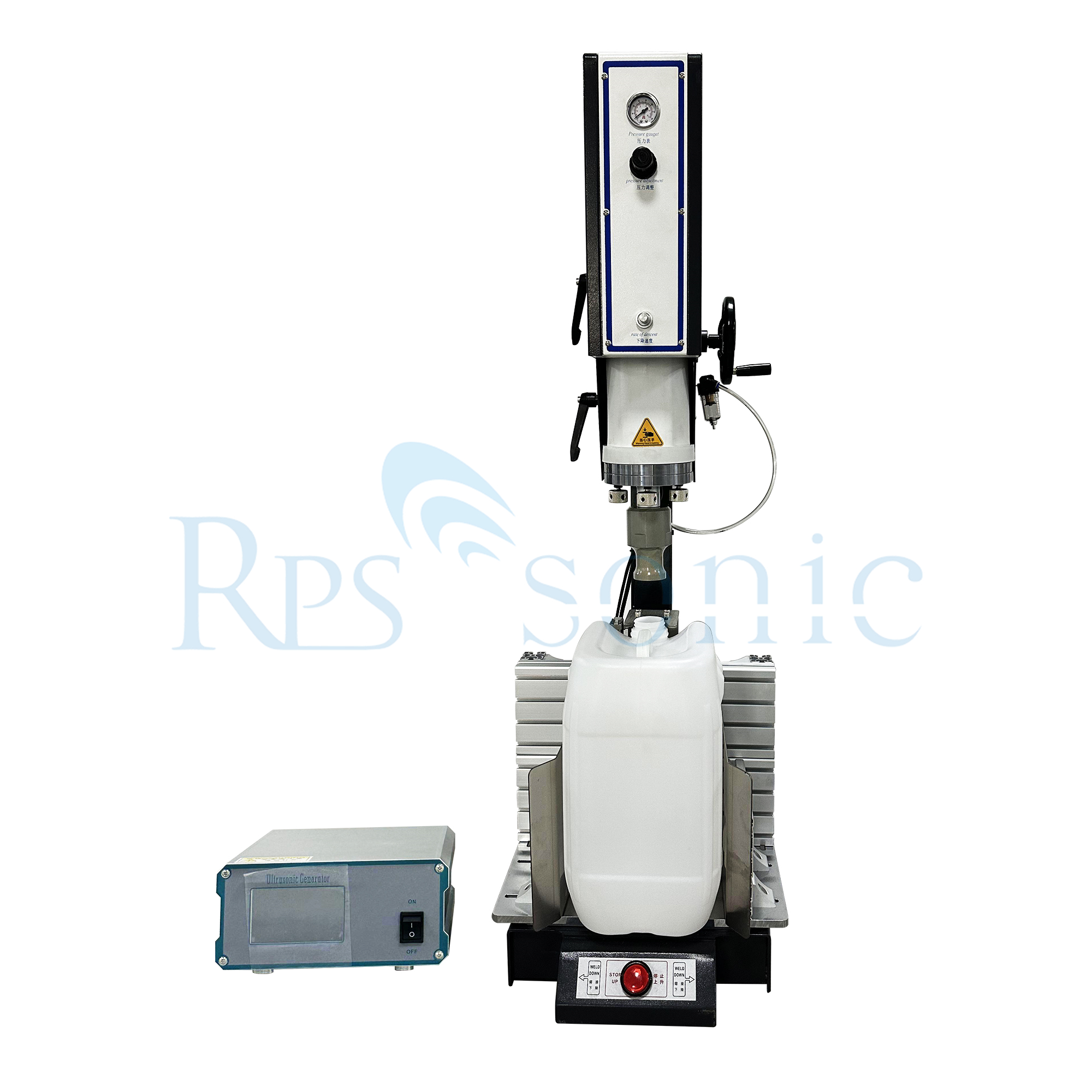
Ultrasonic Metal Roll Welding machine For Solar Heater



Parameter
| Machine | Ultrasonic Metal Roll Welding system |
| Frequency(KHz) | 20Khz |
| Power | 2000 W |
| Cutting Blade / Horn | Titanium |
| Voltage(V) | 220V |
| The width of blade | depend on your requirement |
| Equipment weight | 30KG |
Description
Process Overview:
1.Preparation:
Two metal rolls or sheets are placed adjacent to each other, typically overlapping slightly.
2.Application of Pressure:
Pressure is applied to the overlapping area. This pressure can be applied through rollers or clamping mechanisms.
3.Ultrasonic Vibrations:
An ultrasonic welding horn (sonotrode) is placed against the top metal surface.
High-frequency (usually 20 kHz to 70 kHz) ultrasonic vibrations are applied to the metal sheets through the sonotrode.
4.Frictional Heating and Bonding:
The ultrasonic vibrations generate frictional heat at the interface between the two metal surfaces.
This localized heating softens the metal and allows atomic bonding to occur across the interface.
5.Bond Formation:
As the vibrations continue, the softened metal surfaces bond together to form a solid-state weld.
6.Cooling and Solidification:
After the ultrasonic vibrations cease, the welded joint cools and solidifies, forming a strong metallurgical bond.
Advantages
No Consumables: Unlike traditional welding methods that may require filler materials, ultrasonic welding does not use consumables.
Energy Efficiency: It typically consumes less energy compared to other welding methods like arc welding.
High Productivity: Ultrasonic welding can be automated and is suitable for continuous processes, making it highly productive.
Minimal Distortion: Since it operates at lower temperatures than traditional welding, it minimizes distortion and heat-affected zones in the metal.
Applications
Automotive Industry: Used for manufacturing components like exhaust systems, fuel tanks, and battery trays.
Electronics: Bonding metal components in electronics manufacturing.
Packaging: Sealing and welding metal foils and sheets in food packaging and other industries.
Aerospace: Bonding thin metal sheets for structural components.
-
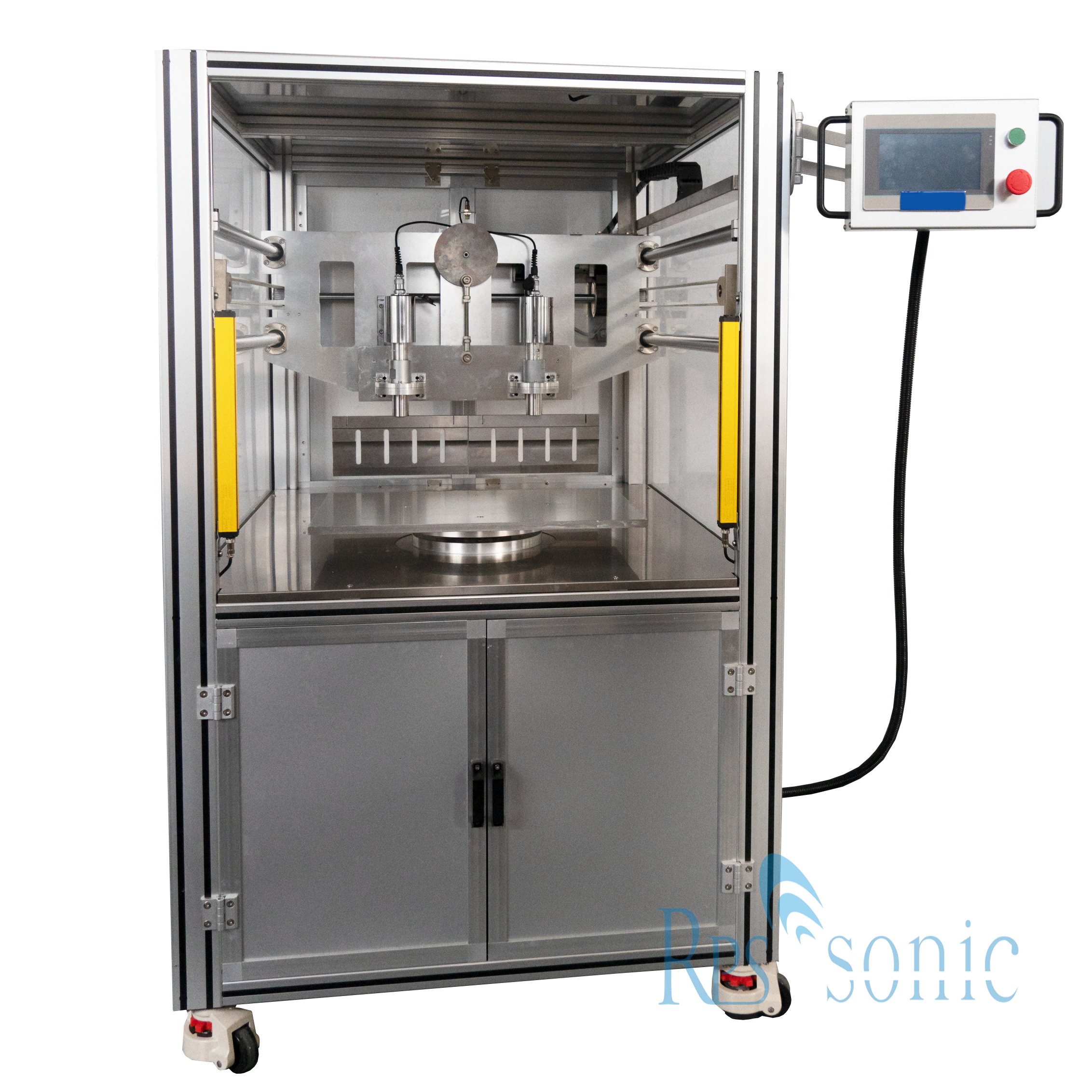
Automatic ultrasonic food cutting machine for diffferent cakes cutting
-

Industrial flow cell 20kHz Ultrasonic Graphene Dispersion Equipment
-
2019 wholesale price China The Customizable Fully Automatic Control Desktop Rubber Cutting Machine with ISO. Ce
-

1000w Ultrasonic food Cutting Machine For Layer cake Cutting with titanium blade
-

20khz 2000w High Quality Ultrasonic Welding transducer with booster and horn
-
3200w high power automatic ultrasonic welding machine ultrasonic plastic welder