




Principle of Ultrasonic Extraction
Ultrasonic waves propagate through liquid media, producing a "cavitation effect" during vibration. The cavitation effect forms high-energy microbubbles, which release local high temperatures and high pressures when they burst, thereby:
1.Destroying cell walls: promoting the release of intracellular components.
2.Increasing the contact area between the solvent and the sample: increasing the dissolution and diffusion rate.
3.Enhancing the mass transfer process: accelerating the transfer of active ingredients from the sample to the solvent.
Ultrasonic extraction steps
1. Prepare raw materials:
Crush the target material (such as plants or other solid samples) to increase the surface area.
Select appropriate solvents (such as water, ethanol, methanol or other polar solvents) as needed.
2. Solvent mixing:
Mix the sample and solvent in an appropriate ratio, usually 1:5 to 1:20 (sample: solvent).
Place the mixture in a container resistant to ultrasonic vibration.
3. Ultrasonic treatment:
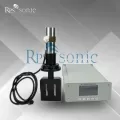
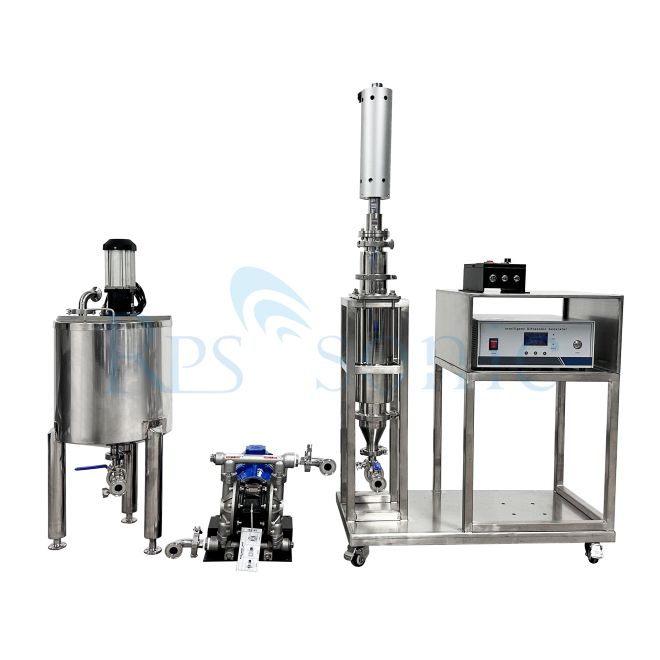
Use an ultrasonic probe or ultrasonic cleaner.
Set the frequency and power (common frequencies are 20–40 kHz) and control the temperature at 30–70°C.
The extraction time is generally 10–60 minutes, which can be adjusted depending on the sample and target components.
4. Separation and purification:
Use centrifugation, filtration or a separatory funnel to separate the solution from the solid.
Concentrate, dry or further purify the extract (such as column chromatography).
