





1. Ultrasonic Food Cutter: Advantages Determined by Principle
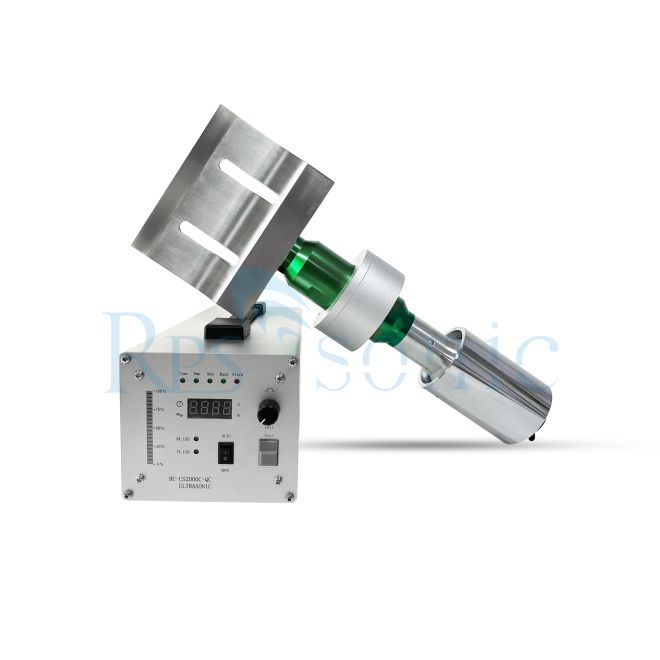
The core advantage of ultrasonic food cutters stems from their unique operating mechanism. An ultrasonic generator converts electrical energy into high-frequency mechanical vibrations (typically 20-40kHz). This vibration energy is transferred to the cutting blade, causing it to vibrate with a small amplitude. This vibration is more than just a "cutting action," but rather achieves efficient cutting through the following mechanisms:
1.1 Reduced Friction and Sticking: High-frequency vibration maintains a constant gap between the blade and the food, preventing sticky food from clinging to the blade. This solves the problem of "sticking and disfiguring" when cutting sticky foods like gummy candies, chocolate, and rice cakes.
1.2 Reduced Cutting Resistance: Vibration energy instantly disrupts the molecular structure of food, enabling smooth, low-pressure cuts on even crispy chips, cookies, or firm frozen meats, minimizing debris.
1.3 Precise Control of Cutting Accuracy: Stable and adjustable amplitude, combined with an automated conveying system, enables millimeter-level cutting accuracy, meeting the processing requirements for products such as pastries and sandwiches that require high dimensional consistency. Compared to traditional blades, ultrasonic cutters require less frequent sharpening and maintain a low blade temperature during cutting (due to rapid heat dissipation through vibration). This high temperature does not alter the taste and nutritional content of food, making them particularly suitable for processing heat-sensitive foods such as cheese and cream cakes.
2. Multi-Scenario Application: Covering the Full Range of Food Processing Categories
Ultrasonic food cutters are highly adaptable and have been widely used in a variety of sectors, including snack foods, baked goods, frozen foods, and prepared meals. They offer customized solutions for cutting different food types.
2.1 Sticky Foods: Say Goodbye to "Sticky Knife Trouble"
Traditional cutting methods for sticky foods (such as gummy candies, chewy candies, mochi, and chocolate-covered desserts) can cause the blade to stick to the ingredients, resulting in irregular product shapes and requiring frequent machine downtime for blade cleaning, significantly impacting production efficiency. The high-frequency vibrations of ultrasonic cutters prevent sticky ingredients from sticking. For example:
● In a soft candy production line, ultrasonic cutters can simultaneously cut multiple rows of soft candies at once, resulting in smooth, burr-free cuts and over 30% higher cutting efficiency than traditional blades. Manual cleaning of sticky materials is also unnecessary.
● When cutting chocolate sandwich cakes, traditional blades can easily squeeze out the chocolate sauce, causing the filling to leak. Ultrasonic cutters can precisely separate the cake base and the filling, keeping the filling intact. This has increased the qualified rate of finished products from 85% to 99%.
2.2Crisp Foods: Reducing "Crumb Loss"
Crisp foods such as potato chips, biscuits, and wafers are extremely sensitive to cutting pressure. Traditional blades, due to excessive pressure, easily produce a large amount of debris, with a loss rate of up to 5%-10%. Ultrasonic cutters, through their "low pressure + high-frequency vibration" cutting method, can maximize food integrity.
● After introducing ultrasonic cutting equipment, a potato chip manufacturer reduced their chip crushing rate from 8% to 1.5%, saving over one million yuan in raw material losses annually.
● When cutting wafers in multiple layers, traditional blades can easily cause separation between the layers. Ultrasonic cutters, however, achieve "seamless cutting" between layers, ensuring a stable product structure and improving taste consistency.
2.3 Foods Containing Particles/Fiber: Avoiding Cutting Blockages
For foods containing particles or fibers, such as jam bread, nut cakes, and sausages, traditional blades can easily become stuck, resulting in interrupted cutting or product deformation. The vibration of ultrasonic cutters can break up these obstructions, ensuring smooth cutting:
● In sausage processing, ultrasonic cutters can quickly cut through sausages containing fascia, creating smooth, string-free cuts without causing machine downtime due to fascia entanglement.
● When cutting nut cakes, even if the cake contains large particles such as walnuts and almonds, ultrasonic cutters can precisely sever the connection between the particles and the cake base, preventing particles from falling off and degrading the product appearance.
2.4 Frozen Foods: Overcoming the "Excessive Hardness Challenge"
Frozen foods such as frozen meat, frozen dough, and frozen pizza are highly rigid. Traditional blades are prone to wear, resulting in uneven cuts and even requiring thawing before cutting, increasing food safety risks. Ultrasonic cutters, leveraging their high-frequency vibrations to "break ice," can directly cut frozen foods below -20°C.
● When cutting frozen steak, ultrasonic cutters produce uniform slices without thawing, preventing bacterial growth during the thawing process while preserving the steak's texture and enhancing the finished taste.
● When cutting frozen pizza, ultrasonic cutters can simultaneously separate the frozen crust, cheese, and toppings, creating a clean cut without the need for subsequent trimming, meeting the efficiency demands of the "grab and bake" fast food industry.