




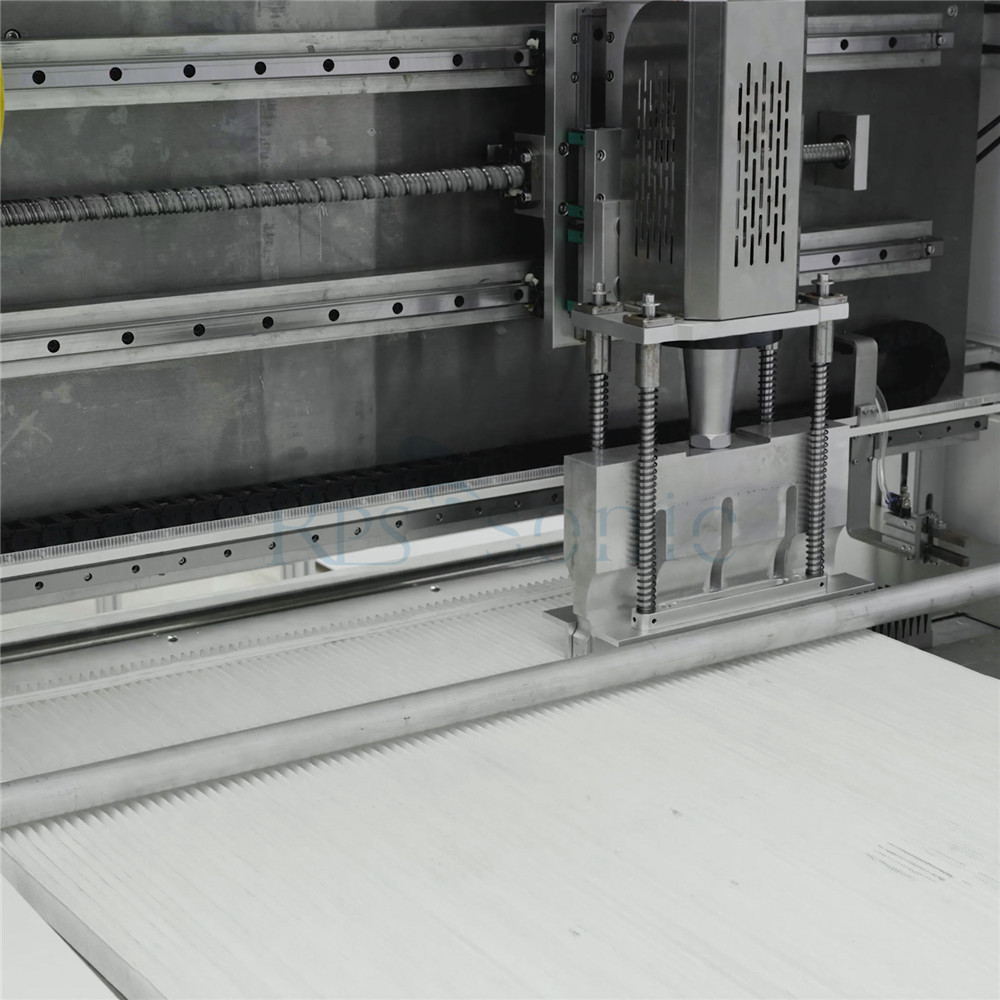
Automatic Ultrasonic pleated filter welding machine

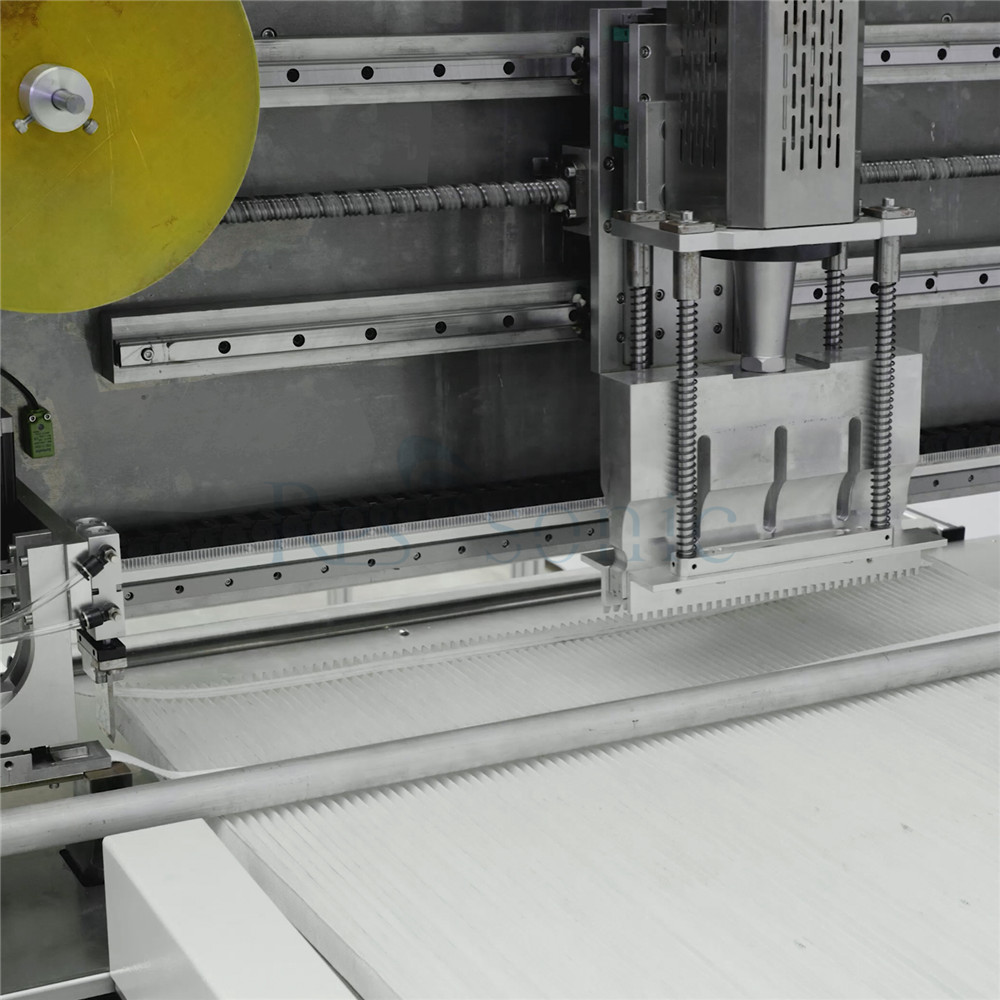
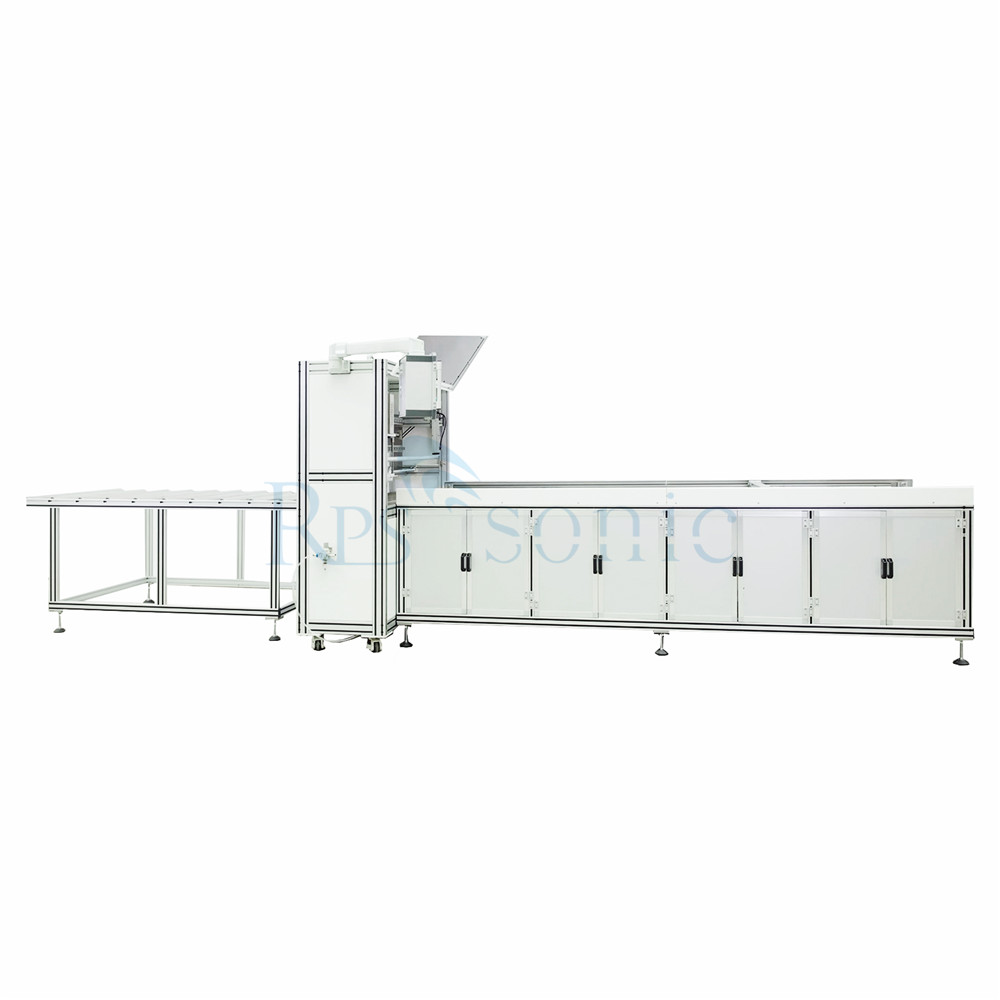
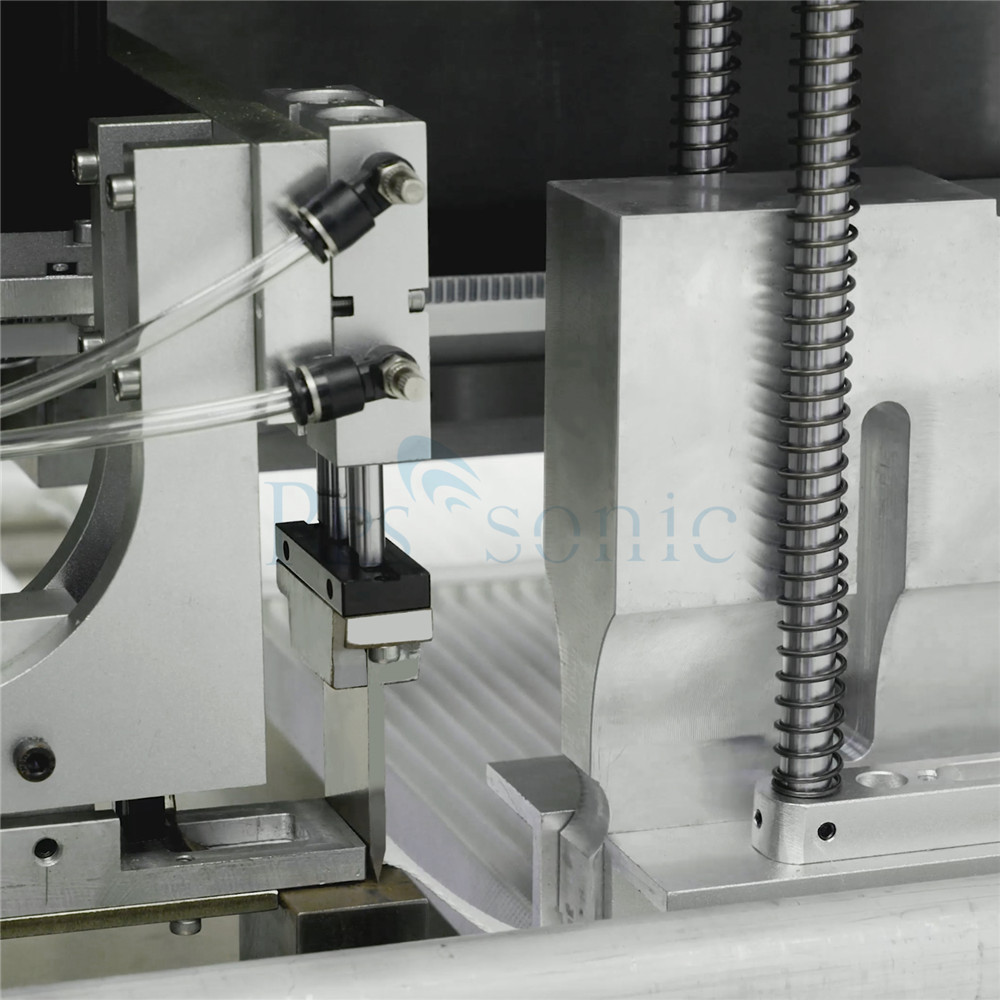

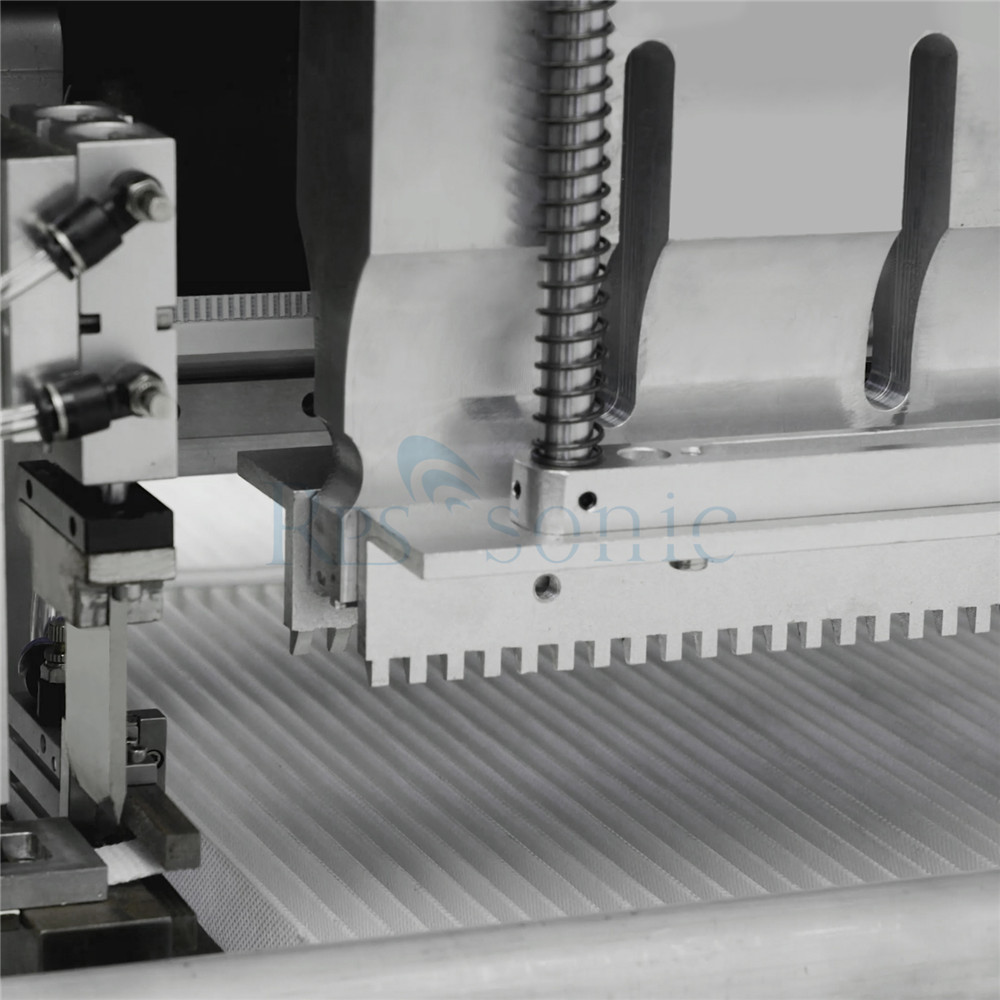
1. Equipment composition
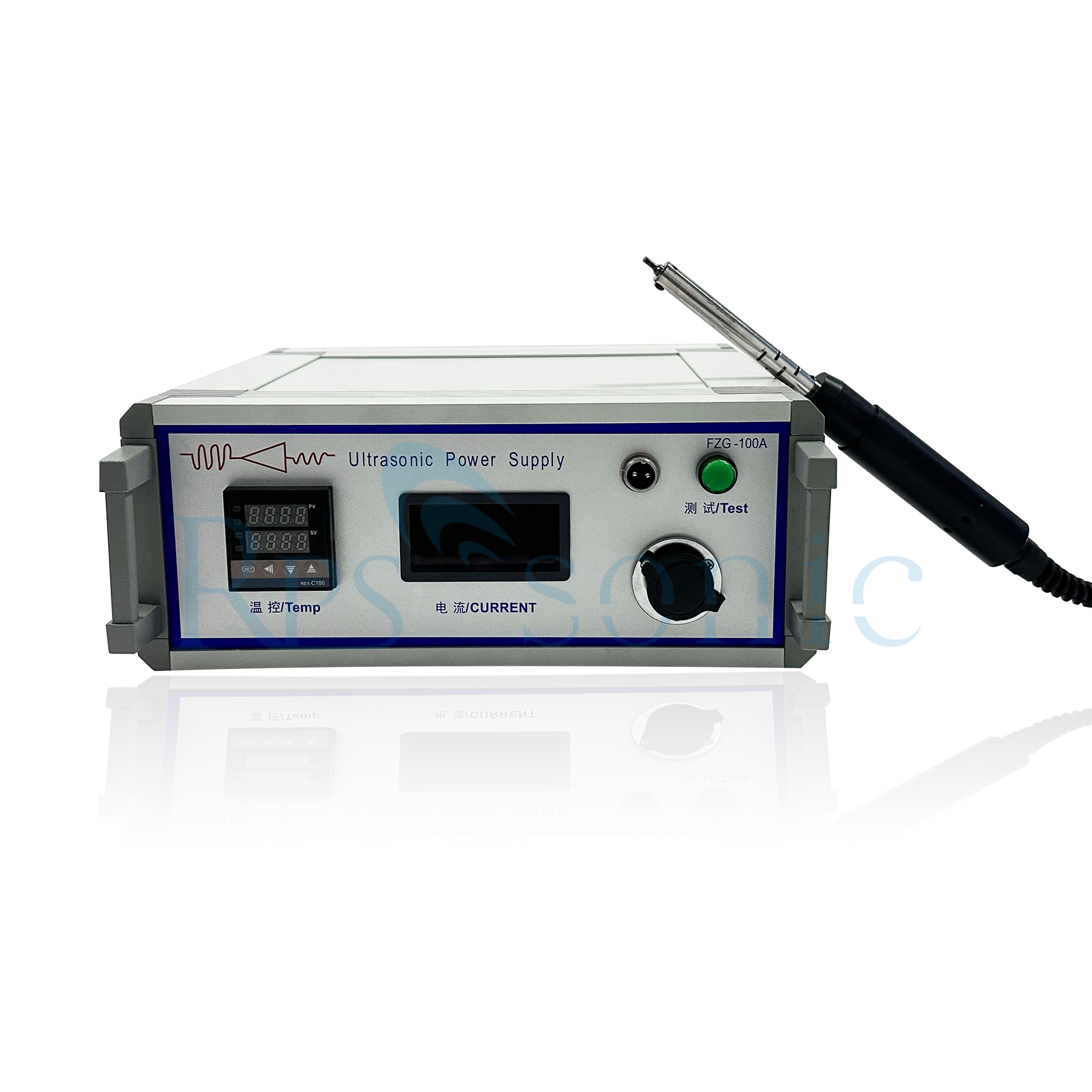
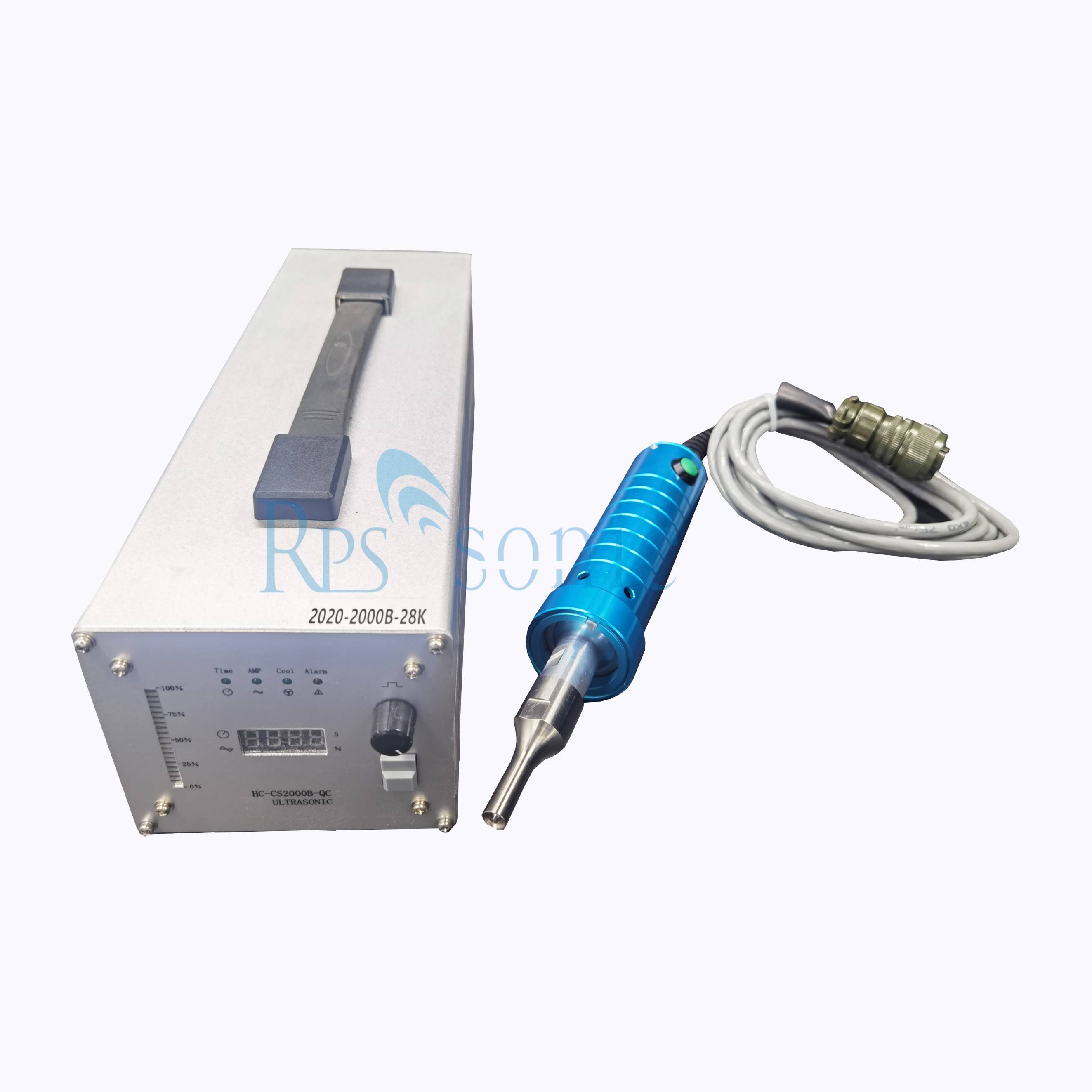
Ultrasonic generator: converts electrical energy into high-frequency (usually 15kHz-40kHz) ultrasonic signals.
Transducer (vibrator): converts electrical signals into mechanical vibrations.
Amplifier (amplifier): amplifies the vibration amplitude and transmits it to the welding head.
Welding head (mold): customized design, matching the shape of the filter element pleats, directly contacting the workpiece to transmit ultrasonic energy.
Pneumatic/servo system: provides welding pressure to ensure uniform contact.
Fixture tooling: fixes the filter element and end cover to ensure welding position accuracy.
Control system: PLC or touch screen control, adjustable parameters (time, pressure, amplitude, etc.).
2. Characteristics of welding process
Non-conduction welding: local heating to avoid thermal damage to filter materials.
Fast and efficient: a single welding cycle is usually completed within 0.1-1 seconds.
Good sealing: no risk of air leakage/liquid leakage, suitable for high-precision filtration needs.
No consumables: no auxiliary materials such as glue and solvents are required.
Environmental protection and energy saving: low energy consumption, no harmful gas generation.
3. Applicable filter element types
Material: melt-blown polypropylene (PP), polyester (PET), nylon and other thermoplastic filter materials.
Structure: cylindrical, conical, flat pleated filter element.
Application areas:
Automotive/industrial air filters
HVAC system filters
Medical/food grade liquid filters
Oil filters, fuel filters
4. Technical advantages
High-precision welding: can handle micron-level pleated structures and maintain filtration efficiency.
High strength: the tensile strength of the welding area is close to that of the raw material.
Automation integration: can be connected to the production line and cooperate with the robot to load and unload materials.
Good consistency: digital control of parameters to reduce human errors.
5. Key parameters
Frequency: commonly used 20kHz (large workpiece) or 40kHz (precision parts).
Amplitude: 10-50μm (adjusted according to material thickness).
Pressure: 0.2-0.6MPa (too much pressure will crush the folds).
Welding time: usually 0.3-0.8 seconds.
This type of equipment needs to customize the welding head according to the specific structure of the filter element (such as pleat height, density), and it is recommended to provide sample test welding.
-
60Khz Ultrasonic soldering iron equipment for soldering copper
-
Ultrasonic plastic welding machine handheld type 35Khz
-

20Khz 3200w automatic ultrasonic welding machine ultrasonic plastic welder
-
Automatic 20KHz Ultrasonic belt welding and cutting machine
-
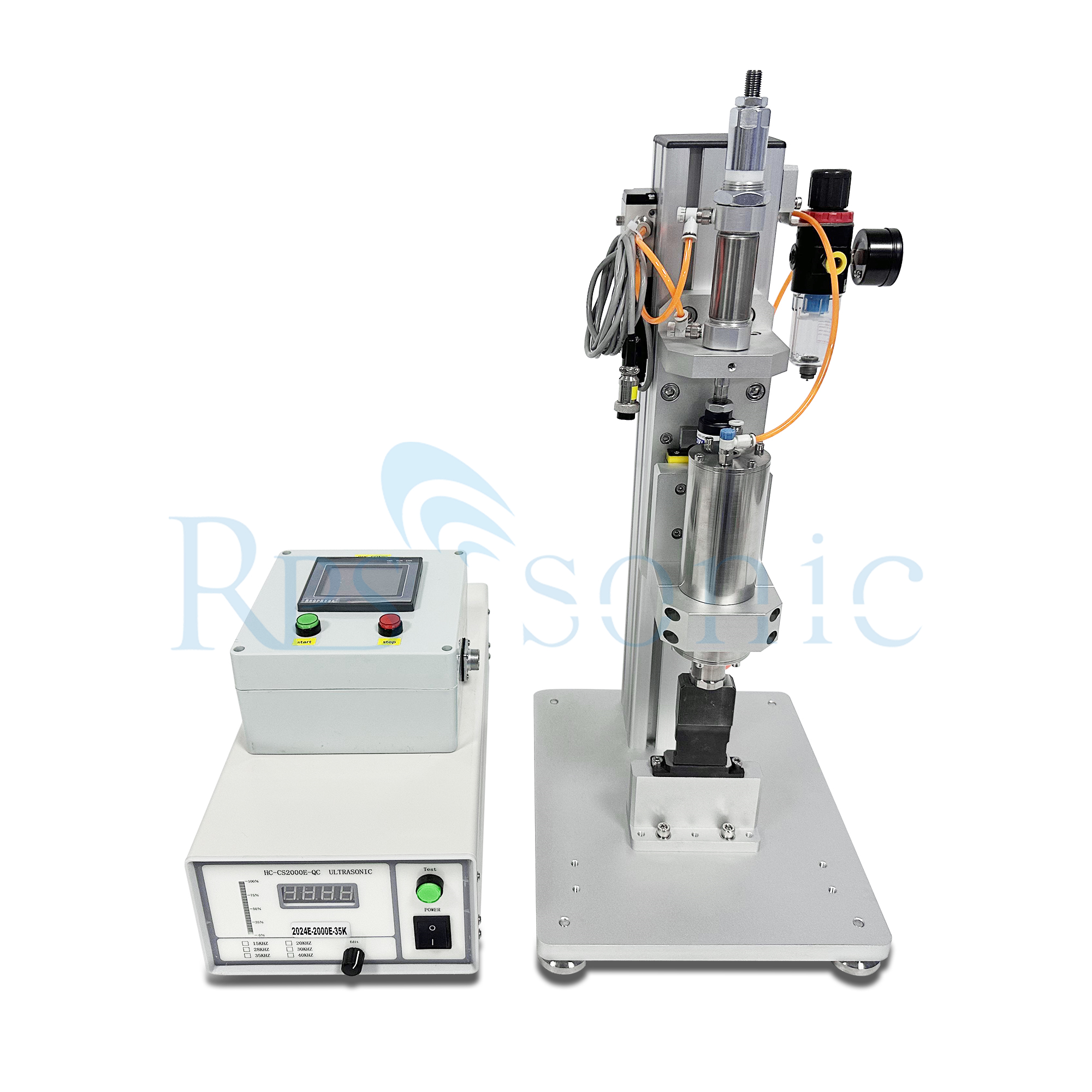
Desktop 35KHz ultrasonic spot welding machine for PP box weldingwith food pedal
-

Hnadheld Ultrasonic Poultry belt welding machine ultrasonic spot welder
-

Bench-top ultrasonic plastic welding machine ultrasonic welding PP/PVC/PU
-

Herrmann ultrasonic converter KHS 20-IP50 for ultrasonic cutting machine
-
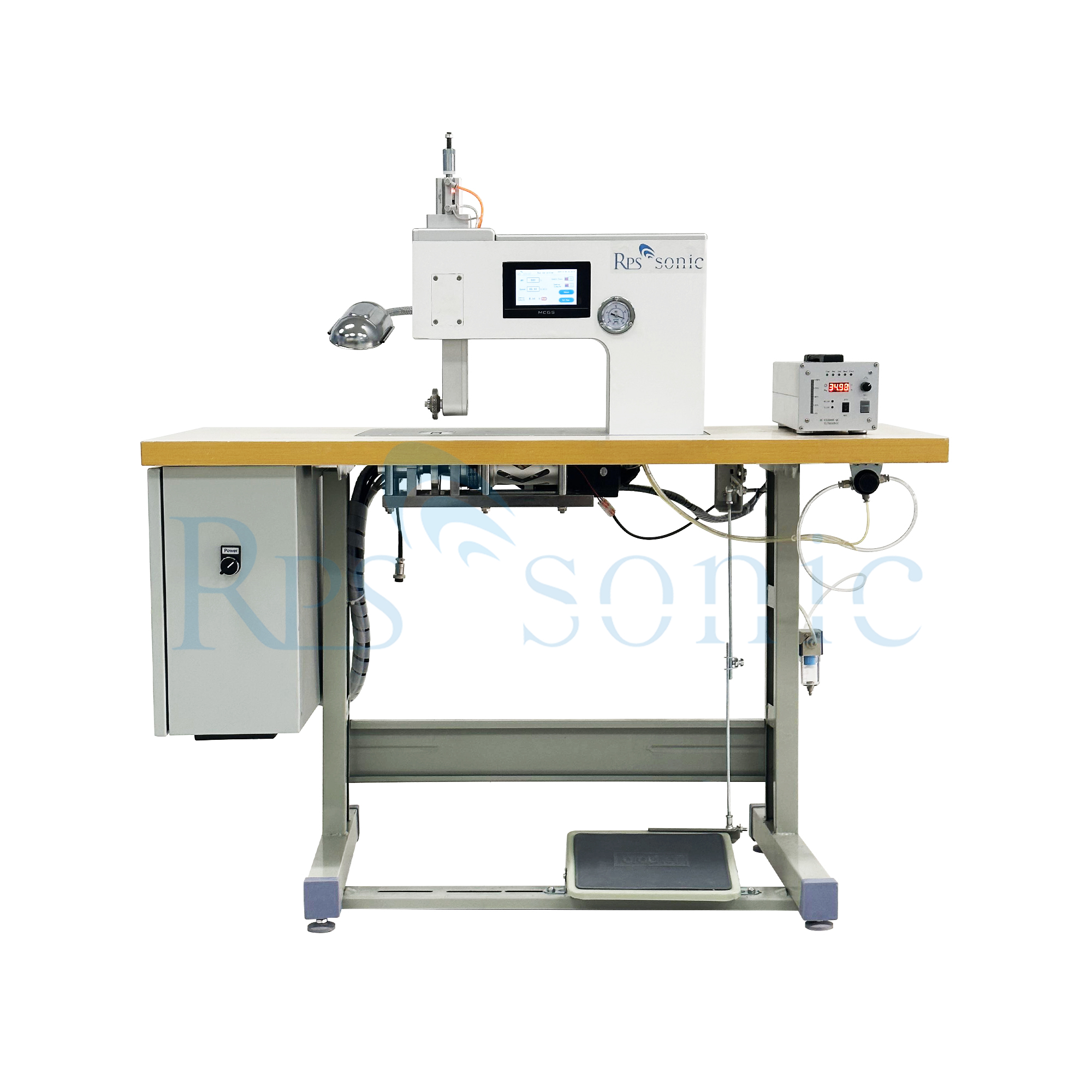
Ultrasonic rotary welding machine ultrasonic TPU sewing machine
-

Ultrasonic welding system for Sealing of packaging bag lid